Languages

Extinction of Species

Extinction of Species

English

Plastic waste threatens lakes as well as oceans

Researchers found levels of plastics in Lake Garda similar to those in marine environments 'Microplastic' threat to shores Pollution with plastic waste is not confined to the oceans but poses a growing threat to lakes as well. That is the view of researchers who found significant concentrations of the substance in Italy's Lake Garda. They say the levels are similar to those found in samples taken from marine beach sediments. They are concerned that these tiny plastic particles are accumulating in freshwater species and are "likely" to get into the food chain. The research is published in the journal, Current Biology. The problem of large amounts of plastic polluting the world's oceans has been well documented in recent years. As well as bigger pieces that can choke sea creatures when ingested, there is an equally serious issue with very small fragments called micro-plastics. But research on the problems caused by plastic in lakes has been lacking. This new study looked at Lake Garda, a large, sub-alpine body of water. The researchers found significant concentrations of plastic in sediment samples. On the north shore they found around 1,000 larger particles per square metre and 450 micro-plastic particles in the same area. "We were surprised," lead author Prof Christian Laforsch from the University of Bayreuth told BBC News.

Oceans health declining quickly

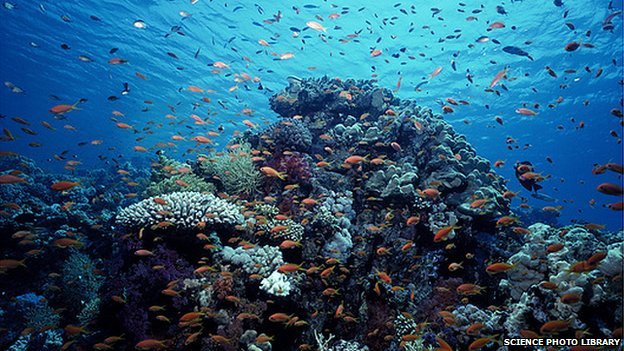
Corals are likely to suffer as a result of the changes to our oceans The health of the world’s oceans is deteriorating even faster than had previously been thought, a report says. A review from the International Programme on the State of the Ocean (IPSO), warns that the oceans are facing multiple threats. They are being heated by climate change, turned slowly less alkaline by absorbing CO2, and suffering from overfishing and pollution. The report warns that dead zones formed by fertiliser run-off are a problem. It says conditions are ripe for the sort of mass extinction event that has afflicted the oceans in the past. It says: “We have been taking the ocean for granted. It has been shielding us from the worst effects of accelerating climate change by absorbing excess CO2 from the atmosphere. “Whilst terrestrial temperature increases may be experiencing a pause, the ocean continues to warm regardless. For the most part, however, the public and policymakers are failing to recognise - or choosing to ignore - the severity of the situation.” It says the cocktail of threats facing the ocean is more powerful than the individual problems themselves. Coral reefs, for instance, are suffering from the higher temperatures and the effects of acidification whilst also being weakened by bad fishing practices, pollution, siltation and toxic algal blooms. IPSO, funded by charitable foundations, is publishing a set of five papers based on workshops in 2011 and 2012 in partnership with the International Union for Conservation of Nature (IUCN’s) World Commission on Protected Areas.

Zimbabwe elephants poisoned by cyanide

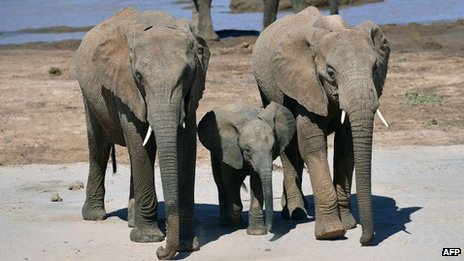
Zimbabwe elephants poisoned by cyanide There has been a recent rise in the killing of elephants in parts of Africa More than 80 elephants have been killed for their ivory by poachers who used cyanide to poison a water hole in Zimbabwe's largest game park. Tourism Minister Walter Mzembi confirmed the toll on Tuesday after touring Hwange National Park. Wildlife department officials said the chemical also killed smaller animals and predators which feed on them. Nine poachers were arrested after rangers tracked them to a cache of ivory hidden in the park. "When we left Hwange National Park on Sunday, the total number of elephants that had died from cyanide poisoning was 81," Jerry Gotora, a director of the Zimbabwe parks department, told AFP. "Several other animals have also died, but we don't have the total number yet." The elephant death toll includes more than 40 elephants discovered following a poisoning incident in the 4,650-sq km (1,795-square mile) national park earlier this month. There has been a rise in the killing of elephants and rhinos in parts of Africa in recent years, mostly to feed demand for horns and tusks in Asia.

Rhino poaching driving Black Rhino and White Rhino to near extinction

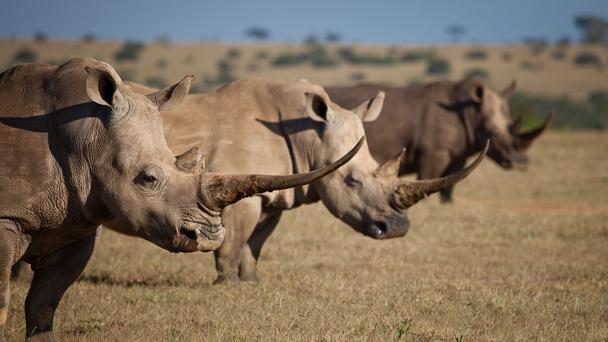
white rhinos
white rhinos kenya

Located 160km north of Nairobi, Solio Reserve is the premier place in Africa to see black and white rhino in the wild, but these precious animals are at the heart of a bloody poaching battle. The previous night, armed rangers who patrol the park’s 48km-long electric fence saw three men with tools and guns try to enter the reserve – and the previous month they discovered poachers cutting a hole in the fence near where a pair of cheetah makes their den. On both occasions, the rangers won out, but it was an unsettling reminder that the battle for the survival of one of Africa’s most endangered species is far from won. The problem is so rampant in central Kenya, where breeders have made in-roads into breeding rhinos in captivity on private reserves, that during the monthly full moon cycle, when poachers are not reliant on torches or headlamps for light, the rhinos need to be protected 24 hours a day. Tragically, in 2012 Solio lost at least 12 out of around 220. “Solio represents the heartbeat of rhino conservation in Kenya,” said Felix Patton, the reserve’s rhino monitoring coordinator. “Because of that, the poaching pressure is ever present – so there is a need to bring in more income to sustain the rhinos’ security and habitat. More importantly, though, we need to change the poacher’s attitudes – because the real value of rhino horn is completely misunderstood.

Study reveals 'true' material cost of development say researchers

Current methods of measuring the full material cost of imported goods are highly inaccurate say researchers. In a new study, they found that three times as many raw materials are used to process and export traded goods than are used in their manufacture. Richer countries who believe they have succeeded in developing sustainably are mistaken say the authors. The research has been published in the Proceedings of the National Academy of Sciences. Many developed nations believe they are on a path to sustainable development, as their economic growth has risen over the past 20 years but the level of raw materials they are consuming has declined. But this new study indicates that these countries are not including the use of raw materials that never leave their country of origin. Heavy footprints The researchers used a new model that looked at metal ores, biomass, fossil fuels and construction materials to produce what they say is a more comprehensive picture of the "material footprint" of 186 countries over a 20 year period. In 2008, around 70bn tonnes of raw materials were extracted worldwide but just 10bn tonnes were physically traded. Over 40% were used to enable the processing and export of these materials. "By relying on current indicators, governments are not able to see the true extent of resource consumption," said Dr Tommy Wiedmann from the University of New South Wales.

Indian Tigers need genetic diversity to survive

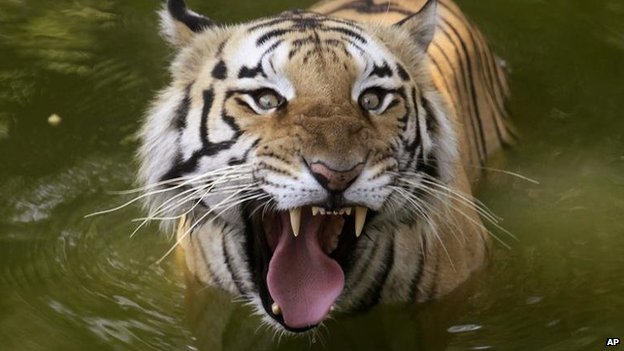
Royal Bengal Tiger India faces extinction.

Indian tigers face threat due to lack of genetic diversity.

Tigers need genetic diversity to survive. India's tigers are facing extinction owing to a collapse in the variety of their mating partners, say Cardiff University researchers. They found that 93% of DNA variants found in tigers shot the period of the British Raj were not present in tigers today Prof Mike Bruford said the genetic diversity needed for the species to survive had been "lost dramatically".

There are fewer than 2,000 tigers left worldwide, 60% in India. The Cardiff university team collaborated with the National Centre for Biological Sciences in Bangalore, India on the research. They had unprecedented access to the Natural History Museum of London's tiger collection which allowed them to identify the DNA variants in the tigers killed in the British Raj period from 1858 to 1947 but which have disappeared today. Mechanised trophy hunting reduced the animal's numbers from 40,000 in a mere 100 years. The territory occupied by the tiger has declined more than 50% during the last three generations and mating now only occurs in 7% of its historical territory.

Rainforest plays critical role in hydropower generation

Belo Monte Bridge and proposed dam site Brazil

Belo monte - The proposed Belo Monte dam will be one of the biggest in the world, but deforestation could limit the amount of energy generated Deforestation in the Amazon region could significantly reduce the amount of electricity produced from hydropower, says a new study. Scientists say the rainforest is critical in generating the streams and rivers that ultimately turn turbines. If trees continue to be felled, the energy produced by one of the world's biggest dams could be cut by a third. The study is published in the Proceedings of the National Academy of Sciences. Many countries in tropical regions are turning to hydropower as an untapped source of energy. In Brazil around 45 new hydro plants are in the planning stage. “We now have very strong evidence that Brazil's ability to generate electricity depends on forest conservation” Dr Daniel Nepstad Rainforests, by their very name, are prime locations for the dams that are usually required to create the force of water needed to generate electric power. Until now the presumption has been that cutting down the trees near a dam actually increased the amount of water flowing into the dams. Trees of life But in this new study the researchers took a broader look at the climate projections for the Amazon basin and not just at the rivers on which the dams were built. They found that rainforests are more critical than previously thought as they produce the rain that fills the streams that ultimately drives the rivers and the turbines.

Arctic Ocean is acidifying rapidly

Arctic - Saunders Island and Wolstenholme Fjord with Kap Atoll
arctic volcano

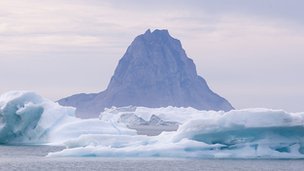
Arctic Ocean 'acidifying rapidly' Photo1: Saunders Island and Wolstenholme Fjord with Kap Atholl in the background is shown in this picture taken during an Operation IceBridge survey flight in April 2013. Photo 2: arctic volcano. The Arctic seas are being made rapidly more acidic by carbon-dioxide emissions, according to a new report. Scientists from Norway's Center for International Climate and Environmental Research monitored widespread changes in ocean chemistry in the region. They say even if CO2 emissions stopped now, it would take tens of thousands of years for Arctic Ocean chemistry to revert to pre-industrial levels. Many creatures, including commercially valuable fish, could be affected. They forecast major changes in the marine ecosystem, but say there is huge uncertainty over what those changes will be. It is well know that CO2 warms the planet, but less well-known that it also makes the alkaline seas more acidic when its absorbed from the air.

Nicaragua Bosawas Biosphere Reserve under threat from illegal logging

Bosawas-biosphere-reserve-nicaragua-rainforest-diversity-logging-development-threat
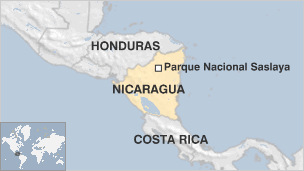
Saslaya-National Park Bosawas Bioshpere Reserve Nicaragua Map

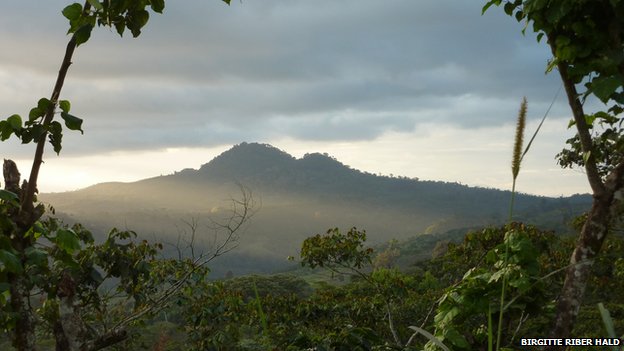
Nicaragua cloud forest 'under siege' by illegal loggers. Bosawas forest - the Bosawas Reserve is a critically important rainforest but native people say it is being destroyed by "colonists" A famed rainforest in Nicaragua is under growing threat from illegal loggers, say indigenous leaders. The Bosawas Biosphere Reserve is Central America's largest tropical forest with clouds constantly drifting over the hilly terrain. But the Mayangna and Miskito people who live there say 30,000 hectares a year are being deforested by "colonists". They are calling on US president Barack Obama, who is visiting the region, to support their battle. Described by the United Nations as a global biological treasure, the reserve is located on the border between Nicaragua and Honduras and teems with wildlife. “We believe that if there is no intervention there will be no Biosphere Reserve in five to 10 years” Taymond Robins, Mayangna people The two million hectares are said to be home to 150,000 insect species, rare jaguars, eagles and crocodiles as well as the world's last populations of Baird's Tapir and the Central American Spider Monkey. Landless invaders The Bosawas reserve also overlaps the homes of indigenous communities who have been there for centuries, living by hunting and fishing. The Nicaraguan government recognised the full legal title of the Mayangna to their lands in 2007. Since then, they say they have been subject to what they term an "invasion" by landless people from other parts of the country.

African forest elephants face extinction

African forest elephants decline by 62% in 10 years

African forest elephants by water


African forest elephants face extinction if 'drastic measures' are not taken


Forest elephant numbers have decreased by 62% across Central Africa over the last 10 years, according to a study.

The analysis confirmed fears that African forest elephants (Loxodonta cyclotis) are heading for extinction, possibly within the next decade. Conservationists said "effective, rapid, multi-level action is imperative" in order to save the elephants. They are concerned the forest elephants are being killed for their ivory. Results of the study, undertaken by researchers from the Wildlife Conservation Society (WCS), are published in the scientific journal PLoS One. Over 60 co-authors contributed to the study, which was led by Dr Fiona Maisels, a WCS conservation scientist from the School of Natural Sciences, University of Sterling. "Although we were expecting to see these results, we were horrified that the decline over the period of a mere decade was over 60%," Dr Maisels told BBC Nature.

Elusive giants

African forest elephants

Pages

Email Addresses