Languages

Extinction of Species

Extinction of Species

English

CITES bans lead to subsequent improvements in mammalian species’ IUCN status, relative to species in which trade was not banned

The Convention on International Trade in Endangered Species (CITES) bans international trade in species threatened with extinction. We investigate the effects of these bans on species’ endangerment, as assessed by the International Union for Conservation of Nature (IUCN). Our analysis exploits changes in CITES bans between 1979 and 2017. We find that CITES bans lead to subsequent improvements in mammalian species’ IUCN status, relative to species in which trade was not banned. These effects are primarily due to improvements in the status of commercially targeted species. On the other hand, CITES bans lead to deteriorations in reptilian species’ IUCN status. We find that major spikes in trade volume occurred in anticipation of the bans on reptilian species but not in anticipation of those on mammalian species.


The World's Oldest Living Trees

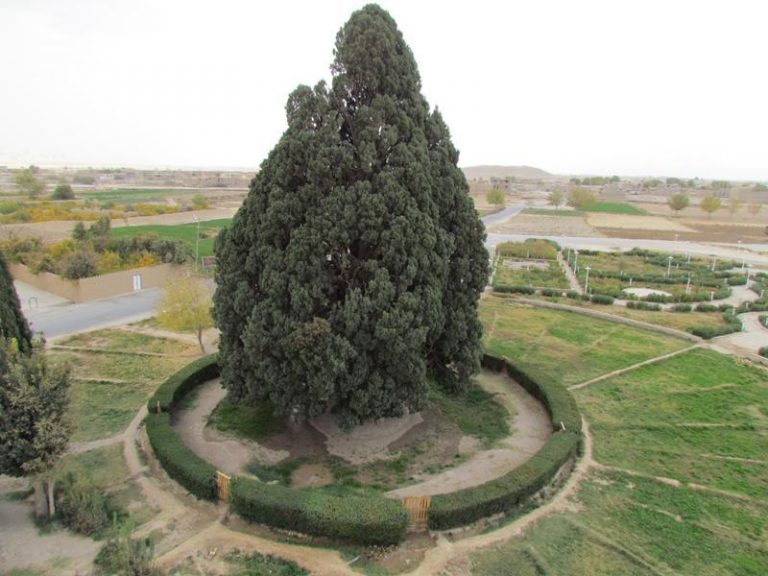
Cypress of Abarkuh in Iran
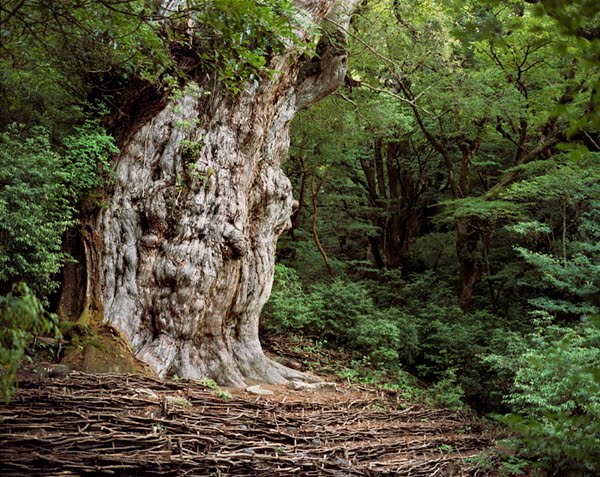
JŌMON SUGI Cryptomeria Tree Yakushima Japan - 2000 years old
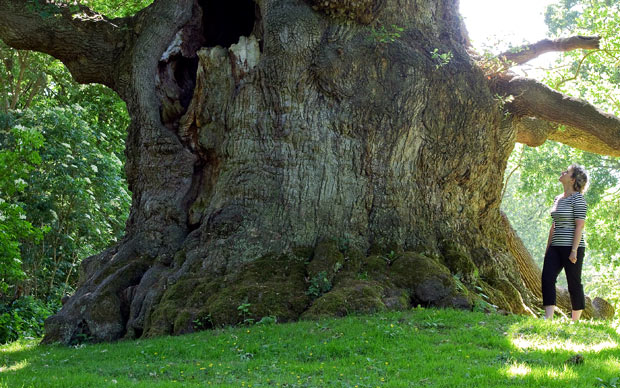
widest tree LLANGERNYW YEW in WALES - 4000 years old
widest tree - LLANGERNYW YEW in WALES - 4000 years old
Alerce_Milenario_or_Gran_Abuelo_cypress_tree_Fitzroya_Cupressoides_Andes_Mountains_South_America - 3640 years old
Old Tjikko Norway spruce tree Fulufjället Mountain Dalarna province Sweden - 9500 years old - world's oldest tree
Methuselah 5000 years old bristlecone pine tree White Mountains Inyo Nationa Forest California
Pando The Trembling Giant Quaking Aspen Utah - 1 million years old

Cypress of Abarkuh in Iran Cypress of Abarkuh in Iran The Zoroastrian Sarv also known as Sarv-e Abarqu or Cypress of Abarkuh, is a cypress tree in Central Iran, Yazd Province at Iranian National Movement. It is said to have lived for 4000 years, earning its title as the oldest living thing in the whole of Asia. JŌMON SUGI JŌMON SUGI Cryptomeria Tree Yakushima Japan - 2000 years old Jōmon Sugi is a large Cryptomeria tree of about 83-foot height and 53-foot girth, located on Yakushima, in Japan. It dates to the Jomon Period from which it gets its name. Calculated using tree’s growth ring, it is about 2000 years old, though some argue that the tree is over 7000 years old. LLANGERNYW YEW IN WALES widest tree LLANGERNYW YEW in WALES - 4000 years old Llangernyw yew is the oldest tree in Wales, as it is over 4,000-year-old.

Billion people face global flooding risk

A British aid charity is warning that by 2060 more than a billion people worldwide will live in cities at risk of catastrophic flooding as a result of climate change. A study by Christian Aid says the US, China and India are among the countries most threatened. It says the Indian cities of Kolkata and Mumbai will be most at risk. The eight most vulnerable cities on the list are all in Asia, followed by Miami in the US. The report urges governments to take action to reduce global warming and invest in disaster reduction programmes. Dr Alison Doig, the report's author, told the BBC World Service that people living in large coastal cities were particularly at risk. "I think it's cities like Kolkata, Dakar, the big mega-cities of the south and the emerging economies where the people are most vulnerable to exposure to sea-level rises and to higher rain events," she said. "Flooding in these cities can cause massive damage, but can also threaten life." Dr Doig warned that Florida was likely to suffer extensive flooding. "The whole of Florida is totally vulnerable," she said. "It is so low-lying, it is virtually swampland reclaimed. So significant climate change... raising water half to a full metre this century, will take out an awful lot of Florida and a significant amount of Miami." The study says that the priority should be to rapidly reduce carbon emissions and limit temperature increase by switching from fossil fuels to low-carbon energy.

Coral bleaching weakens fish's health and survival chances

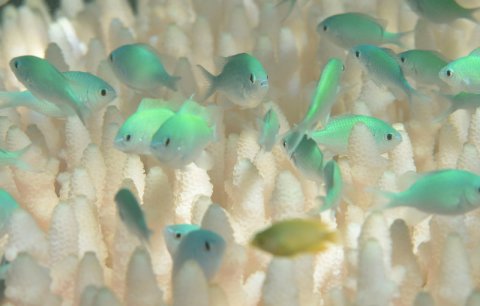
Researchers in Australia and Sweden have found that coral bleaching and death can have a direct effect on how reef-dwelling fish learn about their environment - particularly how to avoid predators.

The team from James Cook University in Queensland and Uppsala University carried out tests in enclosed "mini reefs" that simulated the environment they were studying. They put young damselfish in their reefs, half of which contained healthy coral, the other half containing the skeletons of dead coral. The scientists then trained the fish to recognise the scent of a new predator - pairing that scent with another chemical that damselfish release when they're under attack. Only the fish in the healthy reefs learned the new predator's smell, and hid among the coral in response. On dead reefs, the fish just kept on exploring, leaving themselves vulnerable. The researchers say their results show worrying signs of the direct impact of coral damage on marine animals' behaviour and survival. The findings are published in the journal Proceedings of the Royal Society B.

Massive coral bleaching killing Australia's Great Barrier Reef - 2016

Fish swim amid bleached coral near Lizard Island, Australia, Great Barrier Reef
Coral - 4 stages of coral healthy, bleached, algal growth voer bleached dead coral
Coral - 4 stages of coral - healthy, bleached, algal growth voer bleached dead coral
Close-up of four staes of coral bleaching dying coral great barrier reef australia
heavy algal overgrowth over bleached dying coral - Great Barrier Reef Australia

The massive bleaching hitting the Great Barrier Reef off the coast of Australia is likely that country's "biggest ever environmental disaster," says Dr. Justin Marshall, who has studied the reef for three decades. Fish swim amid bleached coral near Lizard Island, Australia, Great Barrier Reef Only 7 percent of the reef has escaped bleaching, according to researchers at the ARC Center of Excellence. Marshall, a professor at the University of Queensland, says the destructive phenomenon is happening in an area the size of Scotland. "Before this mass bleaching started, we already were at the point of losing 50% of the coral cover on the Great Barrier Reef. This, I think, will probably take another 50% off what was left," Marshall says. Over the course of the last six months, Marshall and his colleagues with the citizen science project Coral Watch have documented the degradation of reef structures near Lizard Island, one of the worst-hit areas. They photographed the same formations of coral multiple times, showing clearly the pace of the destruction.

Horrible extinction risk to plants - May 2016

Scientists have published their first global assessment of the state of the world's plants.

They warn that 21% of all plants are at risk of extinction and face a broad range of threats. The research was carried out by the Royal Botanic Gardens Kew in the UK.   See the full report:   here

Male and Female Songbirds in the Spring!

Male and female songbirds in the Spring

Male and Female Songbirds in the Spring! Male and female songbirds in the Spring Let's do the right thing so we never have a silent spring!

Populations of some of the world's largest wild animals are dwindling, raising the threat of an "empty landscape", say scientists.


About 60% of giant herbivores - plant-eaters - including rhinos, elephants and gorillas, are at risk of extinction, according to research.

Analysis of 74 herbivore species, published in Science Advances, blamed poaching and habitat loss.

A previous study of large carnivores showed similar declines.

Prof William Ripple, of Oregon State University, led the research looking at herbivores weighing over 100kg, from the reindeer up to the African elephant.

"This is the first time anyone has analysed all of these species as a whole," he said.

"The process of declining animals is causing an empty landscape in the forest, savannah, grasslands and desert."
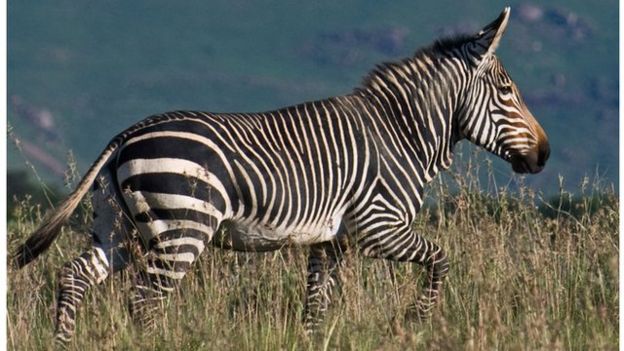
The threatened mountain zebra

The threatened mountain zebra

Prof David Macdonald, of Oxford University's Wildlife Conservation Research Unit, was among the team of 15 international scientists.

"The big carnivores, like the charismatic big cats or wolves, face horrendous problems from direct persecution, over-hunting and habitat loss, but our new study adds another nail to their coffin - the empty larder," he said.

"It's no use having habitat if there's nothing left to eat in it."

According to the research, the decline is being driven by a number of factors including habitat loss, hunting for meat or body parts, and competition for food and resources with livestock.

Climate Engineering Danger - Not a solution.

Any attempts to engineer the climate are likely to result in "different" climate change, rather than its elimination, new results suggest.

Prof Ken Caldeira, of Stanford University, presented research at a major conference on the climate risks and impacts of geoengineering.

These techniques have been hailed by some as a quick fix for climate change.

But the impacts of geoengineering on oceans, the water cycle and land environments are hotly debated.

They have been discussed at a meeting this week of 12,000 scientists in Vienna.

Researchers are familiar with the global cooling effects of volcanic eruptions, seen both historically and even back into the deep past of the rock record.

With this in mind, some here at the European Geosciences Union General Assembly have been discussing the possible worldwide consequences of pumping sulphate aerosols into the stratosphere to attempt to reflect sunlight back into space and cool the planet.

Rubber plantations destroying biodiversity and forcing habitat loss for endangered birds, bats and primates in Southeast Asia

The global demand for rubber tyres is threatening protected forests in Southeast Asia, according to a study. Tropical forests are being cleared for rubber plantations, putting endangered birds, bats and primates at risk, say UK researchers. By 2024, up to 8.5 million hectares of new rubber plantations will be needed to meet demand, they report in Conservation Letters. This could have a "catastrophic" impact on wildlife, they warn. Species such as the endangered white-shouldered ibis, yellow-cheeked crested gibbon and clouded leopard could lose precious habitat, said the team led by Eleanor Warren-Thomas, from the School of Environmental Sciences at the University of East Anglia. Also, the banteng, which is found in the forests of Cambodia. There's a lot we can do as scientists and the public to make rubber production more wildlife-friendly. "The tyre industry consumes 70% of all natural rubber grown, and rising demand for vehicle and aeroplane tyres is behind the recent expansion of plantations. But the impact of this is a loss of tropical biodiversity," she said. "We predict that between 4.3 and 8.5 million hectares of new plantations will be required to meet projected demand by 2024. This will threaten significant areas of Asian forest, including many protected areas." Eight-point-five million hectares is about the size of the land area of Austria. Biodiversity concern Rubber is the most rapidly expanding tree crop within mainland Southeast Asia.

Pages