Languages

Extinction of Species

Extinction of Species

English

Polar Bear trade ban

Polar bear trade ban divides campaigners

polar bears and water
 
Some campaigners argue that the key issue for polar bears is climate change
 

Wildlife campaigners are at odds over a new attempt to ban the global trade in polar bear parts.

Some activists say the market for rugs and ornaments made from the bears is driving them to extinction, but others argue that the most pressing problem for the species is climate change and the disappearance of polar ice. The issue will be decided at a UN wildlife conservation meeting in Thailand in March 2013. The Humane Society International/UK says that polar bears have been brought to a tipping point by climate change but that increased hunting in recent years is pushing the species "beyond the brink."


“We can't be arguing for the science when it suits us and then ignore it when it doesn't suit our case”

Dr Colman O'Criodain WWF  

"The drivers for the increase in recent years in the

Worlds largest shark sanctuary in the Cook Islands

Cook Islands' shark sanctuary creates world's largest shark sanctuary

Jackfish following reef shark


As shark numbers fall, otherspecies further down the food chain are put at risk.   

Wildlife Crime Threatens Species and Nations

Wildlife crime profound threat to nations, says report


Tiger cub
 
A tiger cub rescued from smugglers in Thailand en route to China
 

The global illegal trade in wildlife

is worth $19bn (£12bn) a year and is threatening the stability of some governments according to new research. Carried out for conservation group WWF, a report highlights a "new wave" of organised wildlife crime by armed groups operating across borders. It says funds from trafficking are being used to finance civil conflicts. The study comes as Malaysian officials captured about 20 tonnes of ivory in one of the biggest seizures ever made.


“The bloody ivory trade has reached new heights of destruction and depravity in 2012”


Will Travers Born Free Foundation

According to Jim Leape, WWF International director

Ocean Acidification destroying Antarctic marine life


Ocean Acidification destroying Antarctic marine life

The Southern Ocean


The research took place in the Southern Ocean


Marine snails in seas around Antarctica are being affected by ocean acidification, scientists have found.

An international team of researchers found that the snails' shells are being corroded. Experts says the findings are significant for predicting the future impact of ocean acidification on marine life. The results of the study are published in the journal Nature Geoscience. The marine snails, called "pteropods", are an important link in the oceanic food chain as well as a good indicator of ecosystem health.


"They are a major grazer of phytoplankton and... a key prey item of a number of higher predators - larger plankton, fish, seabirds, whales," said Dr Geraint Tarling, Head of Ocean Ecosystems at the British Antarctic Survey (BAS) and co-author of the report.

Proof of Climate Change - Global Warming in Europe

Flooded properties as the River Tiber, Rome, breaches its banks (Getty Images)


The cost of damage from extreme weather events is projected to increase in the future.


England's Fens are habitat for rare wildlife and biodiversity

Fens are rare wildlife 'hotspot'

Ouse washes


Ouse Washes is a Special Area of Conservation


The Fens are home to 25% of Britain's rarest wildlife and 13 globally rare species, according to a new report.

Researchers from the University of East Anglia studied over one million records collected by scientists and amateur enthusiasts that date back to 1670. The Fens Biodiversity Audit details evidence of 13,474 species of plants, insects, birds, fish and mammals. The area covered 3,800 km sq, spanning the Fenlands of Norfolk, Suffolk, Cambridgeshire and Lincolnshire. Christopher Panter, an ecologist from the school of Environmental Sciences at the University of East Anglia and one of the authors of the audit, commented: "One of the most surprising things was that, despite it being a very large area, most of the area was previously unrecorded."

 
Fantastic fens

Dolomedes fen raft spider
Predatory Great Raft Spider - East Anglica.

Data was collected from well-known fen sites such as

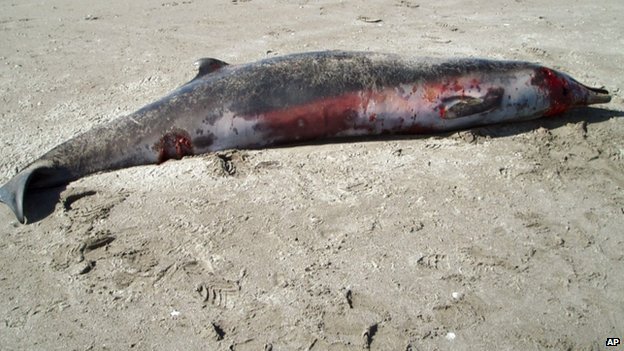
Spade-toothed beaked whale - world's rarest whale

Spade-toothed beaked whale

The world's rarest whale has been identified - two years after two of them washed up in New Zealand.

An adult female spade-toothed beaked whale and her calf were found beached in 2010, but they were mistaken for a more common type of whale and buried. When tests were done about six months later on samples taken from the mammals, they showed they were actually the rare spade-toothed beaked kind. The whales are so rare that nobody has ever seen one alive.

This year scientists returned to dig out the skeletons of the two whales, so they could study them. It wasn't an easy task and they found the mother's skull had been washed out to sea. Previously, only skull fragments have been discovered and that's only happened three times.

The spade-toothed beaked whale

The spade-toothed beaked whale gets its name because males have wide, blade-like, tusk teeth. Both males and females have beaks which make them look like dolphins. Not much is known about the whales, except that they live in the South Pacific Ocean and eat mainly squid.

Ethopian Wolf is genetically vulnerable and nearing extinction

Rarest dog: Ethiopian wolves are genetically vulnerable


 BBC Nature


Populations of the world's rarest dog, the Ethiopian wolf, are genetically fragmenting, scientists say.

Fewer than 500 of Africa's only wolf species are thought to survive. Now a 12-year study of Ethiopian wolves living in the Ethiopian highlands has found there is little gene flow between the small remaining populations. That places the wolves at greater risk of extinction from disease, or habitat degradation. In a study published in the journal , Dada Gottelli of the Zoological Society of London and colleagues in Oxford, UK and Berlin, Germany, quantified the genetic diversity, population structure and patterns of gene flow among 72 wild-living Ethiopian wolves.

 
Red dog

 BBC Nature

Earth: Will the age of man be written in stone?

There have been a few times in the history of mankind when we nearly died out as a species. Anthropologists call these events “bottlenecks”, times when the population of humans shrank – perhaps to as few as 2,000 people over 50,000 years ago. At those levels, we would be categorised as an endangered species on the IUCN Red List, existing in even fewer numbers than wild tigers do today. We survived, and in fact we’ve thrived, mainly because we adapted our environment to suit our needs. But to what degree has the survival and triumph of our species changed our planet? The best people to answer this could well be those who have the grandest perspective. Geologists can take a 4.5-billion-year step back and look at the human impact on our planet in the context of its long history – they can identify changes in the rock record within layers of deposited sediments that build up and are compressed over time.

Conservation targets need billions in funding

Scientists say billions required to meet conservation targets


Ethiopian bush crow


The most threatened species tend to be relatively cheap to save because of small range sizes.


Reducing the risk of extinction for threatened species and establishing protected areas for nature will cost the world over $76bn dollars annually. Researchers say it is needed to meet globally agreed conservation targets by 2020. The scientists say the daunting number is just a fifth of what the world spends on soft drinks annually. And it amounts to just 1% of the value of ecosystems being lost every year, they report in the journal Science.

“Nature just doesn't do recessions, we're talking about the irreversible loss of unique species and millions of years of evolutionary history” Donal McCarthy RSPB

Pages