Languages

global warming

English

Climate Change is affecting fish size and reproduction, with reduced fisheries yields.

Climate change 'may shrink fish'


Haddock from the North Sea


Fish body size is related to the water's temperature and oxygen levels, says the team


Fish species are expected to shrink

Methane greenhouse gas to be released from Antartica

Antarctic may host methane stores

[[{"type":"media","view_mode":"media_crop","fid":"127","attributes":{"alt":"","class":"media-image","id":"media_crop_6810678576135","media_crop_h":"0","media_crop_image_style":"-1","media_crop_instance":"17","media_crop_rotate":"0","media_crop_scale_h":"0","media_crop_scale_w":"0","media_crop_w":"0","media_crop_x":"0","media_crop_y":"0","typeof":"foaf:Image"}}]]
 
Ancient organic matter could be converted to methane by microbes.
 

Large volumes of methane - a potent greenhouse gas - could be locked beneath the ice-covered regions of Antarctica, according to a new study.

Dying wetland trees along Virginia's coastline are evidence that rising sea levels threaten nature and humans

Virginia's dying marshes and climate change denial

      'Ghost trees' are victims of rising sea levels  

Dying wetland trees along Virginia's

coastline are evidence that rising sea levels threaten nature and humans, scientists say - and show the limits of political action amid climate change scepticism. Dead trees loom over the marsh like the bones of a whale beached long ago. In the salt marshes along the banks of the York River in the US state of Virginia, pine and cedar trees and bushes of holly and wax myrtle occupy small islands, known as hummocks. But as the salty estuary waters have risen in recent years, they have drowned the trees on the hummocks' lower edges. If - when - the sea level rises further, it will inundate and drown the remaining trees and shrubs, and eventually sink the entire marsh. That threatens the entire surrounding ecosystem, because fish, oysters and crabs depend on the marsh grass for food.

Bryan Watts

Arctic melt releasing ancient methane increasing rate of global warming

Scientists have identified thousands of sites in the Arctic where methane that has been stored for many millennia is bubbling into the atmosphere. The methane has been trapped by ice, but is able to escape as the ice melts. Writing in the journal Nature Geoscience, the researchers say this ancient gas could have a significant impact on climate change. Methane is the second most important greenhouse gas after CO2 and levels are rising after a few years of stability. There are many sources of the gas around the world, some natural and some man-made, such as landfill waste disposal sites and farm animals. Tracking methane to these various sources is not easy. But the researchers on the new Arctic project, led by Katey Walter Anthony from the University of Alaska at Fairbanks (UAF), were able to identify long-stored gas by the ratio of different isotopes of carbon in the methane molecules. Using aerial and ground-based surveys, the team identified about 150,000 methane seeps in Alaska and Greenland in lakes along the margins of ice cover. Local sampling showed that some of these are releasing the ancient methane, perhaps from natural gas or coal deposits underneath the lakes, whereas others are emitting much younger gas, presumably formed through decay of plant material in the lakes. "We observed most of these cryosphere-cap seeps in lakes along the boundaries of permafrost thaw and in moraines and fjords of retreating glaciers," they write, emphasising the point that warming in the Arctic is releasing this long-stored carbon.

International Energy Agency Plea over Climate Warming much more than predicted.

Gas-fired power station
 
Carbon capture is described as "woefully off pace" in the report
 

Ocean acidification = habitat loss = extinction

'Jacuzzi vents' model CO2 future

 At these volcanic vent sites, carbon dioxide bubbles up like a Jacuzzi
 

A UK scientist studying volcanic vents in the ocean says they hold a grave warning for future marine ecosystems.

Canada censoring its scientists

Canadian government is 'muzzling its scientists'


Canadian Arctic
Government experts tracked a new ozone hole, but were not allowed to give interviews.

The Canadian government has been accused of "muzzling" its scientists.

Speakers at a major science meeting being held in Canada said communication of vital research on health and environment issues is being suppressed. But one Canadian government department approached by the BBC said it held the communication of science as a priority. Prof Thomas Pedersen, a senior scientist at the University of Victoria, said he believed there was a political motive in some cases. "The Prime Minister (Stephen Harper) is keen to keep control of the message, I think to ensure that the government won't be embarrassed by scientific finding by Canadian scientists that run counter to sound environmental stewardship," he said.

“I suspect the federal government would prefer that its scientists don't discuss research that points out just how serious the climate change challenge is." Professor Thomas Pedersen University of Victoria

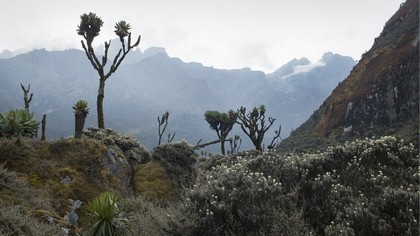
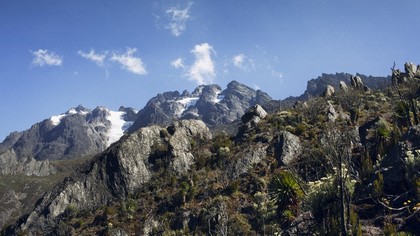
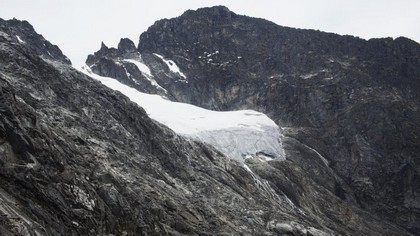
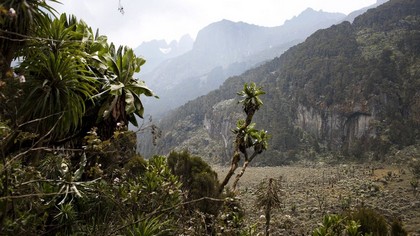
African tropical glaciers disappearing and going extinct

Uganda and the Democratic Republic of Congo have been home to tropical glaciers for tens of thousands of years.     These glaciers currently are receeding at a rate of between 30 meters per year to 50 meters per year.     The largest "glacier" is now about 1 square kilometer, in 2012.     The rate at which these glaciers are disappearing is increasing, and they will soon be extinct in our lifetime, probably by 2020.     Gloabal warming, caused by pollution and the burning of fossil fuels is the cause of this extinction. Unlike animals, however, glaciers can return when the climate cools down again, if we can reduce our population, pollution, and stop burning fossil fuels and modify our energy system. So perhaps extinction is too strong a word to use.
Pages

Email Addresses