Languages

global warming

English

What is climate change? A really simple guide

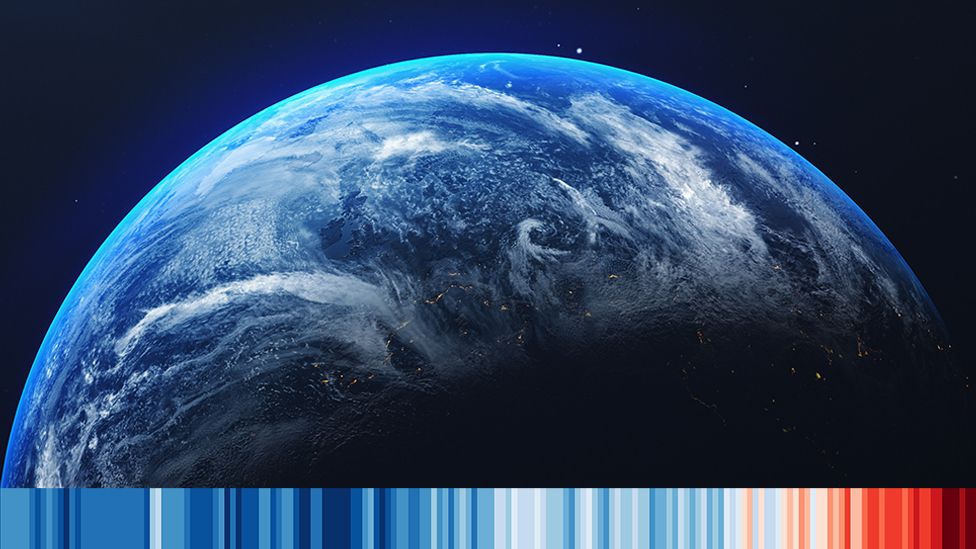
Picture of the Earth

World temperatures are rising because of human activity, and climate change now threatens every aspect of human life.

Left unchecked, humans and nature will experience catastrophic warming, with worsening droughts, greater sea level rise and mass extinction of species.

We face a huge challenge, but there are potential solutions.

What is climate change?

Climate is the average weather in a place over many years. Climate change is a shift in those average conditions.

Extreme weather: What is it and how is it connected to climate change?

People around the globe are experiencing dramatic heatwaves, deadly floods and wildfires as a result of climate change.

The UK and parts of Europe have seen temperatures of above 40C this month, leading to transport disruption and water shortages.

Emissions caused by the burning of fossil fuels have been trapping heat in the atmosphere since the start of the industrial era. This extra heat isn't evenly distributed across the globe, and bursts out extreme weather events.

Unless global emissions are cut, this cycle will continue.

Here are four ways climate change is changing the weather.

1. Hotter, longer heatwaves

To understand the impact of small changes to average temperatures, think of them as a bell curve with extreme cold and hot at either end, and the bulk of temperatures in the middle.

A small shift in the centre means more of the curve touches the extremes - and so heatwaves become more frequent and extreme.

2022 - We are living in the hottest period on earth in 125,000 years

The July 2022 heatwave is happening when average world temperatures have risen by just over 1C from their pre-industrial levels.

We are living in the hottest period in 125,000 years, according to the UN's climate science body, the Intergovernmental Panel on Climate Change (IPCC).

We know what is behind this - greenhouse gas emissions caused by our burning of fossil fuels like coal and gas. Concentrations of carbon dioxide (CO2) in the atmosphere are at the highest level for two million years and rising, according to the IPCC.

If all the promises governments made at the UN COP26 climate conference in Glasgow last year are actually implemented then we're looking at temperatures rising by 2.4C by the end of the century.

But the bad news is that emissions of CO2 continue to increase. Without big cuts by 2030 we could see temperatures go even higher. Perhaps as much as 4C by the end of the century, scientists predict.

Human Pollution

Human Pollution is killing the natural world and is a major cause of Extinction of Species. Human Pollution is directly related to Human Overpopulation and Human Overdevelopment. There are too many people on the planet for Nature to be able to sustainably heal itself and handle Human Pollution.

Endangered Humans

Groups, Populations and Tribes of Humans are at risk of Extinction - and for the same major causes as animals: Human overpopulation, overdevelopment, pollution, global warming, and loss, decline and extinction of other species and habitat that Humans depend on for food, pollination, freshwater, rain and water purification, and temperature control.

Causes

Causes of Extinction include hunting, over-fishing, habitat loss, over-population, climate change, global warming, pollution and more.

20% of Reptiles Threatened - 2022

One in five reptiles is threatened with extinction, according to the first comprehensive assessment of more than 10,000 species across the world.

Scientists are calling for urgent conservation action for crocodiles and turtles, which are in a particularly dire situation.

They say reptiles have long been overlooked in conservation, because they are seen as less charismatic than "furry and feathery" creatures.

So far, 31 species have gone extinct.

The study, published in Nature, took more than 15 years to complete, because of problems getting funding for the work.

"Reptiles to many people are not charismatic and there's been a lot more focus on more furry, feathery species of vertebrates for conservation," said Dr Bruce Young of the international nature organisation, NatureServe.

- The venomous king cobra is in decline because of deforestation and human persecution

- Geckos are vanishing in parts of the world due to wildlife trade

- The mugger crocodile: Threatened by habitat destruction and human conflict

- Jamaican iguana: Reptiles on islands face risks from invasive species and sea level rise

Despite their low publicity profile, the cold-blooded vertebrates play an essential role in the balance of life.

"Reptiles are good for people because they help control pests such as insects and rodents," said Prof Blair Hedges of Temple University in Philadelphia, US.

Greenhouse Gases = Global Warming

Greenhouse gases are caused by burning fossil fuels like coal, crude oil, refined petrol products like gasoline, petrol, diesel and aviation fuel, heating oil and natural gas. Greenhouse Gases cause Global Warming which causes habitat loss and extinction of species. It must be stopped!

2016 Hottest year ever. Global warming is worsening.

2016 hottest year ever global warming causes drought

The latest temperature numbers from NASA and the National Oceanic and Atmospheric Administration say the first six months of 2016 were the hottest on record around the planet. Let's look at June. Scientists took temperatures from around the world and got a June average. What they found was a world that was 1.62 degrees Fahrenheit hotter than the average June in the 20th Century. How about January? Hottest ever. Same with February, March, April and May. Every month in 2016 has been warmer than ever, at least since people started keeping reliable records — that was 1880. How much warmer is 2016 so far? Overall, this year has been almost two degrees warmer than what people experienced in the 20th Century. Now, you may remember, last year broke the record for the hottest year ever globally. But Gavin Schmidt, climate scientist and director of NASA's Goddard Institute for Space Studies, says that "2016 has really has blown that out of the water." Schmidt has calculated the chance that the rest of this year will continue on its record pace, based on the first six months. "It indicates that we have roughly a 99 percent chance of a new record in 2016," he says. About 70 percent of Earth is covered by clouds at any given moment. Their interaction with climate isn't easy to study, scientists say; these shape-shifters move quickly. A Warming World Means Less Water, With Economic Consequences. Now, a couple of degrees warmer overall may not sound like much; it changes more than that in a day.

Billion people face global flooding risk

A British aid charity is warning that by 2060 more than a billion people worldwide will live in cities at risk of catastrophic flooding as a result of climate change. A study by Christian Aid says the US, China and India are among the countries most threatened. It says the Indian cities of Kolkata and Mumbai will be most at risk. The eight most vulnerable cities on the list are all in Asia, followed by Miami in the US. The report urges governments to take action to reduce global warming and invest in disaster reduction programmes. Dr Alison Doig, the report's author, told the BBC World Service that people living in large coastal cities were particularly at risk. "I think it's cities like Kolkata, Dakar, the big mega-cities of the south and the emerging economies where the people are most vulnerable to exposure to sea-level rises and to higher rain events," she said. "Flooding in these cities can cause massive damage, but can also threaten life." Dr Doig warned that Florida was likely to suffer extensive flooding. "The whole of Florida is totally vulnerable," she said. "It is so low-lying, it is virtually swampland reclaimed. So significant climate change... raising water half to a full metre this century, will take out an awful lot of Florida and a significant amount of Miami." The study says that the priority should be to rapidly reduce carbon emissions and limit temperature increase by switching from fossil fuels to low-carbon energy.

Pages

Email Addresses