Languages

Causes of Extinction

English

Humans killed off Australia's giant beasts

An extinct marsupial mega-herbivore
Scientists have linked a dramatic decrease in spores found in herbivore dung to the arrival of humans in Australia 41,000 years ago.
 
Humans hunted Australia's giant vertebrates to extinction about 40,000 years ago, the latest research published in Science has concluded. The cause of the widespread extinction has provoked much debate, with climate change being one theory. However, scientists studied dung samples from 130,000 and 41,000 years ago, when humans arrived, and concluded hunting and fire were the cause. The extinction in turn caused major ecological changes to the landscape.

New Species of Newt discovered in Loas

Should the location of newly discovered species be hidden?


The Laotriton laoensis newt


Discovering a new species can be the defining moment of a biologist's career, but for some it can also mean exposing rare and vulnerable animals to the dark world of the wildlife pet trade, with catastrophic results. It's a scientific dilemma that has led some conservationists to question whether it would be better to hide their findings from the world. In 1999, herpetologist Bryan Stuart was working in Northern Laos when he stumbled across an eye-catching newt he had never seen before. The creature was prehistoric in its appearance with thick, warty skin and bright, yellow dots all the way down its back. He spotted it in a bottle of alcohol that a Lao colleague had brought back from a wedding in a remote part of the country - the poison from the newt's skin had been used to make a drink with special medicinal properties for a toast to the newlyweds. Stuart went in search of the newt in the wild and three years later he published an article in the Journal of Herpetology, announcing the discovery of the new species, Laotriton laoensis.

Europe's water resources under pressure

Depleted reservoir, Portugal (Image: Reuters)    There is increasing demand for the continent's limited water resources, the report warns


Continued inefficient use of water could threaten Europe's economy, productivity and ecosystems, a report has warned.

DR Congo employs dogs to tackle elephant poaching

Dogs training at Virunga, September 2011
Bloodhounds have begun working  with rangers at Virunga National Park to track down poachers.

Rangers in the Democratic Republic of Congo's Virunga park have a new weapon in their fight against poachers. National Park authorities have trained five bloodhound dogs to track elephant poachers after a spate of incidents. The first investigation using the dogs was carried out last week and led to the discovery of illegal weapons. Poaching is one of the key threats to the animals in Virunga, a Unesco World Heritage Site in the war-torn eastern region of DR Congo. The park is also home to gorillas, chimpanzees, okapi, forest elephants and buffalo, among other wildlife. Some 300 rangers protect the park from poachers, rebel groups and illegal miners. 'Effective weapon' Park authorities now hope the bloodhound programme, which was implemented with help from a specialised Swiss centre and volunteers from the German police, will help to protect the vulnerable elephant population from ivory poachers. The dogs and their handlers got the chance to put their training into action on 1 March, when rangers spotted a dead elephant with its tusks cut off on the edge of Virunga.

Nicaragua to stop deforestation with eco-soldiers


Eco Battalion forces confiscate illegal lumber - Nicaraguan army photo   The Ecological Battalion is part of efforts to protect Nicaragua's natural resources

Deep inside the verdant and sweltering vegetation of Nicaragua's Mosquito

UN team examines mining threat to Great Barrier Reef

File photo: Great Barrier Reef     The Great Barrier Reef off the Queensland coast is home to a wealth of marine life

A UN team has arrived in Australia to investigate possible damage to the Great Barrier Reef by the mining industry.

Up to 900 tropical bird species could go extinct.

Up to 900 tropical bird species could 'go extinct'


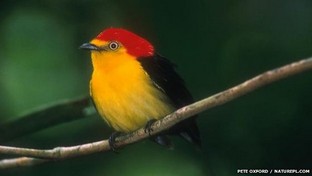
          wire-tailed-manakin-312x176.jpg The wire-tailed manakin faces an uncertain future


Up to 900 species of tropical land birds around the world could become extinct by 2100, researchers say.

The finding is modelled on the effects of a 3.5C Earth surface temperature rise, a Biological Conservation Journal paper shows. Species may struggle to adapt to habitat loss and extreme weather events, author Cagan Sekercioglu says. Mountain, coastal, restricted-range, and species unable to get to higher elevations could be the worst affected.


Rhino Poaching is driving the rhinoceros to extinction.

South Africa troops tackle rhino poachers

Rhinos in a game park in South Africa
Rhinos are killed for their horns in many parts of Africa
South Africa is to deploy hundreds of extra troops along its borders to help fight gangs smuggling rhino horns, the government has announced.

Justice Minister Jeff Radebe said four military companies would be sent to the borders with Zimbabwe, Swaziland and Lesotho. Syndicates export the horns from Africa to parts of Asia and the Middle East. In 2011, a record 450 rhinos were killed by poachers in South Africa, the Department of Environment Affairs says. Mr Radebe said about 600 soldiers would join the fight against rhino poaching. "The deployment includes army engineers who are conducting repairs and maintenance on the Zimbabwe-Mozambique border fence, which is approximately 140 kilometres (85 miles)," Mr Radebe said. Last year troops were deployed along the Mozambican border, many of them inside the world-famous Kruger National Park where more than 200 rhinos were killed last year.

Ocean acidification = habitat loss = extinction

'Jacuzzi vents' model CO2 future

 At these volcanic vent sites, carbon dioxide bubbles up like a Jacuzzi
 

A UK scientist studying volcanic vents in the ocean says they hold a grave warning for future marine ecosystems.

Big Cats - Mountain Lions, Panthers, Jaguars, Tigers and Cheetahs

Of the nearly forty feline, or cat, species, only one—the domestic cat—is believed to be secure. As undeveloped land becomes harder to find, large cats, such as lions, panthers, tigers, jaguars, and cheetahs, are left with less and less natural habitat in which to live.

Pages

Email Addresses