Languages

Causes of Extinction

English

Big Cat Species facing Extinction

Big Cat Species Facing Extinction 2010 was supposed to be the Year of the Tiger. Unfortunately, tigers, lynx, jaguars, leopards, lions, pumas, cheetahs, and every species of Big Cat in the world is in decline. How long these magnificent species can evade extinction is up to us. Big Cats are part of the Family Felidae (or feline), and are a rich addition to our natural world. However, the Big Cats are in severe decline throughout the planet. The Anthropocene Extinction, also known as the Holocene Extinction event, is the world’s 6th great sudden loss of life. We are currently in the third wave of this, and man-made ecological effects such as an overexploitation of species, pollution, the introduction of alien species, and habitat encroachment are directly responsible for the decline and extinction of thousands of species of life.

Canada censoring its scientists

Canadian government is 'muzzling its scientists'


Canadian Arctic
Government experts tracked a new ozone hole, but were not allowed to give interviews.

The Canadian government has been accused of "muzzling" its scientists.

Speakers at a major science meeting being held in Canada said communication of vital research on health and environment issues is being suppressed. But one Canadian government department approached by the BBC said it held the communication of science as a priority. Prof Thomas Pedersen, a senior scientist at the University of Victoria, said he believed there was a political motive in some cases. "The Prime Minister (Stephen Harper) is keen to keep control of the message, I think to ensure that the government won't be embarrassed by scientific finding by Canadian scientists that run counter to sound environmental stewardship," he said.

“I suspect the federal government would prefer that its scientists don't discuss research that points out just how serious the climate change challenge is." Professor Thomas Pedersen University of Victoria

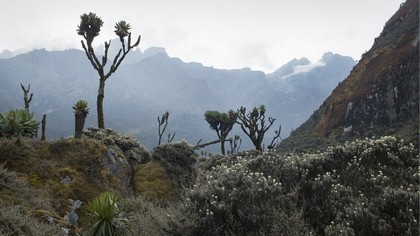
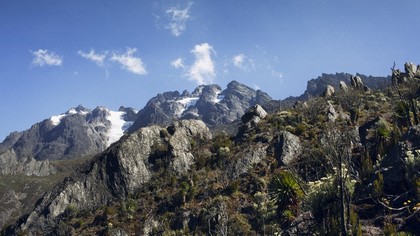
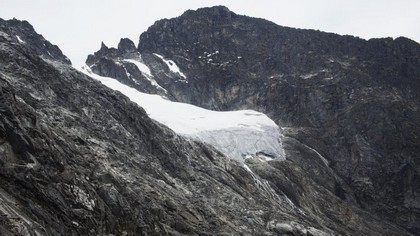
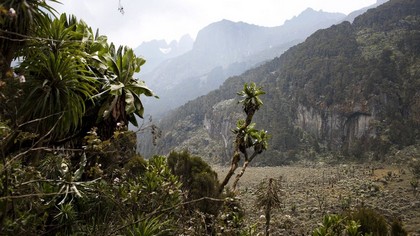
African tropical glaciers disappearing and going extinct

Uganda and the Democratic Republic of Congo have been home to tropical glaciers for tens of thousands of years.     These glaciers currently are receeding at a rate of between 30 meters per year to 50 meters per year.     The largest "glacier" is now about 1 square kilometer, in 2012.     The rate at which these glaciers are disappearing is increasing, and they will soon be extinct in our lifetime, probably by 2020.     Gloabal warming, caused by pollution and the burning of fossil fuels is the cause of this extinction. Unlike animals, however, glaciers can return when the climate cools down again, if we can reduce our population, pollution, and stop burning fossil fuels and modify our energy system. So perhaps extinction is too strong a word to use.

Super Predators - Humans

Predators have roamed the planet for 500 million years. The earliest is thought to be some type of simple marine organism, a flatworm maybe or type of crustacean, perhaps a giant shrimp that feasted on ancient trilobites. Much later came the famous predatory dinosaurs such as T. rex, and later still large toothed mammals such as sabre toothed cats or modern wolves. But one or two hundred thousand years ago, the world’s most powerful predator arrived. Us. We lacked big teeth or sharp claws, huge tentacles or venomous bites. But we had intelligence, and the guile to produce tools and artificial weapons. And as we became ever better hunters we started harvesting animals on a great scale. We wiped out the passenger pigeon, the dodo, the great herds of North American bison. Last century we decimated great whale populations. Today the world’s fishing fleets routinely take more fish than scientists say is sustainable, leading to crashes in cod numbers for example, while people kill more large mammals in North America than all other causes put together. But out of our mass consumption of the world’s fauna appears a curious conundrum.

Crime chiefs agree to get tough on illegal tiger trade

Tiger (Getty Images/Panoramic Images) About 4,000 tigers are estimated to remain in the wild

Crime chiefs from countries with populations of wild tigers have agreed to work together in order to combat the illegal trade in the big cats.

Heads of police and customs from 13 nations agreed to tighten controls and improve cross-border co-operation at a two-day meeting in Bangkok. Only six subspecies remain, with fewer than 1,000 tigers in each group. Smuggling of tiger parts is one of the main threats facing the planet's remaining big cats, say experts.

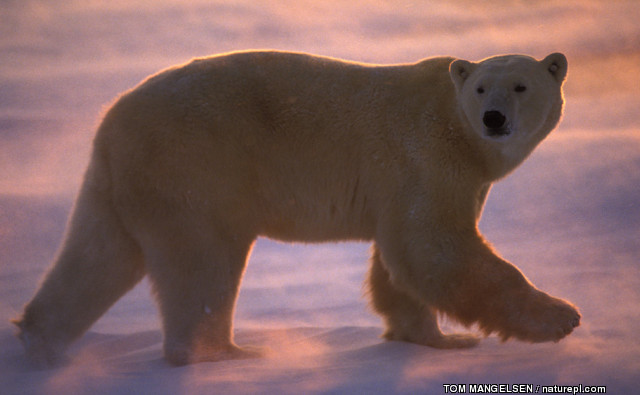
Polar Bear

Bear (Polar)

Polar Bear

Polar bear: Ursus maritimus

Distribution: northern polar regions occurring in 5 nations - Greenland, Norway, Canada, United States, the former Soviet Union and also on Arctic sea pack ice usually within 300km of land. Some individuals wander up to 200km inland.

Population: 20,000 - 25,000 with 60% living in Canada. Status: vulnerable species (IUCN).

Habitat: favourite habitat is a combination of pack ice, open water and coastal land.

Description: coat colour varies from pure white to shades of yellow. Small ears; black eyes and nose.

Height: 1.6m to shoulder

Length: 2.2 - 2.5m.

Size of feet: 30cm long, 25cm wide.

Indian Village Moved to Save Endangered Tigers

India village in Rajasthan relocates to protect tigers

Tiger (Image: AP)
India's tiger numbers have shrunk from 100,000 to 1,700 in a little over a century
An entire village has been relocated in the northern Indian state of Rajasthan to protect tigers, officials say.

Pages