Languages

habitat destruction

English

Tropical forests destroyed at fastest recorded rate in 2024


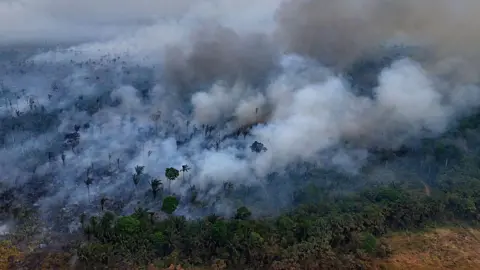
Getty Images Aerial shot of dense green rainforest with thick clouds of smoke rising up into the air

The world's tropical forests, which provide a crucial buffer against climate change, disappeared faster than ever recorded last year, new satellite analysis suggests.

Researchers estimate that 67,000 sq km (26,000 sq mi) of these pristine, old-growth forests were lost in 2024 – an area nearly as large as the Republic of Ireland, or 18 football pitches a minute.

What is biodiversity and how are we protecting it?


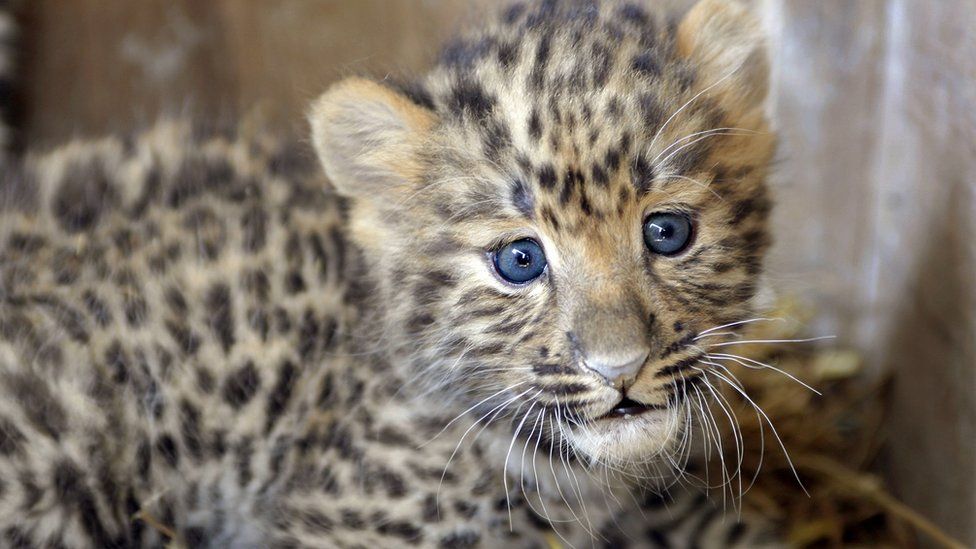
Baby Amur leopard also known as the Manchurian leopard, at the Parc des felins, in Nesles, south-eastern Paris.

Amur leopards are one of the most endangered species in the world


Targets to reverse the decline of biodiversity by 2030 may be missed without urgent action, according to a new report.

This goal was a key part of the UN global summit on biodiversity held in December 2022.

Nearly a third of all monitored species are currently endangered due to human activities.

Populations of some of the world's largest wild animals are dwindling, raising the threat of an "empty landscape", say scientists.


About 60% of giant herbivores - plant-eaters - including rhinos, elephants and gorillas, are at risk of extinction, according to research.

Analysis of 74 herbivore species, published in Science Advances, blamed poaching and habitat loss.

A previous study of large carnivores showed similar declines.

Prof William Ripple, of Oregon State University, led the research looking at herbivores weighing over 100kg, from the reindeer up to the African elephant.

"This is the first time anyone has analysed all of these species as a whole," he said.

"The process of declining animals is causing an empty landscape in the forest, savannah, grasslands and desert."
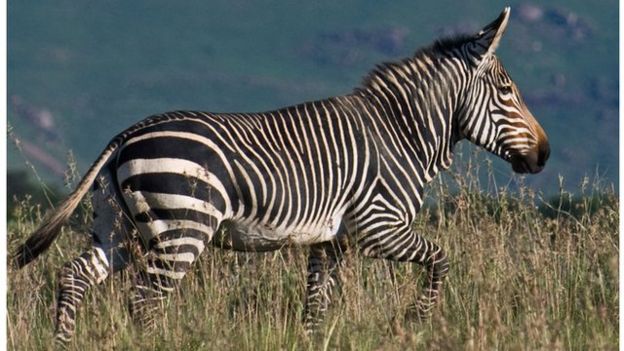
The threatened mountain zebra

The threatened mountain zebra

Prof David Macdonald, of Oxford University's Wildlife Conservation Research Unit, was among the team of 15 international scientists.

"The big carnivores, like the charismatic big cats or wolves, face horrendous problems from direct persecution, over-hunting and habitat loss, but our new study adds another nail to their coffin - the empty larder," he said.

"It's no use having habitat if there's nothing left to eat in it."

According to the research, the decline is being driven by a number of factors including habitat loss, hunting for meat or body parts, and competition for food and resources with livestock.

Reptiles are going extinct

World's reptiles at risk of extinction


A mountain horned agama lizard


Many lizards are under threat, including the mountain horned agama of Sri Lanka


Almost a fifth of the world's reptile species are at risk of extinction, according to scientists.

Research led by the Zoological Society of London found that the future of 19% of the world's reptiles are threatened. Conservation experts also confirmed that 47% are vulnerable and highlighted the possible extinction of three species. The figures are based on a random sample of 1,500 of the world's reptile species. "It's essentially an election poll set up - using this sample to give an example of how reptiles are doing as a whole," explained Dr Monika Bohm, lead author of the study published in the journal Biological Conservation. The study was made in conjunction with 200 experts from the International Union for the Conservation of Nature's Species Survival Commission.


Lava lizard basks on the head of a marine iguana

South Georgia prepares to cull its invasive reindeer and rats.

South Georgia prepares to cull its invasive reindeer

A reindeer greets three penguins on a South Georgia beach


Reindeer have caused great damage to the fragile South Georgian eco-system, trampling native plants and destroying birds' nests and penguin habitats.  

The world's mostly southerly herd of reindeer is to be culled to try to save the environment of the island of South Georgia. The 3,000 reindeer are trampling native plants, causing erosion and endangering king penguins and other local birds by destroying their nests and habitat. A team of Sami herdsmen from Norway have arrived and are preparing to round up and kill the reindeer. The operation is expected to take two southern hemisphere summers.

Threatened Shoebill numbers down to 3000

'Monster' bird reveals dark side


Shoebill chick is filmed attacking its younger sibling

Aggressive bullying between bizarre-looking shoebill chicks has been filmed for the first time. The encounter was captured at Bangweulu wetlands, near Kasanka, in northern Zambia for the BBC One series Africa. Wildlife filmmakers were surprised to witness an older chick attacking its younger sibling while their mother was foraging away from the nest. The birds are rare subjects for study because their swamp breeding grounds are very difficult to access. The team's aim was to shed light on the species by documenting intimate behaviour of shoebill parents and young at the nest. Siblicide, the phenomenon of offspring killing their siblings, is common among many larger birds.

Ocean Acidification destroying Antarctic marine life


Ocean Acidification destroying Antarctic marine life

The Southern Ocean


The research took place in the Southern Ocean


Marine snails in seas around Antarctica are being affected by ocean acidification, scientists have found.

An international team of researchers found that the snails' shells are being corroded. Experts says the findings are significant for predicting the future impact of ocean acidification on marine life. The results of the study are published in the journal Nature Geoscience. The marine snails, called "pteropods", are an important link in the oceanic food chain as well as a good indicator of ecosystem health.


"They are a major grazer of phytoplankton and... a key prey item of a number of higher predators - larger plankton, fish, seabirds, whales," said Dr Geraint Tarling, Head of Ocean Ecosystems at the British Antarctic Survey (BAS) and co-author of the report.

Proof of Climate Change - Global Warming in Europe

Flooded properties as the River Tiber, Rome, breaches its banks (Getty Images)


The cost of damage from extreme weather events is projected to increase in the future.


Global alliance aims to tackle forest crime - illegal logging and timber trafficking

Global alliance aims to tackle forest crime

 AP)


Illegal logging damages biodiversity and undermines people's livelihoods.


Interpol and the United Nations have joined forces to launch an initiative to tackle global forest crime.

The Anthropocene - Humans Shaping the Planet


Construction site in Egypt        

At the Planet Under Pressure conference in London, Diana Liverman and Will Steffen present something of a contrasting couple.

The two professors have been working together on a State of the Planet report, which has involved trawling through numerous reports and scientific papers. At the end of it all, the message of one appears somewhat optimistic, the other fundamentally pessimistic. They agree that changes to the world since about 1950 have been startling - rapid spread of the human population, accelerating exploitation of forests and marine resources, surging economic growth in successive waves across the world, and so on. This radical reshaping of the natural world by a single species is certainly unprecedented in Earth history, which a few years back led to scientists Paul Crutzen and Eugene Stoermer coining a special name for our epoch - the Anthropocene.

Pages

Email Addresses