Languages

habitat destruction

English

The Anthropocene - Humans Shaping the Planet


Construction site in Egypt        

At the Planet Under Pressure conference in London, Diana Liverman and Will Steffen present something of a contrasting couple.

The two professors have been working together on a State of the Planet report, which has involved trawling through numerous reports and scientific papers. At the end of it all, the message of one appears somewhat optimistic, the other fundamentally pessimistic. They agree that changes to the world since about 1950 have been startling - rapid spread of the human population, accelerating exploitation of forests and marine resources, surging economic growth in successive waves across the world, and so on. This radical reshaping of the natural world by a single species is certainly unprecedented in Earth history, which a few years back led to scientists Paul Crutzen and Eugene Stoermer coining a special name for our epoch - the Anthropocene.

Humans killed off Australia's giant beasts

An extinct marsupial mega-herbivore
Scientists have linked a dramatic decrease in spores found in herbivore dung to the arrival of humans in Australia 41,000 years ago.
 
Humans hunted Australia's giant vertebrates to extinction about 40,000 years ago, the latest research published in Science has concluded. The cause of the widespread extinction has provoked much debate, with climate change being one theory. However, scientists studied dung samples from 130,000 and 41,000 years ago, when humans arrived, and concluded hunting and fire were the cause. The extinction in turn caused major ecological changes to the landscape.

Nicaragua to stop deforestation with eco-soldiers


Eco Battalion forces confiscate illegal lumber - Nicaraguan army photo   The Ecological Battalion is part of efforts to protect Nicaragua's natural resources

Deep inside the verdant and sweltering vegetation of Nicaragua's Mosquito

Big Cats - Mountain Lions, Panthers, Jaguars, Tigers and Cheetahs

Of the nearly forty feline, or cat, species, only one—the domestic cat—is believed to be secure. As undeveloped land becomes harder to find, large cats, such as lions, panthers, tigers, jaguars, and cheetahs, are left with less and less natural habitat in which to live.

Crime chiefs agree to get tough on illegal tiger trade

Tiger (Getty Images/Panoramic Images) About 4,000 tigers are estimated to remain in the wild

Crime chiefs from countries with populations of wild tigers have agreed to work together in order to combat the illegal trade in the big cats.

Heads of police and customs from 13 nations agreed to tighten controls and improve cross-border co-operation at a two-day meeting in Bangkok. Only six subspecies remain, with fewer than 1,000 tigers in each group. Smuggling of tiger parts is one of the main threats facing the planet's remaining big cats, say experts.

Polar Bear

Bear (Polar)

Polar Bear

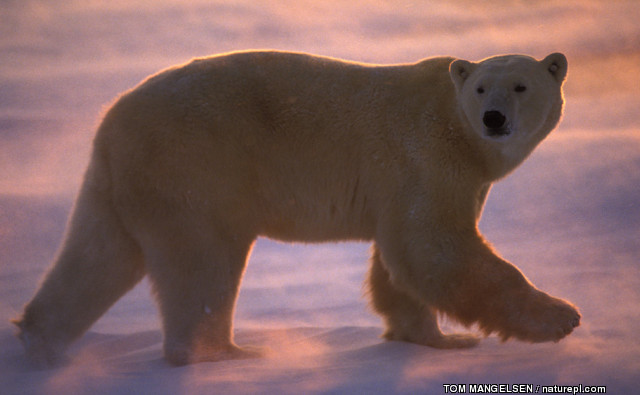
Polar bear: Ursus maritimus

Distribution: northern polar regions occurring in 5 nations - Greenland, Norway, Canada, United States, the former Soviet Union and also on Arctic sea pack ice usually within 300km of land. Some individuals wander up to 200km inland.

Population: 20,000 - 25,000 with 60% living in Canada. Status: vulnerable species (IUCN).

Habitat: favourite habitat is a combination of pack ice, open water and coastal land.

Description: coat colour varies from pure white to shades of yellow. Small ears; black eyes and nose.

Height: 1.6m to shoulder

Length: 2.2 - 2.5m.

Size of feet: 30cm long, 25cm wide.

Pages