Languages

Temperate Forest Habitat

English

Temperate Forest Habitat

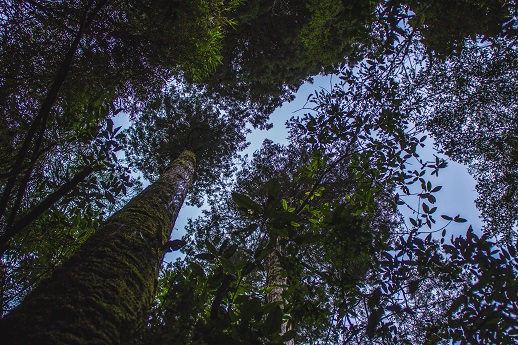
Temperate forests Temperate forests are found in eastern North America, northeastern Asia, and western and central Europe. The temperature of these regions ranges from -30°C to 30°C. The annual rainfall is about 150 cm and is even throughout the year. Most trees found here are deciduous, that is, they shed their leaves once a year (mostly in winter).
Temperate forests have well-defined winter and summer seasons.
Plants: Maple, oak, and elm.
Animals: Fox, bald eagle, mountain lion, bobcat, and black bear.

Preserving the genetic diversity of ancient trees

Even as we discover the incredible benefits of the world's most ancient trees, we are losing them to climate change.

In 2005, several of the centuries-old ponderosa pine trees on my 15 acres (0.06 sq km) of forest in the northern Rocky Mountains in Montana suddenly died. I soon discovered they were being brought down by mountain pine beetles, pernicious killers the size of the eraser on a pencil that burrow into the tree.

The next year the number of dying trees grew exponentially. I felt powerless and grief-stricken as I saw these giant, sky-scraping trees fading all around me, realising there was nothing I could do to stop it.

While the native bugs were the proximate cause, the underlying reason for the unprecedented mortality in my home state and throughout the Rockies was that winters had stopped getting really cold. When I first moved to Montana in the late 1970s, temperatures of -34C (-30F) or even below -40C (-40F) were common in winter, sometimes for weeks at a time. The coldest temperature on record in Montana is –57C (-70F). These days wintertime minimum temperatures rarely get below -18C (0F) or so. If they do, it is usually just for a day or two. That's not nearly cold enough to kill pine beetles, which make their own natural antifreeze.

The World's Oldest Living Trees

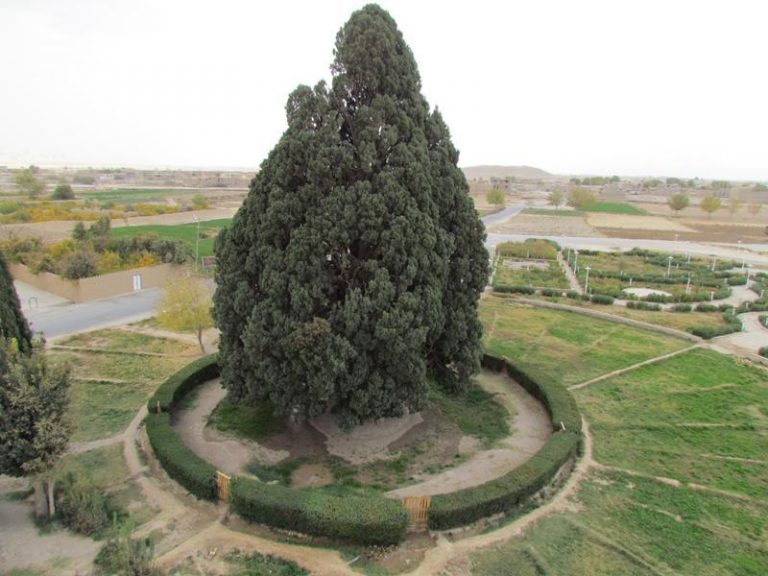
Cypress of Abarkuh in Iran
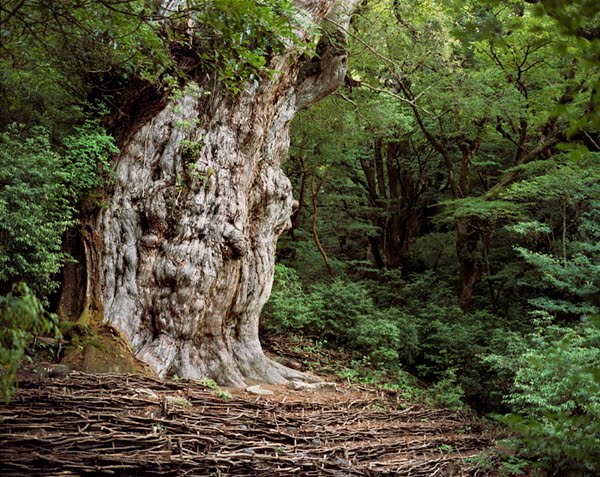
JŌMON SUGI Cryptomeria Tree Yakushima Japan - 2000 years old
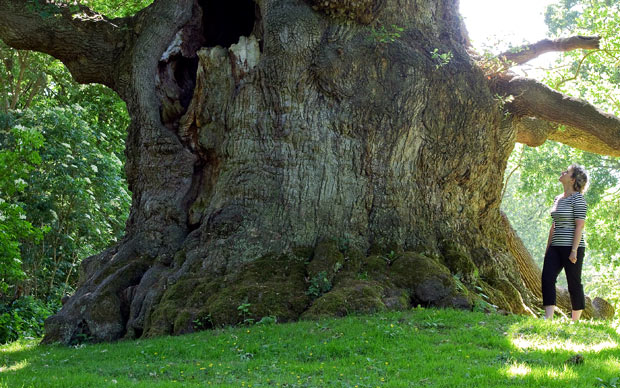
widest tree LLANGERNYW YEW in WALES - 4000 years old
widest tree - LLANGERNYW YEW in WALES - 4000 years old
Alerce_Milenario_or_Gran_Abuelo_cypress_tree_Fitzroya_Cupressoides_Andes_Mountains_South_America - 3640 years old
Old Tjikko Norway spruce tree Fulufjället Mountain Dalarna province Sweden - 9500 years old - world's oldest tree
Methuselah 5000 years old bristlecone pine tree White Mountains Inyo Nationa Forest California
Pando The Trembling Giant Quaking Aspen Utah - 1 million years old

Cypress of Abarkuh in Iran Cypress of Abarkuh in Iran The Zoroastrian Sarv also known as Sarv-e Abarqu or Cypress of Abarkuh, is a cypress tree in Central Iran, Yazd Province at Iranian National Movement. It is said to have lived for 4000 years, earning its title as the oldest living thing in the whole of Asia. JŌMON SUGI JŌMON SUGI Cryptomeria Tree Yakushima Japan - 2000 years old Jōmon Sugi is a large Cryptomeria tree of about 83-foot height and 53-foot girth, located on Yakushima, in Japan. It dates to the Jomon Period from which it gets its name. Calculated using tree’s growth ring, it is about 2000 years old, though some argue that the tree is over 7000 years old. LLANGERNYW YEW IN WALES widest tree LLANGERNYW YEW in WALES - 4000 years old Llangernyw yew is the oldest tree in Wales, as it is over 4,000-year-old.

Horrible extinction risk to plants - May 2016

Scientists have published their first global assessment of the state of the world's plants.

They warn that 21% of all plants are at risk of extinction and face a broad range of threats. The research was carried out by the Royal Botanic Gardens Kew in the UK.   See the full report:   here

Populations of some of the world's largest wild animals are dwindling, raising the threat of an "empty landscape", say scientists.


About 60% of giant herbivores - plant-eaters - including rhinos, elephants and gorillas, are at risk of extinction, according to research.

Analysis of 74 herbivore species, published in Science Advances, blamed poaching and habitat loss.

A previous study of large carnivores showed similar declines.

Prof William Ripple, of Oregon State University, led the research looking at herbivores weighing over 100kg, from the reindeer up to the African elephant.

"This is the first time anyone has analysed all of these species as a whole," he said.

"The process of declining animals is causing an empty landscape in the forest, savannah, grasslands and desert."
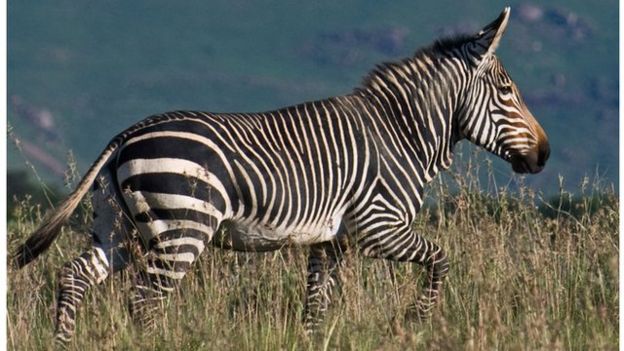
The threatened mountain zebra

The threatened mountain zebra

Prof David Macdonald, of Oxford University's Wildlife Conservation Research Unit, was among the team of 15 international scientists.

"The big carnivores, like the charismatic big cats or wolves, face horrendous problems from direct persecution, over-hunting and habitat loss, but our new study adds another nail to their coffin - the empty larder," he said.

"It's no use having habitat if there's nothing left to eat in it."

According to the research, the decline is being driven by a number of factors including habitat loss, hunting for meat or body parts, and competition for food and resources with livestock.

Deforestation leaves fish undersized and underfed

mountain-lake-canada

The role forest matter plays in aquatic food chains is a relatively recent discovery. Deforestation is reducing the amount of leaf litter falling into rivers and lakes, resulting in less food being available to fish, a study suggests. Researchers found the amount of food available affected the size of young fish and influenced the number that went on to reach adulthood. The team said the results illustrated a link between watershed protection and healthy freshwater fish populations. The findings have been published in Nature Communications. "We found fish that had almost 70% of their biomass made from carbon that came from trees and leaves instead of aquatic food chain sources," explained lead author Andrew Tanentzap from the University of Cambridge's Department of Plant Sciences. "While plankton raised on algal carbon is more nutritious, organic carbon from trees washed into lakes is a hugely important food source for freshwater fish, bolstering their diet to ensure good size and strength," he added. Dr Tanentzap observed: "Where you have more dissolved forest matter you have more bacteria, more bacteria equals more zooplankton. "Areas with the most zooplankton had the largest, fattest fish," he added, referring to the study's results. The team of scientists from Canada and the UK collected data from eight locations with varying levels of tree cover around Daisy Lake, Canada, which forms part of the boreal ecosystem.

Critically Endangered Northern Hairy Nosed Wombat

Critically Endangered Northern Hairy Nosed Wombat

Critically Endangered Northern Hairy Nosed Wombat. Scientists believe the number left in the world is about 200 – a slight increase from the mid 1980s when there were only 35 – but the northern hairy nosed wombats remain critically endangered, largely because of competition with cattle and sheep for food, as well as drought and dingo and feral dog attacks. Today, approximately 185 northern hairy nosed wombats reside at Epping Forest in Queensland, Australia, and another 15 live in the 105-hectare Richard Underwood Nature Refuge nearby, making these the only northern hairy nosed colonies in the world. Northern hairy nosed wombats can only be found in the wild; their shy natures making the nocturnal marsupials ill-prepared to cope with the stress of captivity. There are two other species of wombat, the common (or bare-nosed) wombat, which is not endangered and is found on the southeastern coast of Australia (in New South Wales, Victoria and Tasmania) and the southern hairy nosed wombat, which is endangered and is found in arid, sandy pockets in the southern part of Australia (in South Australia and Western Australia). The Northern hairy nosed wombat is the largest of all the three species, weighing up to 40kg and measuring about 1m long (the females are slightly heavier than the males). Wombats are often referred to as the engineers of the mammal world. Their burrows can be up to 90m long and are essential for helping the animals regulate their temperature and hide from predators. Wombats generally live alone in their burrows, but sometimes there are more than one.

Reptiles are going extinct

World's reptiles at risk of extinction


A mountain horned agama lizard


Many lizards are under threat, including the mountain horned agama of Sri Lanka


Almost a fifth of the world's reptile species are at risk of extinction, according to scientists.

Research led by the Zoological Society of London found that the future of 19% of the world's reptiles are threatened. Conservation experts also confirmed that 47% are vulnerable and highlighted the possible extinction of three species. The figures are based on a random sample of 1,500 of the world's reptile species. "It's essentially an election poll set up - using this sample to give an example of how reptiles are doing as a whole," explained Dr Monika Bohm, lead author of the study published in the journal Biological Conservation. The study was made in conjunction with 200 experts from the International Union for the Conservation of Nature's Species Survival Commission.


Lava lizard basks on the head of a marine iguana

Spoon-billed sandpipers threatened by trapping - China

Spoon-billed sandpipers threatened by trapping in China

Spoon-billed sandpiper feeding


Endangered spoon-billed sandpipers arriving at their wintering grounds in China are being threatened by nets designed to trap shorebirds.

The spoon-billed sandpiper is one of the world's rarest birds. Recent sightings of the bird at several new sites along the coast of southern China indicate the species is more widespread than thought. But the study also found evidence of large-scale shorebird trapping using "mist nets" in some of these key areas. Last month four spoon-billed sandpipers were sighted at new wintering grounds in Fucheng, south-west Guangdong Province: the latest evidence that the bird is migrating to more widespread areas in China than previously known.

 
Wonderful waders

Bittern

Members of the Hong Kong Bird Watching Society discovered a group of the critically endangered birds in partially drained fishponds in Fucheng.

Rhino poaching in South Africa reaches record levels

Rhino poaching in South Africa reaches record levels


dead rhino
 
A dead rhino is dehorned by a researcher in Zimbabwe.
 

Figures from the South African government indicate that poaching for rhinoceros has increased substantially in the last year.

A record 668 rhinos were killed for their horns in 2012, up almost 50% on the number for 2011. The majority of the animals were killed in the Kruger national park, the country's biggest wildlife reserve.


“Rhinos are being illegally killed...all for the frivolous use of their horns as a hangover cure” Sabri Zain TRAFFIC  

Experts say that growing demand for rhino horn in Asia is driving the slaughter.

Pages