Languages

species

English

Welcome to Extinction of Species .ORG

Welcome to Extinction of Species .ORG - the website dedicated to saving species from extinction - and in the process, saving ourselves and planet Earth! Please join us and participate. Publish, blog, translate, learn or teach - once you join you can create your own personal space on this site, and write or comment on anything you like. You can join groups of special interest and you can contact other members publically or privately. Extinction of Species .ORG wants to prevent all species from going extinct, and believes that the best way to save the planet is by saving its myriad species. As long as the tiger, lion, whale, bear, wolf, songbird, hummingbird, panda, leopard, jaguar, elephant, manatee, gorilla, rhino, eagle, condor, baboon, dolphin, sea lion, seal, hippo, cheetah, mountain lion, polar bear, humpback whale, camel, and all the other species survive; then planet Earth will support human life and continue to nurture life of all kinds, races, species and genome. Saving other species is not only the best way to save Humanity, Human Civilization, and our quality of life - it's the only way in the long term. Click on the "Read more" links at the bottom of each snippet to read each complete article, and find out why this is so. Time is of the essence, and Extinction is Forever if we're not in Time!

Humans Are Speeding Extinction and Altering the Natural World at an ‘Unprecedented’ Pace - 2019

WASHINGTON — Humans are transforming Earth’s natural landscapes so dramatically that as many as one million plant and animal species are now at risk of extinction, posing a dire threat to ecosystems that people all over the world depend on for their survival, a sweeping new United Nations assessment has concluded.

The 1,500-page report, compiled by hundreds of international experts and based on thousands of scientific studies, is the most exhaustive look yet at the decline in biodiversity across the globe and the dangers that creates for human civilization. A summary of its findings, which was approved by representatives from the United States and 131 other countries, was released Monday in Paris. The full report is set to be published this year.

Its conclusions are stark. In most major land habitats, from the savannas of Africa to the rain forests of South America, the average abundance of native plant and animal life has fallen by 20 percent or more, mainly over the past century. With the human population passing 7 billion, activities like farming, logging, poaching, fishing and mining are altering the natural world at a rate “unprecedented in human history.”

Birds Aren’t Just Declining. They’re Declining Faster - 2026.

Scientists studying data collected over more than three decades found accelerating losses. Their research offers clues about the causes.

Birds in the United States are not only declining, but they are declining faster, especially in areas with intensive agriculture, according to new research. Overall drops in bird population, measured from 1987 to 2021, were sharpest in warm and warming areas, suggesting that climate change may play a role.

The study, published on Thursday in the journal Science, shows only correlation with intensive agriculture and temperature, not causation. It does not factor in other circumstances that may be affecting birds along migratory routes or while they are overwintering. But it adds to an ever more robust body of evidence that birds — one of the best measured families of animals on Earth, and a sentinel for the health of other species — are not OK.

Whatever the specific drivers, the accelerating losses make sense given society’s focus on economic growth, which often comes at a cost to the natural world, said Peter P. Marra, an ornithologist and dean at Georgetown University who specializes in bird populations and was not involved with the new research.

“The American dream turns into the American nightmare as we start to look at what we’re doing to biodiversity and systems that we depend on as humans,” he said.

Three years left to limit warming to 1.5C, leading scientists warn - 2025

The Earth could be doomed to breach the symbolic 1.5C warming limit in as little as three years at current levels of carbon dioxide emissions.

That's the stark warning from more than 60 of the world's leading climate scientists in the most up-to-date assessment of the state of global warming.

Nearly 200 countries agreed to try to limit global temperature rises to 1.5C above levels of the late 1800s in a landmark agreement in 2015, with the aim of avoiding some of the worst impacts of climate change.

But countries have continued to burn record amounts of coal, oil and gas and chop down carbon-rich forests - leaving that international goal in peril.

Climate change has already worsened many weather extremes - such as the UK's 40C heat in July 2022 - and has rapidly raised global sea levels, threatening coastal communities.

"Things are all moving in the wrong direction," said lead author Prof Piers Forster, director of the Priestley Centre for Climate Futures at the University of Leeds.

"We're seeing some unprecedented changes and we're also seeing the heating of the Earth and sea-level rise accelerating as well."

These changes "have been predicted for some time and we can directly place them back to the very high level of emissions", he added.

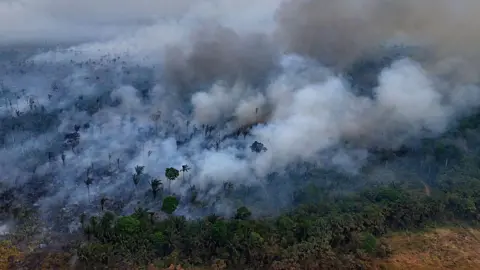
Tropical forests destroyed at fastest recorded rate in 2024


Getty Images Aerial shot of dense green rainforest with thick clouds of smoke rising up into the air

The world's tropical forests, which provide a crucial buffer against climate change, disappeared faster than ever recorded last year, new satellite analysis suggests.

Researchers estimate that 67,000 sq km (26,000 sq mi) of these pristine, old-growth forests were lost in 2024 – an area nearly as large as the Republic of Ireland, or 18 football pitches a minute.

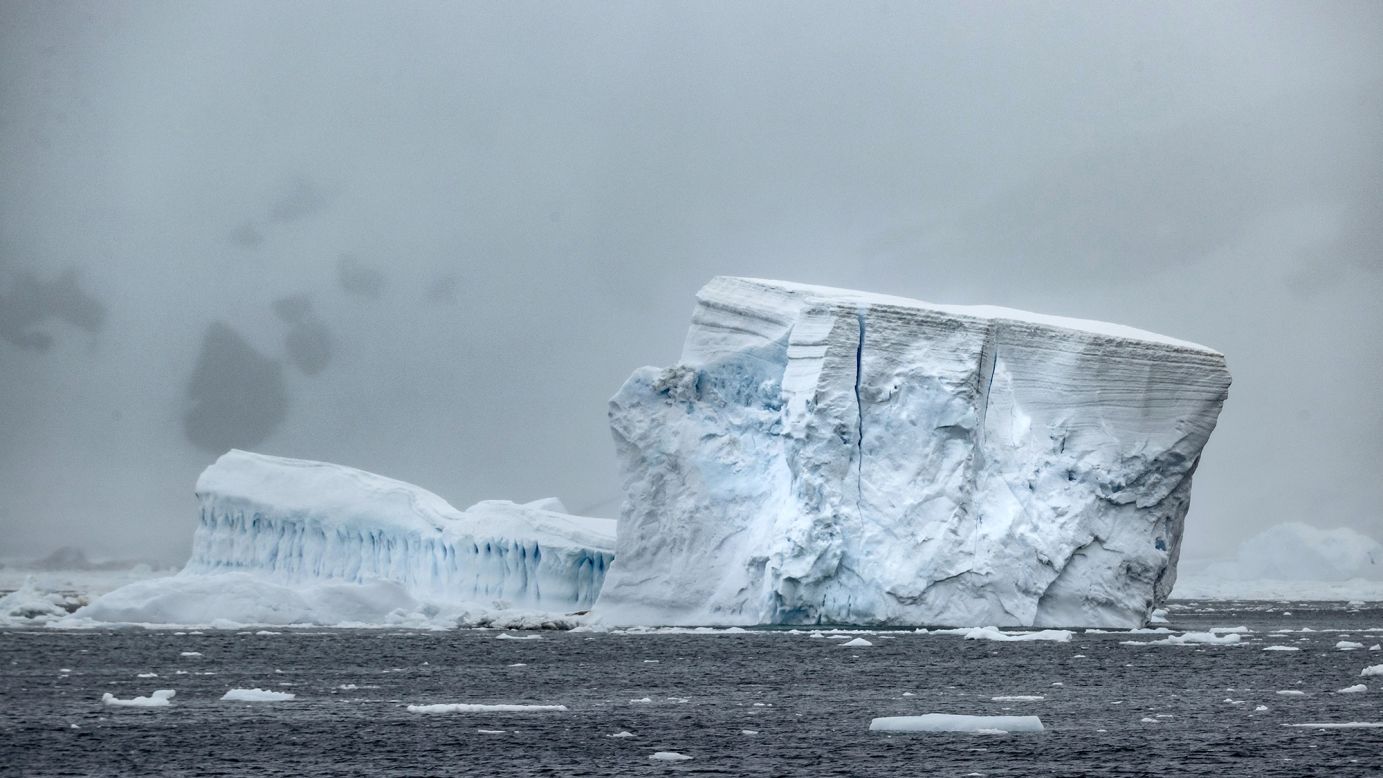
Global Ice Melt to Destroy World's Coastlines - 2025

The world’s ice sheets just got a dire prognosis, and coastlines are going to pay the price

Glaciers in Antarctica on February 7, 2022. A new study suggests even if the world meets its climate targets it may not be enough to save the planet's ice sheets.

Glaciers in Antarctica on February 7, 2022. A new study suggests even if the world meets its climate targets it may not be enough to save the planet's ice sheets. 


Celtic rainforest facing species extinction crisis - 2025


Ben Porter a pool of water beneath a thick forest with craggy branches and moss covered floors. they scene is partially reflected in the water

Temperate rainforest, seen here in the Vale of Ffestiniog, Gwynedd, is found in areas subject to the influence of the sea

An "extinction crisis" is happening in Britain's temperate rainforests where some of the world's rarest mosses, lichens and liverworts are vanishing, ecologists have warned.

Also known as Celtic rainforests, temperate rainforests are found primarily along the UK's western coasts.

US Reverses Course under Trump and other Countries follow suit, threatening the Planet - 2025

How Trump's 'drill, baby, drill' pledge is affecting other countries

Getty Images US President Donald Trump points after speaking during the Unleashing American Energy event at the Department of Energy in Washington DC, US

Trump has said the US's oil and gas will be sold all over the world

The UN climate summit in the United Arab Emirates in 2023 ended with a call to "transition away from fossil fuels". It was applauded as a historic milestone in global climate action.

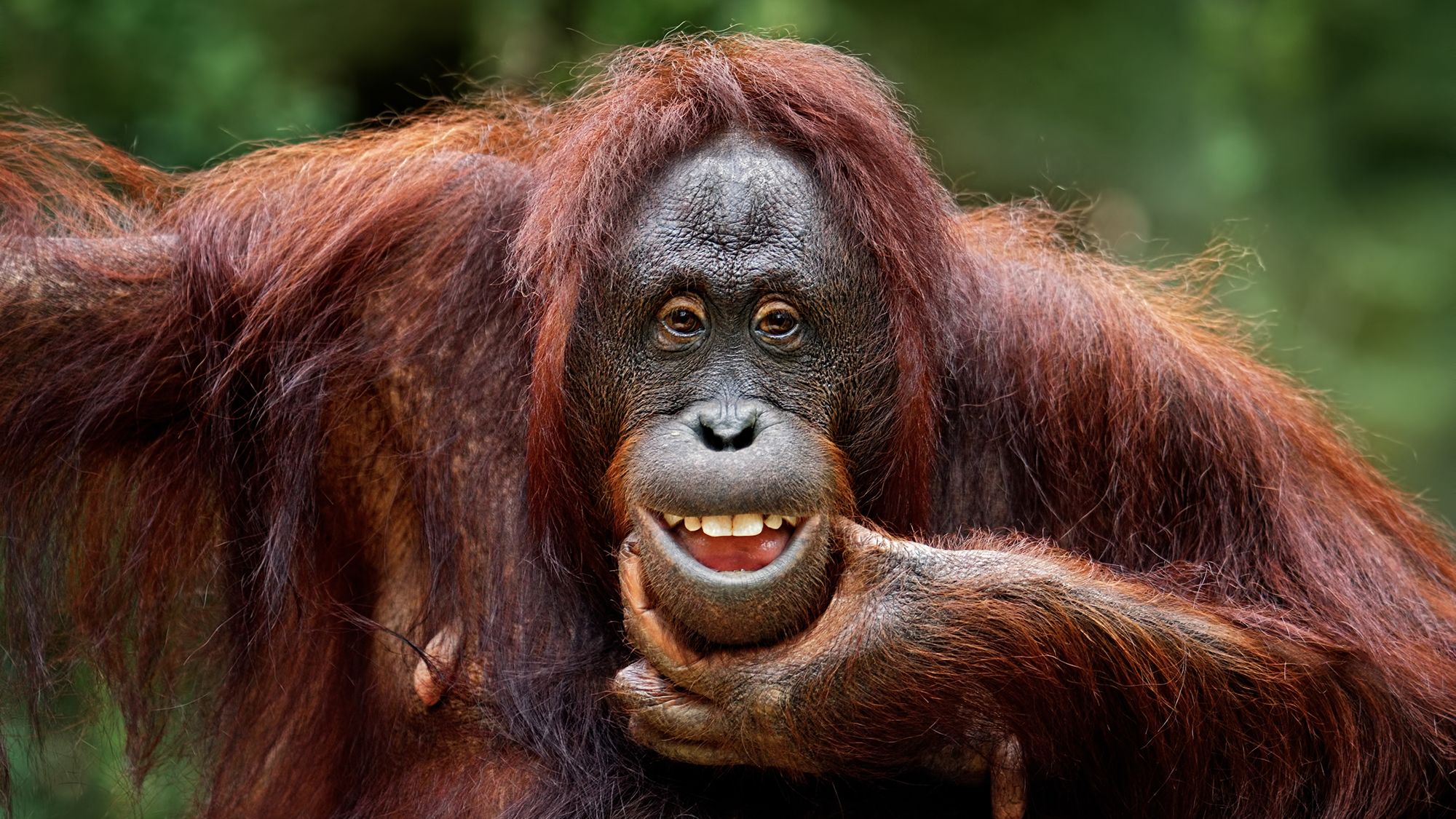
Great apes tease each other just like humans do, says new study

Great apes tease each other just like humans do, says new study


Scientists observed playful teasing in orangutans, chimpanzees, bonobos and gorillas.

[Scientists observed playful teasing in orangutans, chimpanzees, bonobos and gorillas.]


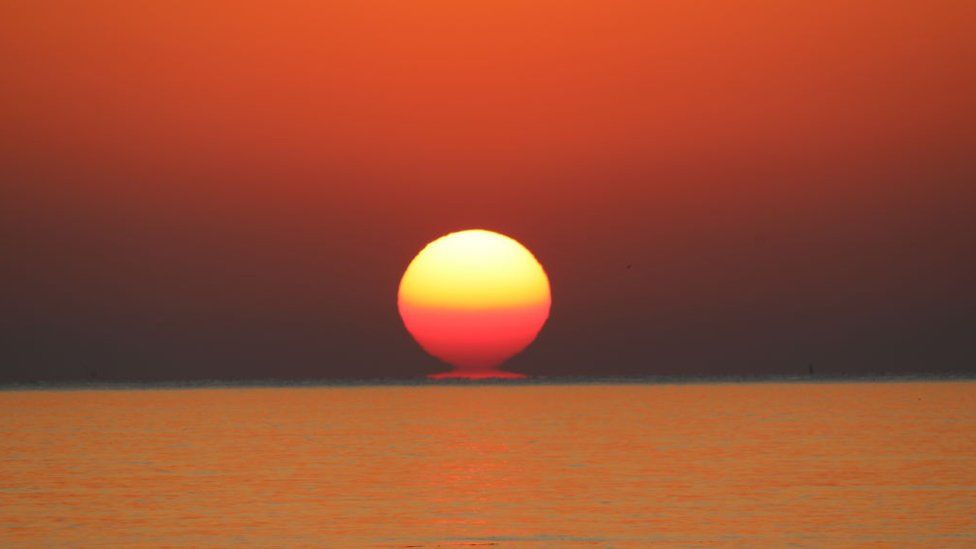
Climate change: recent, rapid ocean warming alarms scientists - 2023

sun over the oceabn

A recent, rapid heating of the world's oceans has alarmed scientists concerned that it will add to global warming.

This month, the global sea surface hit a new record high temperature. It has never warmed this much, this quickly.

Scientists don't fully understand why this has happened.

But they worry that, combined with other weather events, the world's temperature could reach a concerning new level by the end of next year.

Experts believe that a strong El Niño weather event - a weather system that heats the ocean - will also set in over the next months.

Pages