Languages

overdevelopment

English

When hungry elephants and people clash in a village

When hungry elephants and people clash in a village - human overpopulation and overdevelopment = destruction and loss of habitat which drives species to extinction.

An elephant prepares to "mock charge" the CATS Elephant Response Team's vehicle as the team attempt to drive it away from the town of Livingstone and back towards the Mosi-oa-Tunya National Park.

An elephant eyes the Elephant Response Team's vehicle as the team attempt to drive the animal away from the town of Livingstone in Zambia and back toward Mosi-oa-Tunya National Park.


The emergency call comes in just before midnight. In the driver's seat of a battered Toyota Hilux pickup truck, 29-year-old Chamunolwa Jimayi chats briefly with the caller. He hangs up the phone and shouts to his two colleagues in the back to hold on tight, then shoots off at high speed through the city center, careening around the traffic.

UN climate report: Scientists release 'survival guide' to avert climate disaster - 2023

UN climate report: Scientists release 'survival guide' to avert climate disaster

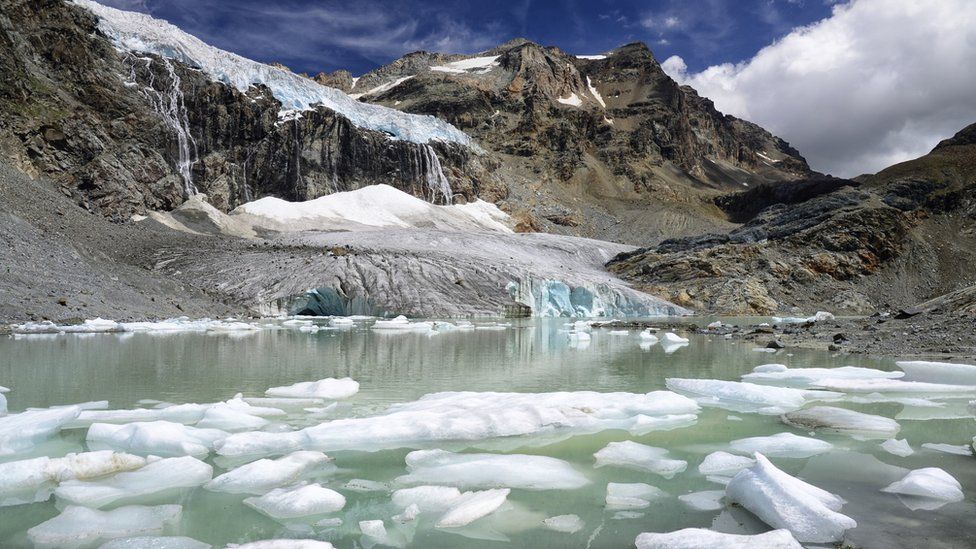
Scientists from the Intergovernmental Panel on Climate Change met in Switzerland where glaciers are melting

Scientists from the Intergovernmental Panel on Climate Change met in Switzerland where glaciers are melting


UN chief Antonio Guterres says a major new report on climate change is a "survival guide for humanity".

Clean energy and technology can be exploited to avoid the growing climate disaster, the report says.

Animal populations shrunk an average of 69% over the last half-century

Global animal populations are declining, and we've got limited time to try to fix it.

That's the upshot of a new report from the World Wildlife Fund and the Zoological Society of London, which analyzed years of data on thousands of wildlife populations across the world and found a downward trend in the Earth's biodiversity.

According to the Living Planet Index, a metric that's been in existence for five decades, animal populations across the world shrunk by an average of 69% between 1970 and 2018.

Not all animal populations dwindled, and some parts of the world saw more drastic changes than others. But experts say the steep loss of biodiversity is a stark and worrying sign of what's to come for the natural world.

"The message is clear and the lights are flashing red," said WWF International Director General Marco Lambertini.

According to the report's authors, the main cause of biodiversity loss is land-use changes driven by human activity, such as infrastructure development, energy production and deforestation.

Climate change may become the leading cause of biodiversity loss

Cattle graze near a fire in Amazonas, Brazil, on Sept. 22. A new report analyzed years of data on wildlife populations across the world and found a downward trend in the Earth's biodiversity.

Endangered Humans

Groups, Populations and Tribes of Humans are at risk of Extinction - and for the same major causes as animals: Human overpopulation, overdevelopment, pollution, global warming, and loss, decline and extinction of other species and habitat that Humans depend on for food, pollination, freshwater, rain and water purification, and temperature control.

Causes

Causes of Extinction include hunting, over-fishing, habitat loss, over-population, climate change, global warming, pollution and more.

Unsustainable logging, fishing and hunting 'driving extinction' - 2022

One in five people around the world rely on wild animals, plants and fungi for food and livelihoods, according to a landmark assessment.

But many wild species are not being harvested sustainably, putting food security at risk, the report found.

In 2019, experts estimated that one million plants and animals could go extinct in coming decades.

And much of this is being driven by unsustainable fishing, hunting and logging.

Now a new report by the same influential body concludes that the sustainable use of wild species is critical for people and nature.

And climate change and increased demand is likely to push more species to the brink, putting food security at risk.

The Intergovernmental Science-Policy Platform on Biodiversity and Ecosystem Services (IPBES) is conservation scientists' equivalent of the IPCC group of climate scientists.

Their most recent assessment, approved by 139 countries in Bonn, Germany, focuses on how fishing, hunting and logging can be carried out more sustainably without damaging biodiversity and food security.

It found that billions of people across the world rely on 50,000 species of wild animals, plants and fungi for food, medicine, fuel, income and other purposes.

The assessment paints a picture of widespread exploitation of nature, with about a third of wild fish in the ocean overfished, more than 10% of wild trees threatened by unsustainable logging, and more than 1,300 mammals pushed to extinction by unsustainable hunting.

Chemicals

Chemical pollution and waste is now found everywhere on Earth - from the Artic to the Antartic. From Mount Everest to the bottom of the seas. Chemical pollution ends up in the food chain, and in our drinking water. Chemical pollution kills and damages myriad species and forms of life, and it is believed to be a cause of cancer in humans.

Rubber plantations destroying biodiversity and forcing habitat loss for endangered birds, bats and primates in Southeast Asia

The global demand for rubber tyres is threatening protected forests in Southeast Asia, according to a study. Tropical forests are being cleared for rubber plantations, putting endangered birds, bats and primates at risk, say UK researchers. By 2024, up to 8.5 million hectares of new rubber plantations will be needed to meet demand, they report in Conservation Letters. This could have a "catastrophic" impact on wildlife, they warn. Species such as the endangered white-shouldered ibis, yellow-cheeked crested gibbon and clouded leopard could lose precious habitat, said the team led by Eleanor Warren-Thomas, from the School of Environmental Sciences at the University of East Anglia. Also, the banteng, which is found in the forests of Cambodia. There's a lot we can do as scientists and the public to make rubber production more wildlife-friendly. "The tyre industry consumes 70% of all natural rubber grown, and rising demand for vehicle and aeroplane tyres is behind the recent expansion of plantations. But the impact of this is a loss of tropical biodiversity," she said. "We predict that between 4.3 and 8.5 million hectares of new plantations will be required to meet projected demand by 2024. This will threaten significant areas of Asian forest, including many protected areas." Eight-point-five million hectares is about the size of the land area of Austria. Biodiversity concern Rubber is the most rapidly expanding tree crop within mainland Southeast Asia.

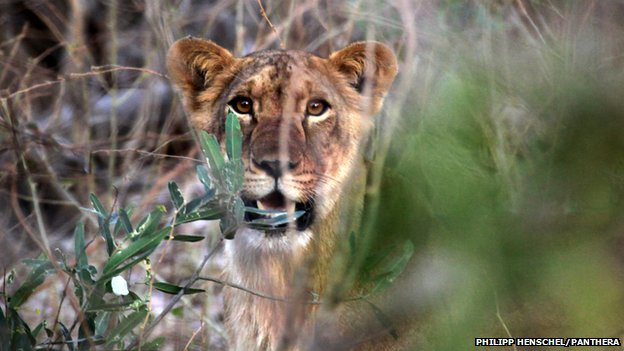
Lions facing extinction in West Africa

lion cub Nigeria
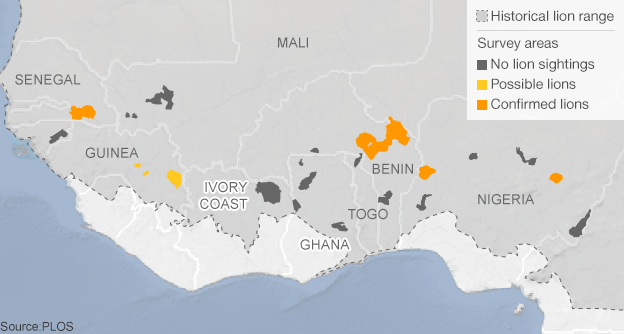
map of west africa's lions 2013

Lions facing extinction in West Africa. There has been a catastrophic collapse in the number of lions in West Africa, with only around 400 left in the region, a new survey suggests. With fewer than 250 mature lions of breeding age, there are concerns the entire population could disappear. The research by Panthera, a non-profit organisation, was carried out in 17 countries, from Senegal to Nigeria, and took more than six years. West African lions are genetically distinct from others in Africa. In 2005, West African lions were believed to live in 21 different protected areas. But the survey, published in the scientific journal PLOS One, suggests lions now exist in just four of those sites. The report says lions now roam in just 1.1% of their historic range in West Africa. The majority of their habitat has been converted for agricultural use, says Philipp Henschel, co-author of the report. Panthera is calling for the lion to be listed as critically endangered in West Africa: all but a few of the areas we surveyed were basically paper parks, having neither management budgets nor patrol staff, and had lost all their lions and other iconic large mammals. The conservation of lions in West Africa have been largely neglected, whereas in eastern and southern Africa where millions of dollars a year are spent. The researchers discovered that West African lions now survive in only five countries; Senegal, Nigeria and a single trans-frontier population on the shared borders of Benin, Niger and Burkina-Faso.

Nicaragua Bosawas Biosphere Reserve under threat from illegal logging

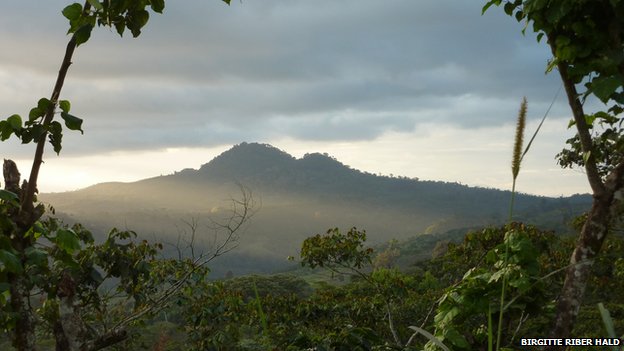
Bosawas-biosphere-reserve-nicaragua-rainforest-diversity-logging-development-threat
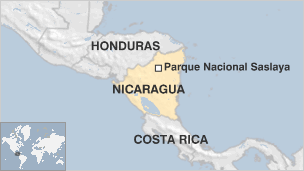
Saslaya-National Park Bosawas Bioshpere Reserve Nicaragua Map

Nicaragua cloud forest 'under siege' by illegal loggers. Bosawas forest - the Bosawas Reserve is a critically important rainforest but native people say it is being destroyed by "colonists" A famed rainforest in Nicaragua is under growing threat from illegal loggers, say indigenous leaders. The Bosawas Biosphere Reserve is Central America's largest tropical forest with clouds constantly drifting over the hilly terrain. But the Mayangna and Miskito people who live there say 30,000 hectares a year are being deforested by "colonists". They are calling on US president Barack Obama, who is visiting the region, to support their battle. Described by the United Nations as a global biological treasure, the reserve is located on the border between Nicaragua and Honduras and teems with wildlife. “We believe that if there is no intervention there will be no Biosphere Reserve in five to 10 years” Taymond Robins, Mayangna people The two million hectares are said to be home to 150,000 insect species, rare jaguars, eagles and crocodiles as well as the world's last populations of Baird's Tapir and the Central American Spider Monkey. Landless invaders The Bosawas reserve also overlaps the homes of indigenous communities who have been there for centuries, living by hunting and fishing. The Nicaraguan government recognised the full legal title of the Mayangna to their lands in 2007. Since then, they say they have been subject to what they term an "invasion" by landless people from other parts of the country.

Email Addresses