Languages

Large Carnivores

English

Populations of some of the world's largest wild animals are dwindling, raising the threat of an "empty landscape", say scientists.


About 60% of giant herbivores - plant-eaters - including rhinos, elephants and gorillas, are at risk of extinction, according to research.

Analysis of 74 herbivore species, published in Science Advances, blamed poaching and habitat loss.

A previous study of large carnivores showed similar declines.

Prof William Ripple, of Oregon State University, led the research looking at herbivores weighing over 100kg, from the reindeer up to the African elephant.

"This is the first time anyone has analysed all of these species as a whole," he said.

"The process of declining animals is causing an empty landscape in the forest, savannah, grasslands and desert."
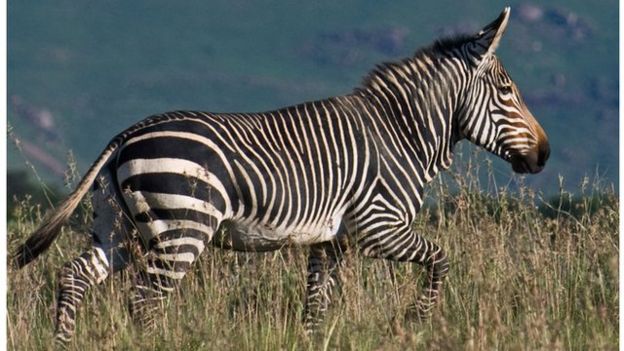
The threatened mountain zebra

The threatened mountain zebra

Prof David Macdonald, of Oxford University's Wildlife Conservation Research Unit, was among the team of 15 international scientists.

"The big carnivores, like the charismatic big cats or wolves, face horrendous problems from direct persecution, over-hunting and habitat loss, but our new study adds another nail to their coffin - the empty larder," he said.

"It's no use having habitat if there's nothing left to eat in it."

According to the research, the decline is being driven by a number of factors including habitat loss, hunting for meat or body parts, and competition for food and resources with livestock.

Project to protect rare Burmese monkey gets new funding

Burmese snub-nosed monkey photographed by a camera trap
Burmese snub-nosed monkey photographed by a camera trap in May 2011
 

A conservation project to help

protect the rare Burmese snub-nosed monkey is one of 33 to get a share of UK Government funding. The species was photographed for the first time last year. The project, led by Fauna and Flora International (FFI), will try to establish how many of the monkeys are left and how best to protect them. The money comes from a long-term scheme called the Darwin Initiative. The Burmese snub-nosed monkey was described scientifically for the first time in 2010 from a dead specimen collected by a local hunter. In May 2011 researchers working in northern Burma captured the first pictures of the species in its natural habitat. A team from FFI, Biodiversity and Nature Conservation Association (Banca), and People Resources and Conservation Foundation (PRCF) took the images using camera traps.


Big Cats - Mountain Lions, Panthers, Jaguars, Tigers and Cheetahs

Of the nearly forty feline, or cat, species, only one—the domestic cat—is believed to be secure. As undeveloped land becomes harder to find, large cats, such as lions, panthers, tigers, jaguars, and cheetahs, are left with less and less natural habitat in which to live.

Email Addresses