Languages

illegal logging

English

Global Deforestation Summary - 2022

Deforestation: Which countries are still cutting down trees?

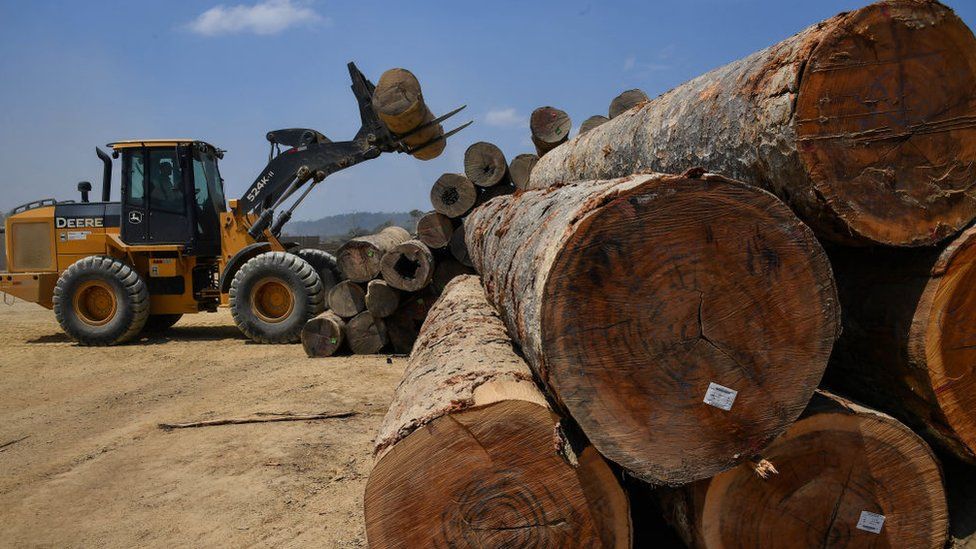
Logs from the Amazon

World leaders have pledged to end and reverse deforestation by 2030.

But in Brazil's Amazon rainforest it has hit its highest level in over 15 years - and progress elsewhere is challenging.

Brazil: Illegal logging continues

Some 60% of the Amazon rainforest is in Brazil, and it plays a vital role in absorbing harmful CO2 that would otherwise escape into the atmosphere.

Amazon and Global Deforestation rose in 2013

Brazil says Amazon deforestation rose 28% in a year

Brazil Environment minister Izabella Teixeira
Minister Izabella Teixeira says she will tackle the problem with local authorities.

Brazil says the rate of deforestation in the Amazon increased by 28% between August 2012 and last July, after years of decline. The government is working to reverse this "crime", Environment Minister Izabella Teixeira said. Activists have blamed the increase in destruction on a controversial reform to Brazil's forest protection law. Last year Brazil reported the lowest rate of deforestation in the Amazon since monitoring began. The provisional statistics from August 2012 to last July suggest that the area suffering deforestation was 5,843 sq km (2,255 sq miles), compared to 4,571 sq km (1,765 sq miles) in the previous 12 months. The 28% rise interrupts a period of declining deforestation which began in 2009. However, it still remains the second lowest annual figure for forest loss in absolute terms. The worst year on record was 2004, when 27,000 sq km of forest was destroyed. Monthly data from several scientific institutions had suggested the deforestation rate might be on the rise.

Just 227 tree species dominate Amazon - 11,000 endangered tree species

Just 227 tree species dominate Amazon

Researchers were surprised to find that such a small proportion of species dominated the Amazon . Despite being home to about 16,000 tree species, just 227 "hyperdominant" species account for half of Amazonia's total trees, a study suggests. An international team of researchers found that the region was, in total, home to an estimated 390 billion trees. Writing in Science, they added that the rarest 11,000 species made up only 0.12% of tree cover. However, they added that the new data could help unlock ecological secrets held by the biodiversity hotspot.

The results were based on a survey of 1,170 plots and half-a-million trees across the six-million-square-kilometre area, often described as the lungs of the world. The authors said that the underlying cause of the hyper dominance of the 227 species, which accounted for 1.4% of the estimated number of species in the region, remained unknown. "We knew that, normally, a few species dominate ecosystems, but if you have a system that has 16,000 tree species but just 227 make up half of the trees, that was pretty surprising even for us," said lead author Dr Hans ter Steege from the Naturalis Biodiversity Center in the Netherlands. He told the Science podcast: "We don't really know why these species are so incredibly dominant because they do not have any particular ecological feature that stands out."

Nicaragua Bosawas Biosphere Reserve under threat from illegal logging

Bosawas-biosphere-reserve-nicaragua-rainforest-diversity-logging-development-threat
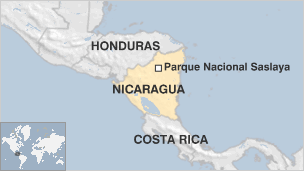
Saslaya-National Park Bosawas Bioshpere Reserve Nicaragua Map

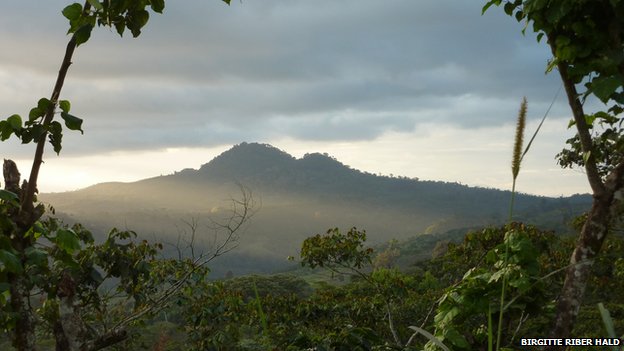
Nicaragua cloud forest 'under siege' by illegal loggers. Bosawas forest - the Bosawas Reserve is a critically important rainforest but native people say it is being destroyed by "colonists" A famed rainforest in Nicaragua is under growing threat from illegal loggers, say indigenous leaders. The Bosawas Biosphere Reserve is Central America's largest tropical forest with clouds constantly drifting over the hilly terrain. But the Mayangna and Miskito people who live there say 30,000 hectares a year are being deforested by "colonists". They are calling on US president Barack Obama, who is visiting the region, to support their battle. Described by the United Nations as a global biological treasure, the reserve is located on the border between Nicaragua and Honduras and teems with wildlife. “We believe that if there is no intervention there will be no Biosphere Reserve in five to 10 years” Taymond Robins, Mayangna people The two million hectares are said to be home to 150,000 insect species, rare jaguars, eagles and crocodiles as well as the world's last populations of Baird's Tapir and the Central American Spider Monkey. Landless invaders The Bosawas reserve also overlaps the homes of indigenous communities who have been there for centuries, living by hunting and fishing. The Nicaraguan government recognised the full legal title of the Mayangna to their lands in 2007. Since then, they say they have been subject to what they term an "invasion" by landless people from other parts of the country.

Yanomami tribe in Brazilian Amazon going extinct

Miners' attack on Yanomami Amazon tribe 'kills dozens'


The Yanomami have previously complained of attacks by illegal miners
 

An attack by gold miners on a group

Global alliance aims to tackle forest crime - illegal logging and timber trafficking

Global alliance aims to tackle forest crime

 AP)


Illegal logging damages biodiversity and undermines people's livelihoods.


Interpol and the United Nations have joined forces to launch an initiative to tackle global forest crime.

Nicaragua to stop deforestation with eco-soldiers


Eco Battalion forces confiscate illegal lumber - Nicaraguan army photo   The Ecological Battalion is part of efforts to protect Nicaragua's natural resources

Deep inside the verdant and sweltering vegetation of Nicaragua's Mosquito

Email Addresses