Languages

Human overpopulation

English

Last male of his kind: The rhino that became a conservation icon


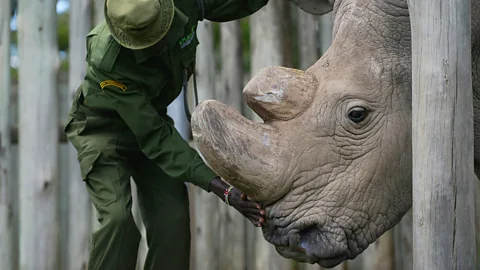
Getty Images The last male northern white rhino Sudan at the Ol Pejeta conservancy Kenya (Getty Images)

Tony Karumba's photo of Sudan with his carer made the rhino a global sensation in his final year

Sudan, the world's last male northern white rhino, died in 2018. In his final years, he became a global celebrity and conservation icon, helping raise awareness about the brutality of poaching.

"Pronatilism" Debunked!

Some misguided people, today, who may call themselves "pronatalist", and who look at future predictions of negative population growth (meaning that population will decrease in the future, instead of continuing to increase), and see this as a problem, are wrong or are not thinking clearly. Some of them may believe that African and Arab and Asian populations are in the process of "replacing" or at least are overtaking the Caucasian, European-based ethnicities that have traditionally been the majority of the population in countries like the US, the UK, Europe, Canada, Australia and New Zealand; and they are right - this is indeed happening, as is the Hispanicization of the US population because of such massive immigration. And they are right to be concerned about this. In a century there may be no nations left on Earth where Caucasians of European ancestry are the majority of the population if immigration is not stopped. And this is a problem. There will be African majority countries, Asian majority countries, Arab majority countries, Hispanic majority countries, but there will not be any Caucasian of European ancestry majority countries left if we do not take action now.

Major report connects the world's environmental challenges - 2024

Major report connects the world's environmental challenges

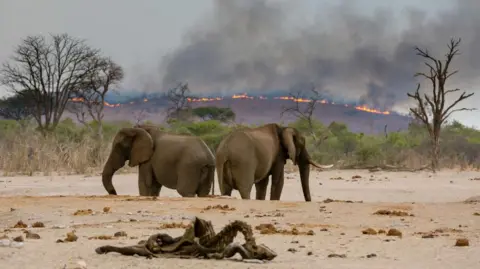
Getty African elephants at a watering hole with a fire in the distance

Issues like climate chante, biodiversity and water are all interlinked, the report says

Climate change, nature loss and food insecurity are all inextricably linked and dealing with them as separate issues won't work, a major report has warned.

The 6th Great Extinction is Happening Now - 2024

'The sixth great extinction is happening', conservation expert warns

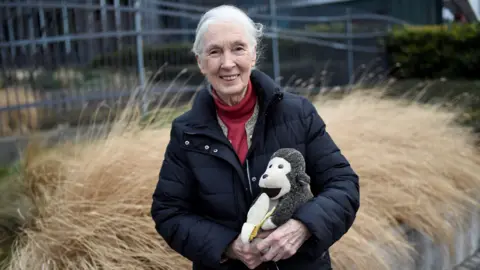
Getty Images Dr. Jane Goodall with her beloved stuffed monkey, Mr. H

Dr. Jane Goodall with her toy monkey, Mr. H, a decades-long travel companion

With her signature shawl draped over her shoulders and silver hair pulled back from her face, Jane Goodall exudes serenity - even over our slightly blurry video call.

In a Vienna hotel room, a press team and a small group of filmmakers, who are documenting her latest speaking tour, fuss around her.

NASA Space Mission Takes Stock of Carbon Dioxide Emissions by Countries

NASA Space Mission Takes Stock of Carbon Dioxide Emissions by Countries


How rangers are using AI to help protect India's tigers in 2022

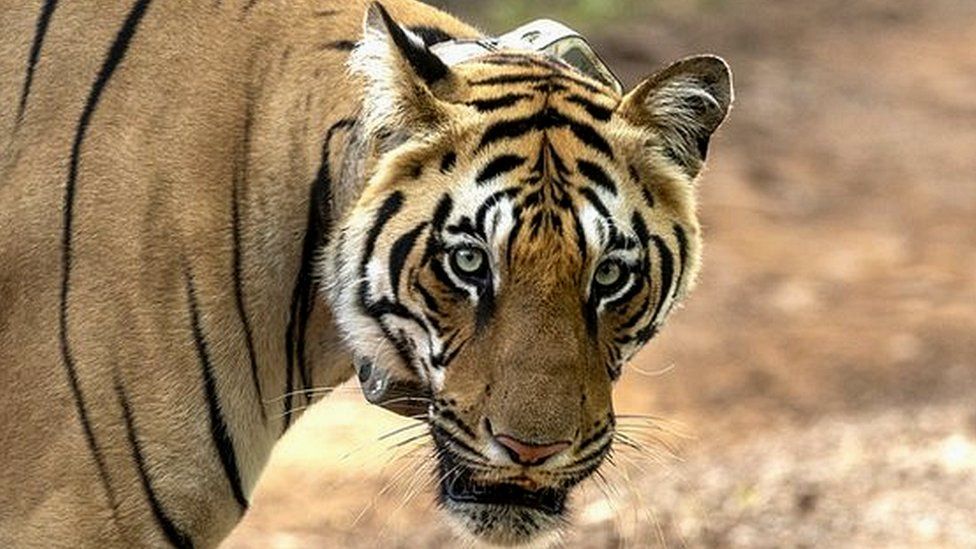
Indian tiger

India has around 3,000 tigers


For 22 years vet, Akhilesh Mishra has been treating animals at Pench National Park in Madhya Pradesh state in India.

He does not hesitate to name the tiger as his favourite animal. "They are so magnificent and beautiful. I just need to feel their soft skin to feel relaxed" he says. "!When I treat an injured tiger and then they are able to go back to forest, it is an out of this world experience."

A tiger's life is not easy, he says, particularly for the females: "For me the tigress is much stronger than the male tiger. She fights so fearlessly for her cubs. She is a goddess - ready to take on a huge tiger who tries to harm her cubs."

Endangered Humans

Groups, Populations and Tribes of Humans are at risk of Extinction - and for the same major causes as animals: Human overpopulation, overdevelopment, pollution, global warming, and loss, decline and extinction of other species and habitat that Humans depend on for food, pollination, freshwater, rain and water purification, and temperature control.

Unsustainable logging, fishing and hunting 'driving extinction' - 2022

One in five people around the world rely on wild animals, plants and fungi for food and livelihoods, according to a landmark assessment.

But many wild species are not being harvested sustainably, putting food security at risk, the report found.

In 2019, experts estimated that one million plants and animals could go extinct in coming decades.

And much of this is being driven by unsustainable fishing, hunting and logging.

Now a new report by the same influential body concludes that the sustainable use of wild species is critical for people and nature.

And climate change and increased demand is likely to push more species to the brink, putting food security at risk.

The Intergovernmental Science-Policy Platform on Biodiversity and Ecosystem Services (IPBES) is conservation scientists' equivalent of the IPCC group of climate scientists.

Their most recent assessment, approved by 139 countries in Bonn, Germany, focuses on how fishing, hunting and logging can be carried out more sustainably without damaging biodiversity and food security.

It found that billions of people across the world rely on 50,000 species of wild animals, plants and fungi for food, medicine, fuel, income and other purposes.

The assessment paints a picture of widespread exploitation of nature, with about a third of wild fish in the ocean overfished, more than 10% of wild trees threatened by unsustainable logging, and more than 1,300 mammals pushed to extinction by unsustainable hunting.

Overdevelopment = Habitat Loss

Human overpopulation leads to overdevelopment of the natural world. Human overdevelopment of the natural world causes terrible damage to Nature, the Earth and the environment. It causes habitat loss, which causes all forms of life to become extinct - plants, animals, insects, as well as human populations. This habitat loss, along with pollution causes critical losses of genetic biodiversity and threatens our very survival on planet earth.

World's wilderness reduced by a tenth since 1990s - 2015

wilderness lost from 1993 to 2015 worldwide

A tenth of the world's wilderness has vanished in the past two decades, research shows. New maps show "alarming losses" of pristine landscapes, particularly in South America and Africa, according to World Conservation Society scientists. They argue in Current Biology that wild areas are ignored in international conservation agreements, despite their ecological and cultural value.

About 20% of the world's land area is classed as wilderness. By this, scientists mean landscapes free of large-scale human disturbances such as housing, development and industry. The majority of these untouched spaces are found in North America, north Asia, north Africa and Australia. They are often home to indigenous peoples as well as endangered plants and animals.

James Watson of the University of Queensland, Australia, and the US Wildlife Conservation Society in New York said wilderness areas "are completely ignored in environmental policy". "International policy mechanisms must recognise the actions needed to maintain wilderness areas before it is too late," said Prof Watson. "We probably have one to two decades to turn this around."

Pages

Email Addresses