Languages

habitat loss

English

Tropical forests destroyed at fastest recorded rate in 2024


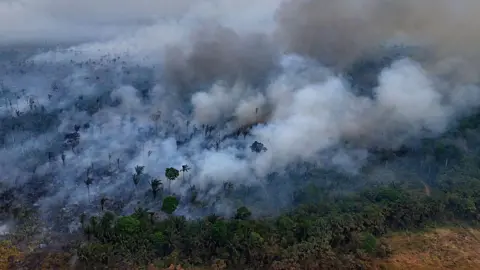
Getty Images Aerial shot of dense green rainforest with thick clouds of smoke rising up into the air

The world's tropical forests, which provide a crucial buffer against climate change, disappeared faster than ever recorded last year, new satellite analysis suggests.

Researchers estimate that 67,000 sq km (26,000 sq mi) of these pristine, old-growth forests were lost in 2024 – an area nearly as large as the Republic of Ireland, or 18 football pitches a minute.

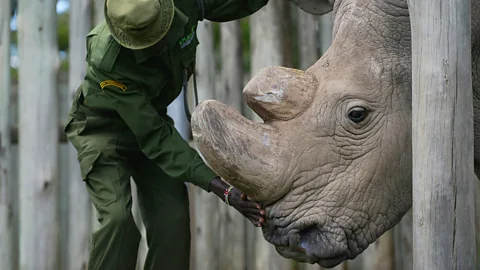
Last male of his kind: The rhino that became a conservation icon


Getty Images The last male northern white rhino Sudan at the Ol Pejeta conservancy Kenya (Getty Images)

Tony Karumba's photo of Sudan with his carer made the rhino a global sensation in his final year

Sudan, the world's last male northern white rhino, died in 2018. In his final years, he became a global celebrity and conservation icon, helping raise awareness about the brutality of poaching.

When hungry elephants and people clash in a village

When hungry elephants and people clash in a village - human overpopulation and overdevelopment = destruction and loss of habitat which drives species to extinction.

An elephant prepares to "mock charge" the CATS Elephant Response Team's vehicle as the team attempt to drive it away from the town of Livingstone and back towards the Mosi-oa-Tunya National Park.

An elephant eyes the Elephant Response Team's vehicle as the team attempt to drive the animal away from the town of Livingstone in Zambia and back toward Mosi-oa-Tunya National Park.


The emergency call comes in just before midnight. In the driver's seat of a battered Toyota Hilux pickup truck, 29-year-old Chamunolwa Jimayi chats briefly with the caller. He hangs up the phone and shouts to his two colleagues in the back to hold on tight, then shoots off at high speed through the city center, careening around the traffic.

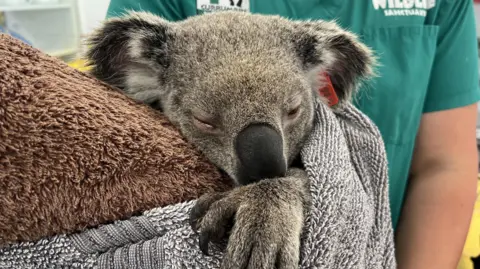
Chlamydia could make koalas extinct. 2024

Chlamydia could make koalas extinct. Can a vaccine save them in time?

Tiffanie Turnbull/BBC A drowsy koala wrapped in a towel and held by a vet

Joe Mangy is one of thousands of koalas treated for chlamydia each year

On the table, unconscious and stretched out on a pillow, Joe Mangy looks deceptively peaceful. The koala's watery, red-rimmed eyes are the only sign of the disease at war with his body.

Tubes snarl out of a mask covering his face as a vet tech listens to his chest with a stethoscope. He is not healing as well as they had hoped.

Politicians not doing enough to stop biodiversity crisis. COP 16 2024 UN Biodiversity Summit in Cali.

Politicians not ambitious enough to save nature, say scientists

A delegate at the UN biodiversity summit, COP 16

UN biodiversity summits happen every two years - this year in Cali, Colombia

Scientists say there has been an alarming lack of progress in saving nature as the UN biodiversity summit, COP 16, draws to a close.

The scale of political ambition has not risen to the challenge of reducing the destruction of nature that costs the economy billions, said one leading expert.

What is biodiversity and how are we protecting it?


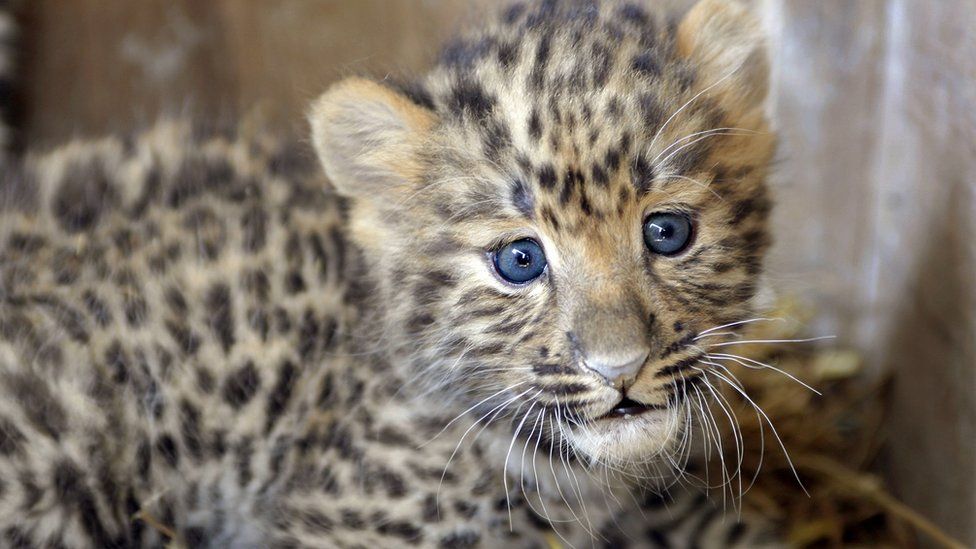
Baby Amur leopard also known as the Manchurian leopard, at the Parc des felins, in Nesles, south-eastern Paris.

Amur leopards are one of the most endangered species in the world


Targets to reverse the decline of biodiversity by 2030 may be missed without urgent action, according to a new report.

This goal was a key part of the UN global summit on biodiversity held in December 2022.

Nearly a third of all monitored species are currently endangered due to human activities.

Biodiversity targets may be slipping out of reach - 2023

White stork

The researchers studied more than 600 species of birds and mammals


Ambitious targets to halt the decline in nature may already be slipping out of reach, a study suggests.

Scientists say the effects of climate change and habitat loss on animal populations have been underestimated.

They say bringing back wildlife may take longer than expected and that unless we act now global biodiversity targets will be out of reach.

In December almost 200 countries agreed to halt the decline in nature by the end of the decade.

Cheetahs to prowl India for first time in 70 years

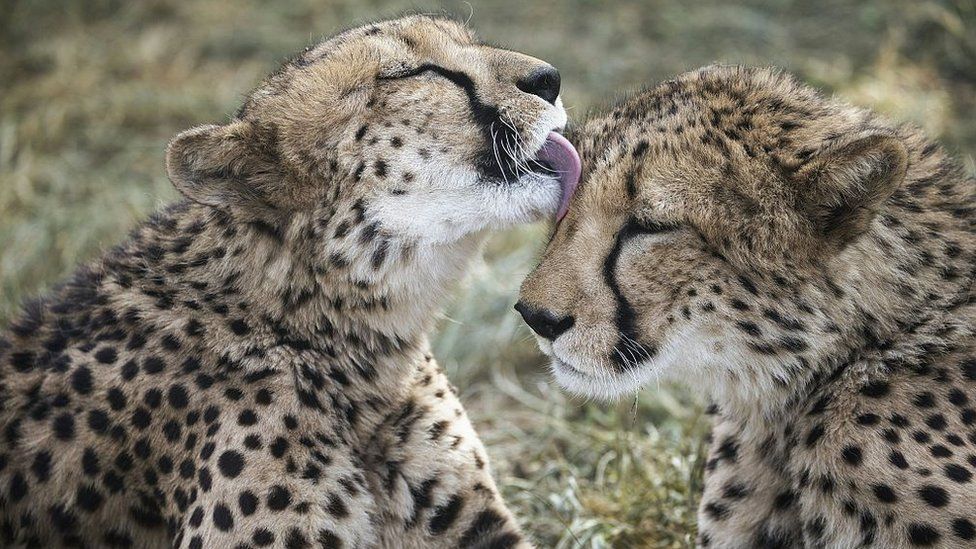
A captive cheetah licks her sibling in an enclosure at the Cheetah Conservation Fund in Otjiwarongo, Namibia, on February 18, 2016.

Namibia has one of the world's largest populations of cheetahs


For the first time in 70 years, India's forests will be home to cheetahs.

Eight of them are set to arrive in August from Namibia, home to one of the world's largest populations of the wild cat.

Their return comes decades after India's indigenous population was declared officially extinct in 1952.

The world's fastest land animal, the cheetah can reach speeds of 70 miles (113km) an hour.

Australia's environment in 'shocking' decline, report finds

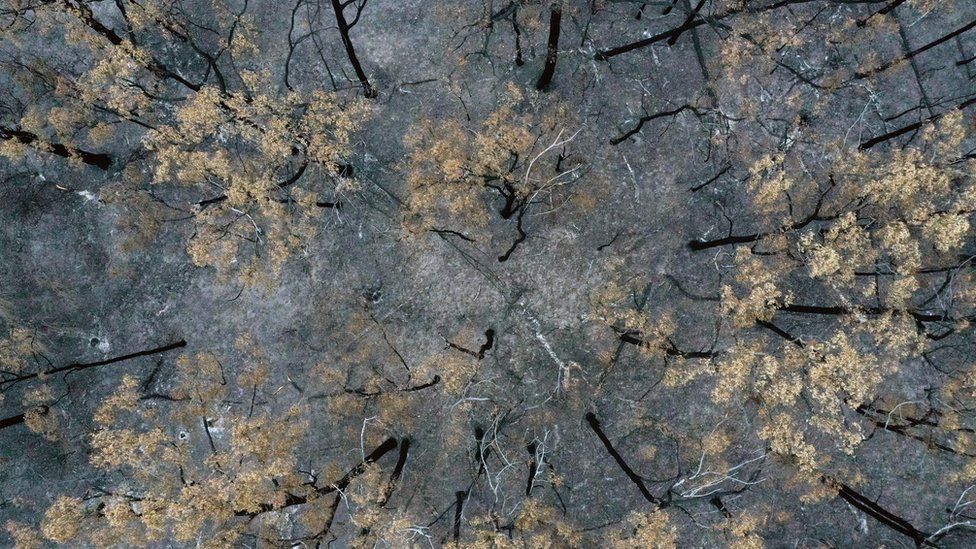
Overhead view of trees destroyed by bushfires in Australia

Australia has suffered a litany of natural disasters in recent years including historic bushfires


Australia's environment is in a shocking state and faces further decline from amplifying threats, according to an anticipated report.

The survey of Australia's ecological systems - conducted every five years - found widespread abrupt changes.

These can be blamed on climate change, habitat loss, invasive species, pollution and mining, it said.

The threats are not being adequately managed - meaning they are on track to cause more problems.

Unsustainable logging, fishing and hunting 'driving extinction' - 2022

One in five people around the world rely on wild animals, plants and fungi for food and livelihoods, according to a landmark assessment.

But many wild species are not being harvested sustainably, putting food security at risk, the report found.

In 2019, experts estimated that one million plants and animals could go extinct in coming decades.

And much of this is being driven by unsustainable fishing, hunting and logging.

Now a new report by the same influential body concludes that the sustainable use of wild species is critical for people and nature.

And climate change and increased demand is likely to push more species to the brink, putting food security at risk.

The Intergovernmental Science-Policy Platform on Biodiversity and Ecosystem Services (IPBES) is conservation scientists' equivalent of the IPCC group of climate scientists.

Their most recent assessment, approved by 139 countries in Bonn, Germany, focuses on how fishing, hunting and logging can be carried out more sustainably without damaging biodiversity and food security.

It found that billions of people across the world rely on 50,000 species of wild animals, plants and fungi for food, medicine, fuel, income and other purposes.

The assessment paints a picture of widespread exploitation of nature, with about a third of wild fish in the ocean overfished, more than 10% of wild trees threatened by unsustainable logging, and more than 1,300 mammals pushed to extinction by unsustainable hunting.

Pages