Intense Mediterranean Sea heatwave raises fears for marine life - July 2025
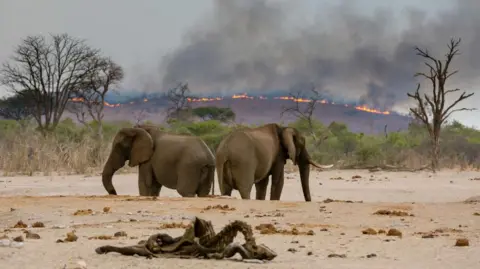
Warmer water at the seaside might sound nice for your holiday dip, but recent ocean heat in the Mediterranean Sea has been so intense that scientists fear potentially devastating consequences for marine life.
The temperature of the sea surface regularly passed 30C off the coast of Majorca and elsewhere in late June and early July, in places six or seven degrees above usual.
That's probably warmer than your local leisure centre swimming pool.
It has been the western Med's most extreme marine heatwave ever recorded for the time of year, affecting large areas of the sea for weeks on end.
The heat appears to be cooling off, but some species simply struggle to cope with such prolonged and intense warmth, with potential knock-on effects for fish stocks.
To give you some idea of these temperatures, most leisure centre swimming pools are heated to roughly 28C. Competitive swimming pools are slightly cooler at 25-28C, World Aquatics says.
Children's pools are a bit warmer, recommended at 29-31C or 30-32C for babies, according to the Swimming Teachers' Association.
Such balmy temperatures might sound attractive, but they can pose hidden threats. Harmful bacteria and algae can often spread more easily in warmer seawater, which isn't treated with cleaning chemicals like your local pool.
The Caribbean has been unusually warm. That’s not a good thing.
Will the recent trend toward a harsher climate continue?
In the tropical Caribbean Sea region, it’s typically warm and humid on land but rarely endlessly hot — relatively stable water temperatures promote conditions that don’t often change drastically day-to-day or even month-to-month.
But that climate norm has been turned on its head over the past two years, with record-breaking heat that ramped up in the spring of 2023 and has continued unabated since; conditions fueled by human-caused climate change. Many places including Puerto Rico, the Virgin Islands and others in the archipelago set heat records in 2023 only to see them overturned last year.
An unusually powerful and resilient marine heat wave contributed to keeping the region toasty. But it wasn’t the only factor.
Major report connects the world's environmental challenges - 2024
Major report connects the world's environmental challenges
Issues like climate chante, biodiversity and water are all interlinked, the report says
Climate change, nature loss and food insecurity are all inextricably linked and dealing with them as separate issues won't work, a major report has warned.
30 % + of Species could go extinct if warming is not checked.
How many species could go extinct from climate change? It depends on how hot it gets.
Two Kea birds, Arthurs Pass South Island New Zealand. The species is listed as threatened in that country and climate change is among the reasons their numbers are in danger.
To consider how climate change could cause some extinctions, imagine a tiny mountain bird that eats the berries of a particular mountain tree.
That tree can only grow at a specific elevation around the mountain, where it's evolved over millennia to thrive in that microclimate. As global temperatures rise, both the tree and the bird will be forced to rise too, tracking their microclimate as it moves uphill. But they can only go so far.
Can Warming Still be Held to + 1.5 ° Centigrade - 2024 ?
Countries agreed to try to hold global warming to 1.5 degrees Celsius. Is that still possible?
An iceberg floats off the coast of Illulisat, Greenland. Ice sheets in Greenland and Antarctica are melting rapidly, and the risks of drastic melting increase as the Earth heats up. The melting of Greenland's ice sheet is the second-largest contributor to global sea-level rise. (The largest contributor is water expanding as it warms.)
The primary focus of international climate negotiations this week in Baku, Azerbaijan, is how to pay for the costs of cutting global climate pollution and adapt to the impacts of climate change.
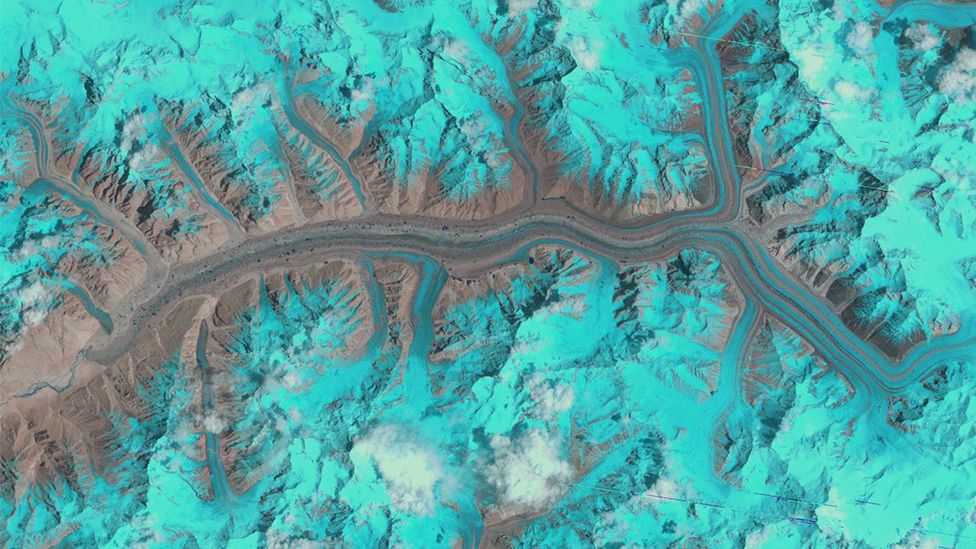
Climate change: Satellite maps warming impact on global glaciers
Glaciers are not easy targets for any type of satellite to measure mass loss over time
Scientists have obtained their best satellite assessment yet of the status of the world's glaciers.
Europe's Cryosat satellite tracked the 200,000 or so glaciers on Earth and found they have lost 2,720bn tonnes of ice in 10 years due to climate change.
That's equivalent to losing 2% of their bulk in a decade.
Monitoring how quickly glaciers are changing is important because millions of people rely on them for water and farming.
Recent comments