Graeme Greene book "The New Big 5" - a photo book of endangered species - 2023
"From the towering giraffe to the bright orange and blue rock agama to the deep-sea anglerfish that produces its own light, we live alongside creatures that are a match for anything science fiction writers have imagined to populate alien worlds," writes Graeme Green in his book The New Big 5, published this month. In April 2020, the wildlife photographer launched a project to flip the idea of the "Big 5" of trophy hunting on its head, inviting people around the world to vote online for their five favourite animals to photograph and see in photos; the New Big 5 of wildlife photography, as decided by the public vote, are the elephant, polar bear, lion, gorilla, and tiger.
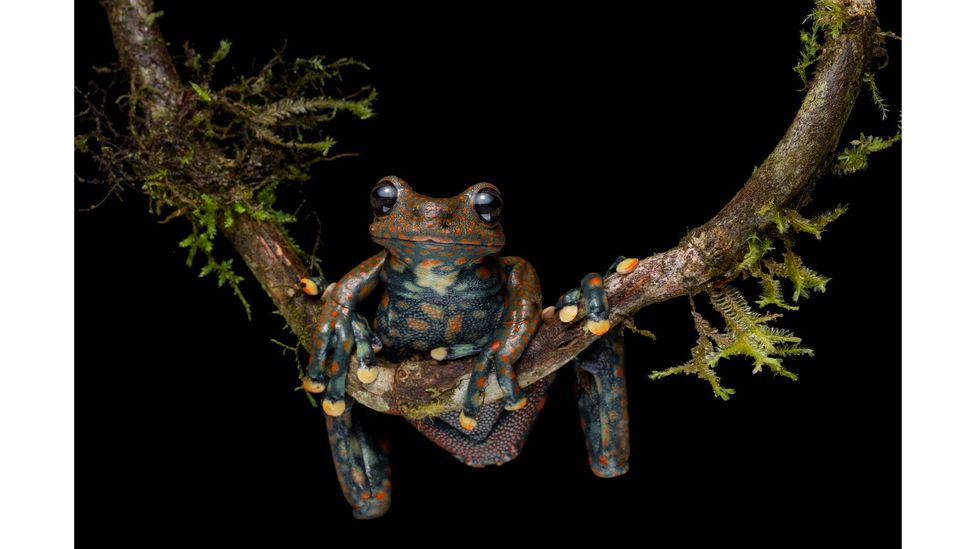
Spotted torrent frog, Santa Barbara Park, Ecuador, Lucas Bustamante; International Union for Conservation of Nature (IUCN) status: Critically Endangered (Credit: Lucas Bustamante)
South and Central America are home to many threatened species, endangered species and critically endangered species at risk of extinction, like the Andean Bear, the Andean Cat, the Andean Hairy Armadillo, the Andean Titi Monkey, the Giant Anteater, the Golden Lion Tamarin, the Jaguar, the Little Spotted Cat, the Mountain Tapir, the Red-handed Howler Monkey, and more.
Saving Ecuador's "Lungs of the World" Yasuni National Park.
Race to save Ecuador's 'lungs of the world'
The Napo River in Ecuador, an Amazon tributary, runs for 1,075km (668 miles).
The Yasuni National Park, known as "the lungs of the world" and one of the most bio-diverse places on earth, is under threat from oil drilling. The race is on to find the funds required to develop new sustainable energy programmes that would leave the oil - and the forest - untouched. In the early light of dawn, the Napo River, running swiftly from its headwaters in the high Andes, swirled powerfully past the bow of our motorised canoe. Suddenly, a dense cloud of green parrots swooped down from the canopy of the jungle and in a cackling din started scooping tiny beakfuls from the exposed muddy bank. The heavy mineral rich clay, the birds seem to know, is an antidote to the toxins present in the seeds of the forest which are a major part of their daily diets.



 Favorite


Recent comments