Rhinos and elephants: the secret lives of Africa's giants
Rhinos and elephants have a range of remarkable behaviours and adaptations, many of which we are only just learning. Emerging through the twilight, a beast lumbers forward, sniffing, snorting, searching for something. One of the largest animals to walk the earth, it is on a surprising mission. This black rhino is embarking on a midnight journey, seeking out other rhinos in the dark to socialise and mate with, sharing some never-before-seen tender moments.
Because despite their size, we are only just beginning to notice some remarkable behaviours and adaptations of elephants and rhinos. These two groups are the largest terrestrial animals. The three species of elephant range from 5.5 tonnes for an average male African bush elephant to 2.7 tonnes for female Asian elephants.
Rhinos, of which there are five species, can exceed 3.5 tonnes. Their size makes them relatively easy to spot and an easy target for poachers, who continue to hunt both groups of large mammal in significant numbers: elephants mainly for ivory in their tusks and rhinos for their horns. They have all been extensively studied by scientists, in the field and also in wildlife parks, breeding centres and zoos. But much about them, and what they get up to, remains a mystery, with many discoveries into their behaviour and adaptations only being made recently. We are still struggling to understand just how unique are different populations of these megafauna.

 Attenborough's pitcher plant (Nepenthes attenboroughii) Attenborough's pitcher plant is known only from the relatively inaccessible summit of Mount Victoria in Palawan in the Philippines. There are thought to be only a few hundred of them. Pitcher plants are carnivorous plants that trap animals in liquid-filled bowls called pitchers. Attenborough's pitcher plant is one of the biggest, with pitchers up to 30cm in height that can trap insects and rats. It was only discovered in 2007 when a team of botanists, tipped off by two Christian missionaries, scaled Mount Victoria. It is named after British natural history broadcaster David Attenborough.
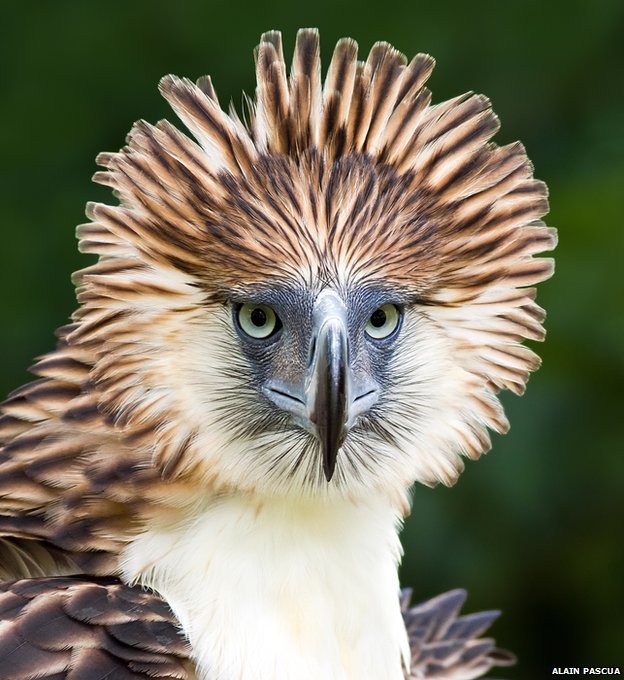 The world's 100 most distinctive and endangered birds have been determined. Scientists in the UK and US chose the birds based on their rarity, but also how distinctive their appearance, behaviour and evolutionary history was. The list of birds contains several of the world's largest and most striking, as well as other unusual species threatened with extinction. Included are the tooth-billed pigeon, known as the little dodo, the Philippine's eagle and a type of kiwi. Scientists at the Zoological Society of London (ZSL), UK and Yale University in New Haven, Connecticut, US created the list as part of the EDGE of Existence programme, which seeks to document the most uniquely vulnerable species on the planet. Details of the exercise are published in the journal Current Biology.
 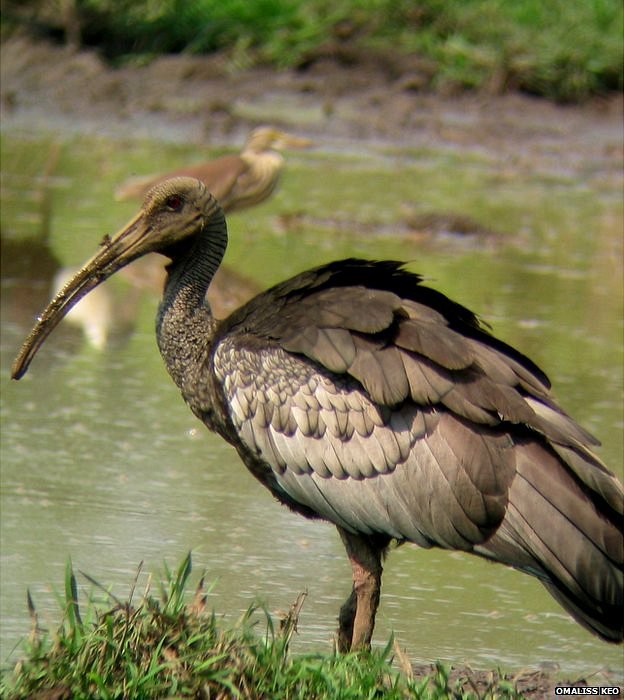 Giant ibis. The giant ibis stands tall at the top of the list At number one is a bird called the giant ibis. The largest member of the ibis and spoonbill family, the giant ibis stands over a metre tall, weighs 4.2kg and is the national bird of Cambodia. Despite this, fewer than 230 pairs remain. As well as being more distantly related to other members of its family, the giant ibis is expected to further decline in numbers due to habitat destruction and the predation of its eggs by mammals.


 Favorite


Recent comments