Languages

coral bleaching

English

Coral bleaching weakens fish's health and survival chances

Researchers in Australia and Sweden have found that coral bleaching and death can have a direct effect on how reef-dwelling fish learn about their environment - particularly how to avoid predators.

The team from James Cook University in Queensland and Uppsala University carried out tests in enclosed "mini reefs" that simulated the environment they were studying. They put young damselfish in their reefs, half of which contained healthy coral, the other half containing the skeletons of dead coral. The scientists then trained the fish to recognise the scent of a new predator - pairing that scent with another chemical that damselfish release when they're under attack. Only the fish in the healthy reefs learned the new predator's smell, and hid among the coral in response. On dead reefs, the fish just kept on exploring, leaving themselves vulnerable. The researchers say their results show worrying signs of the direct impact of coral damage on marine animals' behaviour and survival. The findings are published in the journal Proceedings of the Royal Society B.

Massive coral bleaching killing Australia's Great Barrier Reef - 2016

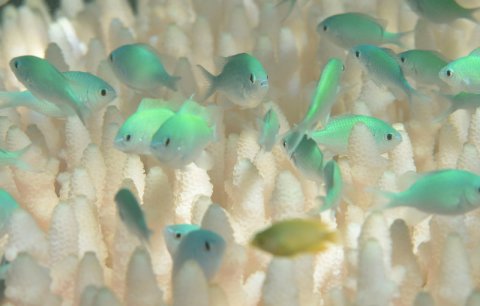
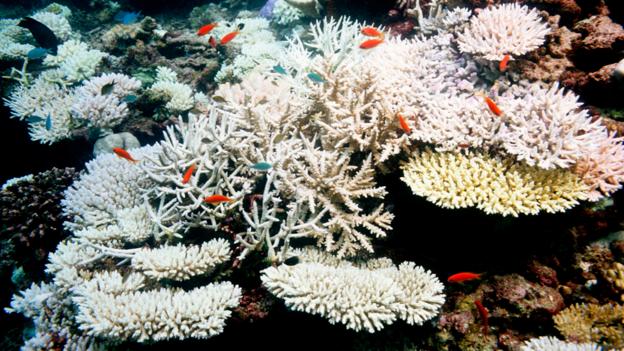
Fish swim amid bleached coral near Lizard Island, Australia, Great Barrier Reef
Coral - 4 stages of coral healthy, bleached, algal growth voer bleached dead coral
Coral - 4 stages of coral - healthy, bleached, algal growth voer bleached dead coral
Close-up of four staes of coral bleaching dying coral great barrier reef australia
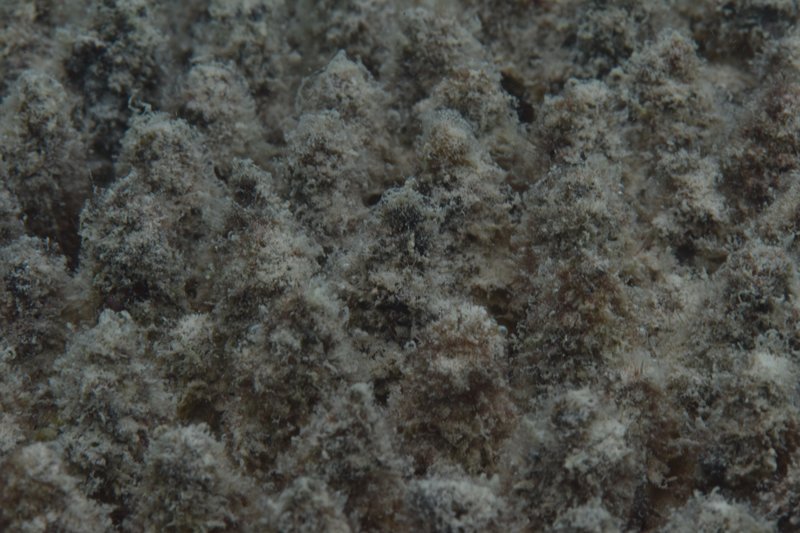
heavy algal overgrowth over bleached dying coral - Great Barrier Reef Australia

The massive bleaching hitting the Great Barrier Reef off the coast of Australia is likely that country's "biggest ever environmental disaster," says Dr. Justin Marshall, who has studied the reef for three decades. Fish swim amid bleached coral near Lizard Island, Australia, Great Barrier Reef Only 7 percent of the reef has escaped bleaching, according to researchers at the ARC Center of Excellence. Marshall, a professor at the University of Queensland, says the destructive phenomenon is happening in an area the size of Scotland. "Before this mass bleaching started, we already were at the point of losing 50% of the coral cover on the Great Barrier Reef. This, I think, will probably take another 50% off what was left," Marshall says. Over the course of the last six months, Marshall and his colleagues with the citizen science project Coral Watch have documented the degradation of reef structures near Lizard Island, one of the worst-hit areas. They photographed the same formations of coral multiple times, showing clearly the pace of the destruction.

Killer starfish threaten Great Barrier Reef

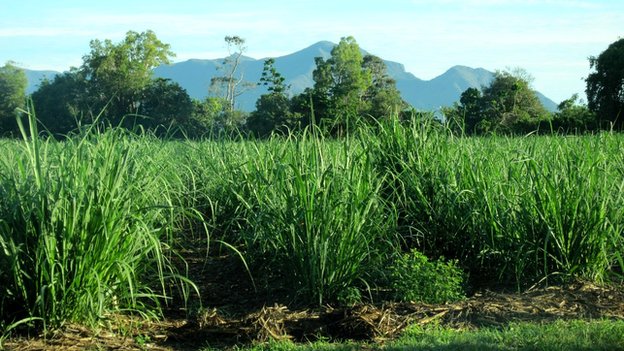
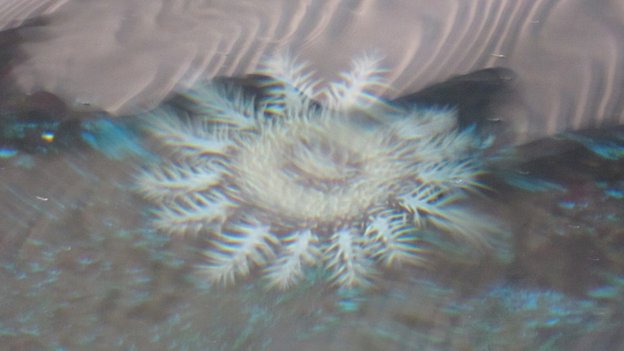
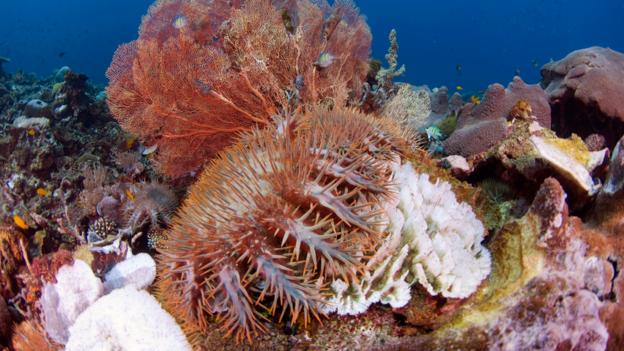
Killer starfish threaten Great Barrier Reef Crown-of-thorns starfish have a voracious appetite and waves of carnivorous starfish are eating their way through Australia's Great Barrier Reef - and sugar cane farming is being blamed. Researchers at Australia's Institute of Marine Science (AIMS), just outside Townsville, Queensland, in north-east Australia, have mapped the pattern of destruction. "Coral cover is half of what it was 27 years ago, coral cover is going down at an alarming rate." Dr Katharina Fabricius, coral reef ecologist and AIMS principal research scientist, told the BBC World Service programme Discovery. She said the biggest culprit was the Crown of Thorns Starfish (COTs). "There are three main sources for the coral decline, one is storms, however 42% is attributed to Crown of Thorns Starfish - and just 10% due to bleaching. This compares with 70% due to bleaching for reefs elsewhere in the world , such as in the Caribbean." “Crown of Thorns are very fecund animals - each female can produce between five and 20 million eggs ” John Brodie, James Cook University Bleaching occurs when corals are stressed by changes in conditions such as temperature, light, or nutrients. They expel the symbiotic algae living in their tissues, causing them to turn completely white. Australian scientists are now looking at ways to reduce the destruction wreaked by starfish, which have the ability to smother coral and digest the fleshy parts.

Ocean Acidification caused by CO2 Emissions

Emissions of CO2 driving rapid oceanic acidification


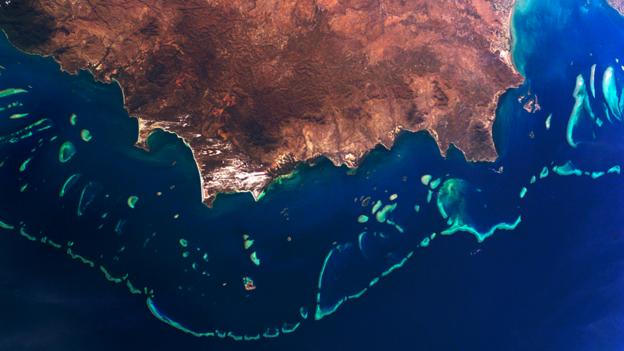
Great barrier reef
Corals all over the world are threatened by rising rates of acidification in the oceans.
 

The world's oceans are becoming acidic at an "unprecedented rate", more rapidly than at any time in the past 300 million years. In their strongest statement yet on this issue, scientists say acidification could increase by 170% by 2100. They say that some 30% of ocean species are unlikely to survive in these conditions. The researchers conclude that human emissions of CO2 are clearly to blame. The study will be presented at global climate talks in Poland next week.

In 2012, over 500 of the world's leading experts on ocean acidification gathered in California. Led by the International Biosphere-Geosphere Programme, a review of the state of the science has now been published. This Summary for Policymakers states with "very high confidence" that increasing acidification is caused by human activities which are adding 24 million tonnes of CO2 to oceans every day.

Oceans health declining quickly

Corals are likely to suffer as a result of the changes to our oceans The health of the world’s oceans is deteriorating even faster than had previously been thought, a report says. A review from the International Programme on the State of the Ocean (IPSO), warns that the oceans are facing multiple threats. They are being heated by climate change, turned slowly less alkaline by absorbing CO2, and suffering from overfishing and pollution. The report warns that dead zones formed by fertiliser run-off are a problem. It says conditions are ripe for the sort of mass extinction event that has afflicted the oceans in the past. It says: “We have been taking the ocean for granted. It has been shielding us from the worst effects of accelerating climate change by absorbing excess CO2 from the atmosphere. “Whilst terrestrial temperature increases may be experiencing a pause, the ocean continues to warm regardless. For the most part, however, the public and policymakers are failing to recognise - or choosing to ignore - the severity of the situation.” It says the cocktail of threats facing the ocean is more powerful than the individual problems themselves. Coral reefs, for instance, are suffering from the higher temperatures and the effects of acidification whilst also being weakened by bad fishing practices, pollution, siltation and toxic algal blooms. IPSO, funded by charitable foundations, is publishing a set of five papers based on workshops in 2011 and 2012 in partnership with the International Union for Conservation of Nature (IUCN’s) World Commission on Protected Areas.

Endangered Coral Reefs in steep decline

Are we losing all of our coral reefs?


Half of Great Barrier Reef coral lost in last 27 years.


Various factors, from cyclones to the Crown of Thorns starfish, are being blamed for the loss of the reef.

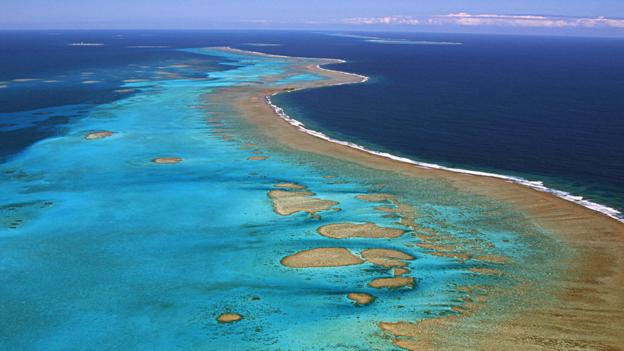
Australia's Great Barrier Reef has lost more than half its coral cover in the past 27 years, a new study shows.