2016 Hottest year ever. Global warming is worsening.
2016 hottest year ever global warming causes drought
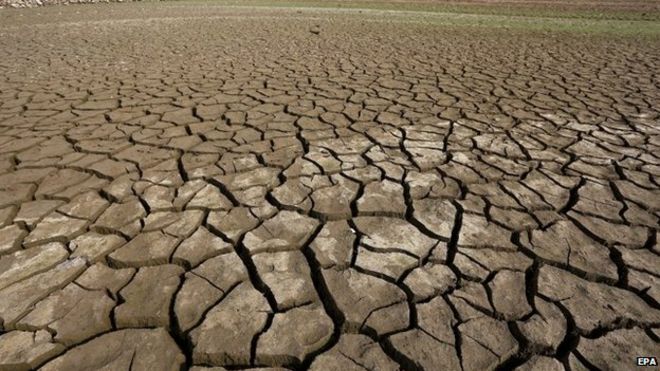
The latest temperature numbers from NASA and the National Oceanic and Atmospheric Administration say the first six months of 2016 were the hottest on record around the planet. Let's look at June. Scientists took temperatures from around the world and got a June average. What they found was a world that was 1.62 degrees Fahrenheit hotter than the average June in the 20th Century. How about January? Hottest ever. Same with February, March, April and May. Every month in 2016 has been warmer than ever, at least since people started keeping reliable records — that was 1880. How much warmer is 2016 so far? Overall, this year has been almost two degrees warmer than what people experienced in the 20th Century. Now, you may remember, last year broke the record for the hottest year ever globally. But Gavin Schmidt, climate scientist and director of NASA's Goddard Institute for Space Studies, says that "2016 has really has blown that out of the water." Schmidt has calculated the chance that the rest of this year will continue on its record pace, based on the first six months. "It indicates that we have roughly a 99 percent chance of a new record in 2016," he says. About 70 percent of Earth is covered by clouds at any given moment. Their interaction with climate isn't easy to study, scientists say; these shape-shifters move quickly. A Warming World Means Less Water, With Economic Consequences. Now, a couple of degrees warmer overall may not sound like much; it changes more than that in a day.
A British aid charity is warning that by 2060 more than a billion people worldwide will live in cities at risk of catastrophic flooding as a result of climate change. A study by Christian Aid says the US, China and India are among the countries most threatened. It says the Indian cities of Kolkata and Mumbai will be most at risk. The eight most vulnerable cities on the list are all in Asia, followed by Miami in the US. The report urges governments to take action to reduce global warming and invest in disaster reduction programmes. Dr Alison Doig, the report's author, told the BBC World Service that people living in large coastal cities were particularly at risk. "I think it's cities like Kolkata, Dakar, the big mega-cities of the south and the emerging economies where the people are most vulnerable to exposure to sea-level rises and to higher rain events," she said. "Flooding in these cities can cause massive damage, but can also threaten life." Dr Doig warned that Florida was likely to suffer extensive flooding. "The whole of Florida is totally vulnerable," she said. "It is so low-lying, it is virtually swampland reclaimed. So significant climate change... raising water half to a full metre this century, will take out an awful lot of Florida and a significant amount of Miami." The study says that the priority should be to rapidly reduce carbon emissions and limit temperature increase by switching from fossil fuels to low-carbon energy.
China per capita carbon emissions overtake EU - 2013
New data on carbon shows that China's emissions per head of population have surpassed the EU for the first time. The researchers say that India is also forecast to beat Europe's CO2 output in 2019. Scientists say that global totals are increasing fast and will likely exceed the limit for dangerous climate change within 30 years. The world has already used up two thirds of the warming gases researchers calculate will breach 2 degrees C. The Global Carbon Project involves researchers from several different institutes around the world and it provides objective details on the scale of annual emissions. The latest data shows that a record 36 billion tonnes of carbon from all human sources were emitted in 2013. Top ten emitters 2013 - % of global total China - 29 USA - 15 EU - 10 India - 7.1 Russian Federation - 5.3 Japan - 3.7 Germany - 2.2 Republic of Korea - 1.8 Iran - 1.8 Saudi Arabia - 1.5 The biggest emitters were China, which produced 29% of the total, followed by the US at 15%, the EU at 10% and India at 7.1% But in an interesting development, China's emissions per head of population exceeding those of the European Union for the first time. While the per capita average for the world as a whole is 5 tonnes of carbon dioxide, China is now producing 7.2 tonnes per person, to the EU's 6.8 tonnes. The US is still far ahead on 16.5 tonnes per person. "We now see China's per capita emissions surpassing the EU," said Dr Robbie Andrew, from the Centre for International Climate and Environmental Research in Norway, who was involved in the research.
2012 Concentrations of warming gases breaks record
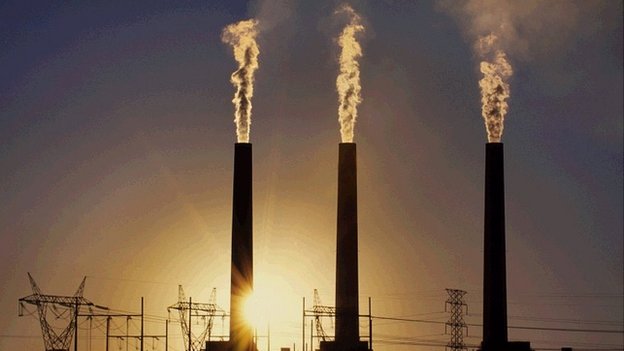
The WMO says that fossil fuel activities such as oil refining are driving atmospheric levels of CO2 to record highs. The levels of gases in the atmosphere that drive global warming increased to a record high in 2012. According to the World Meteorological Organization (WMO), atmospheric CO2 grew more rapidly last year than its average rise over the past decade. Concentrations of methane and nitrous oxide also broke previous records. Thanks to carbon dioxide and these other gases, the WMO says the warming effect on our climate has increased by almost a third since 1990. The WMO's annual greenhouse gas bulletin measures concentrations in the atmosphere, not emissions on the ground. Carbon dioxide is the most important of the gases that they track, but only about half of the CO2 that's emitted by human activities remains in the atmosphere, with the rest being absorbed by the plants, trees, the land and the oceans. Since the start of the industrial era in 1750, global average levels of CO2 in the atmosphere have increased by 141%. According to the WMO there were 393.1 parts per million (ppm) of carbon dioxide in the atmosphere in 2012, an increase of 2.2ppm over 2011. This was above the yearly average of 2.02ppm over the past decade. "The observations highlight yet again how heat-trapping gases from human activities have upset the natural balance of our atmosphere and are a major contribution to climate change," said WMO Secretary-General Michel Jarraud.
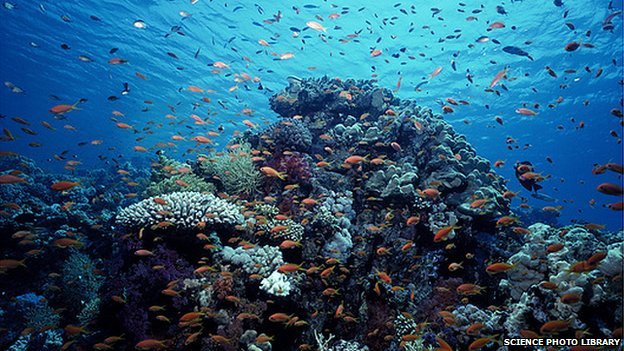
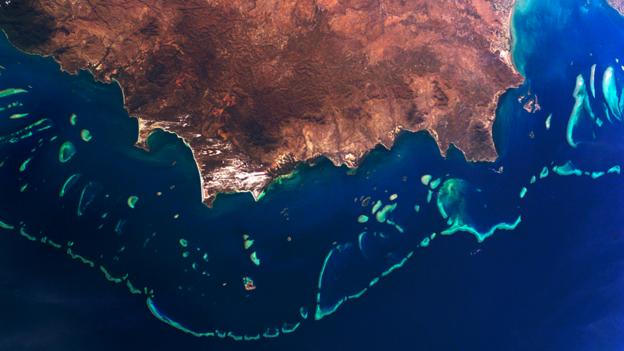
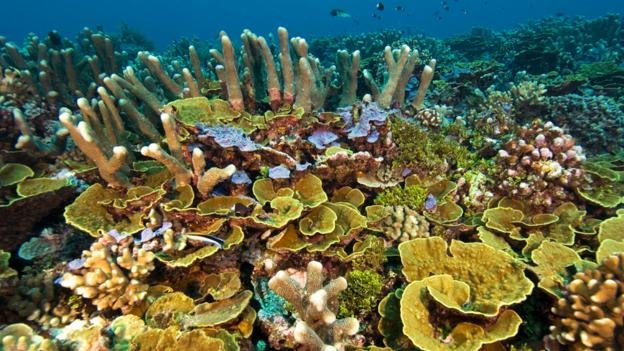
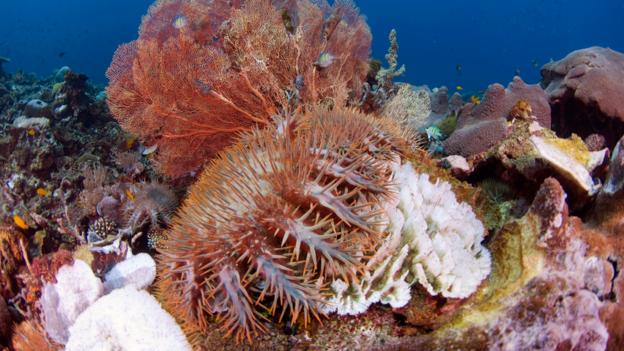
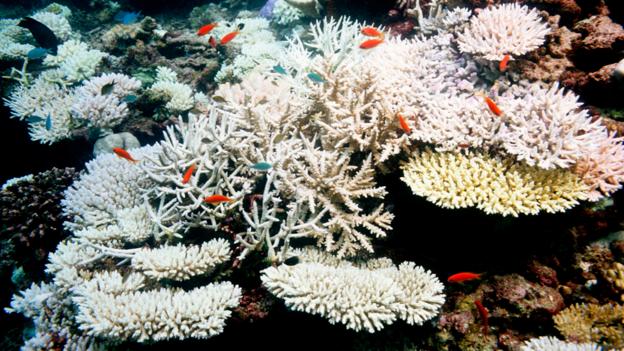
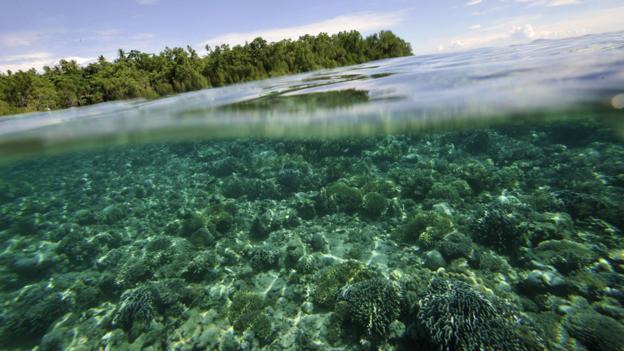
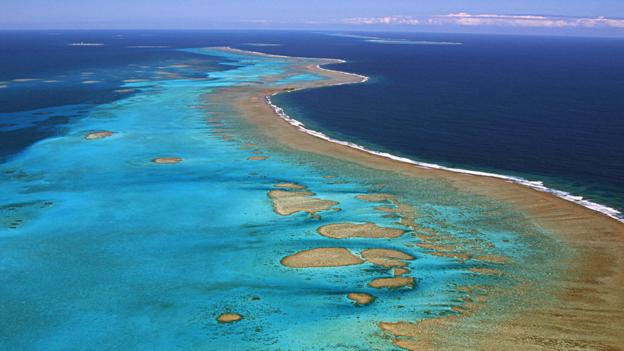
Corals are likely to suffer as a result of the changes to our oceans The health of the world’s oceans is deteriorating even faster than had previously been thought, a report says. A review from the International Programme on the State of the Ocean (IPSO), warns that the oceans are facing multiple threats. They are being heated by climate change, turned slowly less alkaline by absorbing CO2, and suffering from overfishing and pollution. The report warns that dead zones formed by fertiliser run-off are a problem. It says conditions are ripe for the sort of mass extinction event that has afflicted the oceans in the past. It says: “We have been taking the ocean for granted. It has been shielding us from the worst effects of accelerating climate change by absorbing excess CO2 from the atmosphere. “Whilst terrestrial temperature increases may be experiencing a pause, the ocean continues to warm regardless. For the most part, however, the public and policymakers are failing to recognise - or choosing to ignore - the severity of the situation.” It says the cocktail of threats facing the ocean is more powerful than the individual problems themselves. Coral reefs, for instance, are suffering from the higher temperatures and the effects of acidification whilst also being weakened by bad fishing practices, pollution, siltation and toxic algal blooms. IPSO, funded by charitable foundations, is publishing a set of five papers based on workshops in 2011 and 2012 in partnership with the International Union for Conservation of Nature (IUCN’s) World Commission on Protected Areas.
The burning of wood is a major source of black carbon the world over.
Black carbon, or soot, is making a much larger contribution to global warming than previously recognised, according to research.
Scientists say that particles from diesel engines and wood burning could be having twice as much warming effect as assessed in past estimates. They say it ranks second only to carbon dioxide as the most important climate-warming agent. The research is in the Journal of Geophysical Research-Atmospheres. Black carbon aerosols have been known to warm the atmosphere for many years by absorbing sunlight. They also speed the melting of ice and snow. This new study concludes the dark particles are having a warming effect approximately two thirds that of carbon dioxide, and greater than methane.





 Favorite


Recent comments