Languages

2010-2019

English

Europe's water resources under pressure

Depleted reservoir, Portugal (Image: Reuters)    There is increasing demand for the continent's limited water resources, the report warns


Continued inefficient use of water could threaten Europe's economy, productivity and ecosystems, a report has warned.

DR Congo employs dogs to tackle elephant poaching

Dogs training at Virunga, September 2011
Bloodhounds have begun working  with rangers at Virunga National Park to track down poachers.

Rangers in the Democratic Republic of Congo's Virunga park have a new weapon in their fight against poachers. National Park authorities have trained five bloodhound dogs to track elephant poachers after a spate of incidents. The first investigation using the dogs was carried out last week and led to the discovery of illegal weapons. Poaching is one of the key threats to the animals in Virunga, a Unesco World Heritage Site in the war-torn eastern region of DR Congo. The park is also home to gorillas, chimpanzees, okapi, forest elephants and buffalo, among other wildlife. Some 300 rangers protect the park from poachers, rebel groups and illegal miners. 'Effective weapon' Park authorities now hope the bloodhound programme, which was implemented with help from a specialised Swiss centre and volunteers from the German police, will help to protect the vulnerable elephant population from ivory poachers. The dogs and their handlers got the chance to put their training into action on 1 March, when rangers spotted a dead elephant with its tusks cut off on the edge of Virunga.

Nicaragua to stop deforestation with eco-soldiers


Eco Battalion forces confiscate illegal lumber - Nicaraguan army photo   The Ecological Battalion is part of efforts to protect Nicaragua's natural resources

Deep inside the verdant and sweltering vegetation of Nicaragua's Mosquito

UN team examines mining threat to Great Barrier Reef

File photo: Great Barrier Reef     The Great Barrier Reef off the Queensland coast is home to a wealth of marine life

A UN team has arrived in Australia to investigate possible damage to the Great Barrier Reef by the mining industry.

Rhino Poaching is driving the rhinoceros to extinction.

South Africa troops tackle rhino poachers

Rhinos in a game park in South Africa
Rhinos are killed for their horns in many parts of Africa
South Africa is to deploy hundreds of extra troops along its borders to help fight gangs smuggling rhino horns, the government has announced.

Justice Minister Jeff Radebe said four military companies would be sent to the borders with Zimbabwe, Swaziland and Lesotho. Syndicates export the horns from Africa to parts of Asia and the Middle East. In 2011, a record 450 rhinos were killed by poachers in South Africa, the Department of Environment Affairs says. Mr Radebe said about 600 soldiers would join the fight against rhino poaching. "The deployment includes army engineers who are conducting repairs and maintenance on the Zimbabwe-Mozambique border fence, which is approximately 140 kilometres (85 miles)," Mr Radebe said. Last year troops were deployed along the Mozambican border, many of them inside the world-famous Kruger National Park where more than 200 rhinos were killed last year.

Big Cats - Mountain Lions, Panthers, Jaguars, Tigers and Cheetahs

Of the nearly forty feline, or cat, species, only one—the domestic cat—is believed to be secure. As undeveloped land becomes harder to find, large cats, such as lions, panthers, tigers, jaguars, and cheetahs, are left with less and less natural habitat in which to live.

Big Cat Species facing Extinction

Big Cat Species Facing Extinction 2010 was supposed to be the Year of the Tiger. Unfortunately, tigers, lynx, jaguars, leopards, lions, pumas, cheetahs, and every species of Big Cat in the world is in decline. How long these magnificent species can evade extinction is up to us. Big Cats are part of the Family Felidae (or feline), and are a rich addition to our natural world. However, the Big Cats are in severe decline throughout the planet. The Anthropocene Extinction, also known as the Holocene Extinction event, is the world’s 6th great sudden loss of life. We are currently in the third wave of this, and man-made ecological effects such as an overexploitation of species, pollution, the introduction of alien species, and habitat encroachment are directly responsible for the decline and extinction of thousands of species of life.

Crime chiefs agree to get tough on illegal tiger trade

Tiger (Getty Images/Panoramic Images) About 4,000 tigers are estimated to remain in the wild

Crime chiefs from countries with populations of wild tigers have agreed to work together in order to combat the illegal trade in the big cats.

Heads of police and customs from 13 nations agreed to tighten controls and improve cross-border co-operation at a two-day meeting in Bangkok. Only six subspecies remain, with fewer than 1,000 tigers in each group. Smuggling of tiger parts is one of the main threats facing the planet's remaining big cats, say experts.

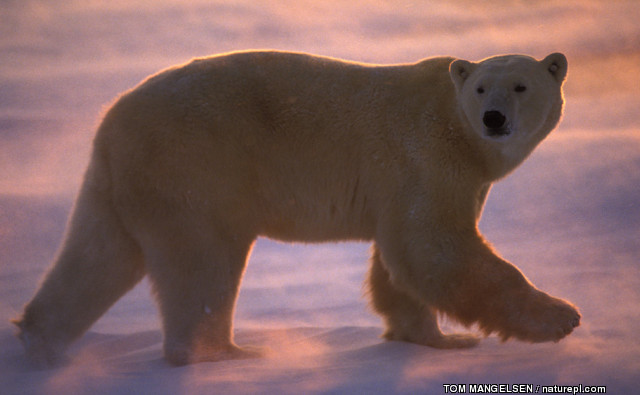
Polar Bear

Bear (Polar)

Polar Bear

Polar bear: Ursus maritimus

Distribution: northern polar regions occurring in 5 nations - Greenland, Norway, Canada, United States, the former Soviet Union and also on Arctic sea pack ice usually within 300km of land. Some individuals wander up to 200km inland.

Population: 20,000 - 25,000 with 60% living in Canada. Status: vulnerable species (IUCN).

Habitat: favourite habitat is a combination of pack ice, open water and coastal land.

Description: coat colour varies from pure white to shades of yellow. Small ears; black eyes and nose.

Height: 1.6m to shoulder

Length: 2.2 - 2.5m.

Size of feet: 30cm long, 25cm wide.

Some Endangered Species

Here's a look at just a few of the world's most endangered species: greater horseshoe bat

Greater Horseshoe Bat

Rhinolophus ferrumequinum

IUCN Status: least concern

Population trend: decreasing

There are eighteen species of bat in Britain and all of them are endangered. The greater horseshoe bat is one of the rarest. One reason for their decline is the destruction of suitable roosting sites, such as old buildings and hollow trees. Changing land use from woodland and small fields to large scale agriculture has also had an effect. They have also suffered from the use of insecticides (poisonous chemicals sprayed on to crops to kill harmful insects) which have deprived the bats of their insect food. Due to conservation efforts its population in the UK has stabilized at about 5000.


siberian tiger Siberian (Amur) Tiger Panthera tigris ssp. altaica IUCN status: Endangered Population trend: stable

Pages

Email Addresses