Languages

Solutions

English

Trees are carbon and methane sinks - we need billions more trees!

Trees might not be acting in the way we thought - this forest fitted with pipes can tell us why

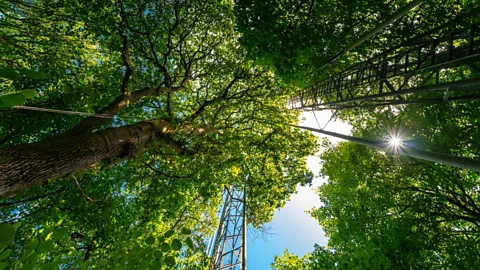
Thomas Downes A photo looking up at trees with sunlight peaking through (Credit: Thomas Downes)

By simulating the future atmosphere, scientists hope to understand whether trees will continue to act as the lungs of the planet.

"The oak is the queen of her domain," says Rob MacKenzie as he gestures towards a giant towering above us. This oak tree has stood in this very spot since long before he or I walked the Earth. 

5 Proven Ways to Help Nature

Industrial wastelands to wildlife oases: Five nature wins that have actually worked:

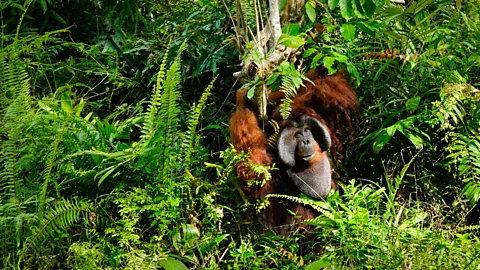
Getty Images An orangutan in a rainforest (Credit: Getty Images)

World leaders are gathering in Cali, Colombia, to agree ways to save species from extinction and restore nature. Here are five powerful solutions to halt biodiversity loss.

There's a treasure trove of ways to save species in decline, and restore their habitats so they can live safely. In a healthy state, rich and biodiverse habitats can replenish our water, air, soil and reduce the risk of dangerous contagious diseases.

March 2023 - Ocean treaty: Historic agreement reached after decade of talks


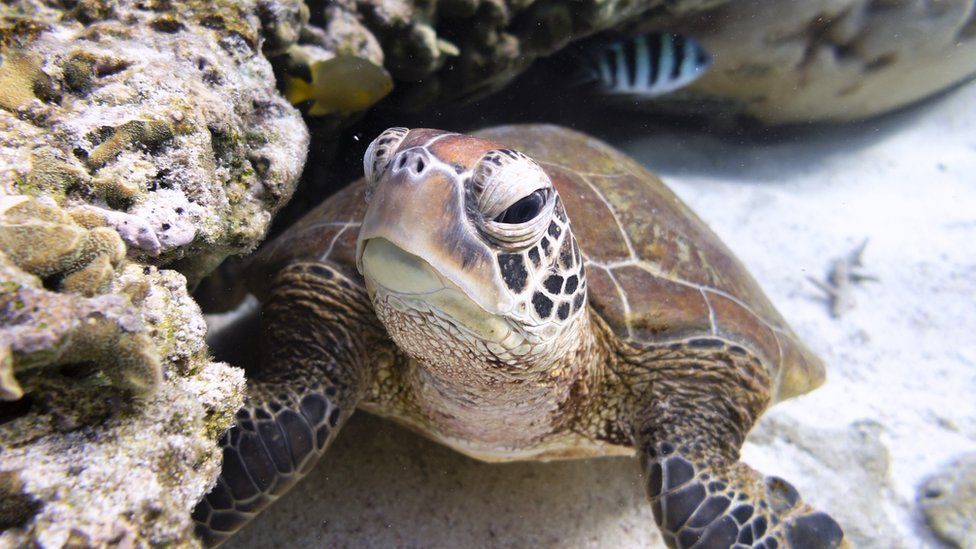
Sea turtle shelters under coral

Nations have reached a historic agreement to protect the world's oceans following 10 years of negotiations.

The High Seas Treaty places 30% of the seas into protected areas by 2030, aiming to safeguard and recuperate marine nature.

The agreement was reached on Saturday evening, after 38 hours of talks, at UN headquarters in New York.

The negotiations had been held up for years over disagreements on funding and fishing rights.

The last international agreement on ocean protection was signed 40 years ago in 1982 - the UN Convention on the Law of the Sea.

Kenya: Wildlife trafficking suspect seized after $1m reward

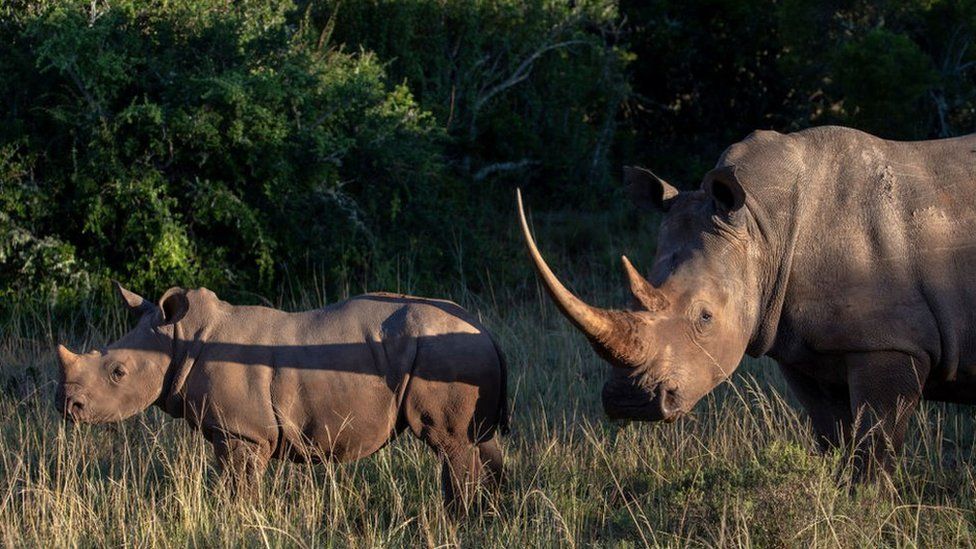
A crash, or group, of white rhinoceroses, also known as the square-lipped rhinoceros, is seen during a safari drive at the Shamwari Private Game Reserve on February 7, 2022 near the town of Paterson in South Africa's Eastern Cape province.

Mr Ahmed is suspected of trying to traffic rhinoceros horn and ivory


Kenyan police have arrested a man suspected of links to a transnational wildlife and drug trafficking syndicate who was indicted in a US court.

Abdi Hussein Ahmed, alias Abu Khadi, was detained on Tuesday in the central county of Meru after a tip-off from the public, police say.

Human Government

Human Government, through its laws, and its enforcement of them, is both a major cause of and a potential solution to the Extinction of Species. Human Government needs to change its laws, and enforce them. We can save species in the short term by creating and enlargening Nature Reserves and Protected areas and legislating against killing any species within those protected aeras, and enforcing that legislation absolutely. After all Extinction is Forever! 

This is only a short term "solution", as it does not address Human Overpopulation, Human Overdevelopment and Human Pollution - the major causes of decline and loss and extinction of species and habitat.  Only Humans together can make the necessary laws to preserve Nature - which is what must be done to ensure our own survival as well as the survival of our Human Civilization.

Humanity depends on Nature - on habitat for food availablity, pollution control, water purification, and agriculture; on other species for food availability, pollution control and pollination; on the atmospheric and oceanic currents for temperature control and freshwater generation and distribution; on atmosphic layers to protect us from cosmic radiation; and much, much more.

We could never afford to do what Nature does for us - we don't have the capacity or ability, and it would cost us thousands or millions times more than the total wealth of the planet - if we could.

Furthermore, human engineering, rather than replacing Nature, only causes more pollution, which makes the situation worse.

Human Dependency on Nature

Humanity depends on Nature - on habitat for food availablity, pollution control, water purification, and agriculture; on other species for food availability, pollution control and pollination; on the atmospheric and oceanic currents for temperature control and freshwater generation and distribution; on atmosphic layers to protect us from cosmic radiation; and much, much more.

We could never afford to do what Nature does for us - we don't have the capacity or ability, and it would cost us thousands or millions times more than the total wealth of the planet - if we could.

Furthermore, human engineering, rather than replacing Nature, only causes more pollution, which makes the situation worse.

Neither can we find another planet in Space to go live on. We do not know of any other habitable planets, and we do not have the technology to get us there, when we do. Furthermore, this "option" will only be available for a very select few and will be horribly expensive, and won't come before the 22nd century, most likely. Planet Earth and our Human civilization won't survive that long unless we change the way we live dramatically.

The only answer for our Human survival is to reduce and limit our numbers, reduce and limit our development and destruction of the natural world, and reduce and limit our types and amounts of pollution. That is the only way we can save Nature, which we are part of, and upon which we depend absolutely.

False Solutions

False Solutions to the Environmental, Ecological and Extinction Crisis are just that -  wrongful and potentially (probably) harmful attempts to correct the problems we face without changing our way of life. Not only will they produce harmul effects and worsen our crises, but they also threaten to take away critical valuable years in which we MUST change the way we live.

Solutions

Solutions to Exinction of Species are many and include making and enforcing laws protecting species and their habitats, ending the use of fossil fuesl, reducing and eliminating Pollution, Pesticides, Overpopulation, Population Growth, Development, etc.

Preserving the genetic diversity of ancient trees

Even as we discover the incredible benefits of the world's most ancient trees, we are losing them to climate change.

In 2005, several of the centuries-old ponderosa pine trees on my 15 acres (0.06 sq km) of forest in the northern Rocky Mountains in Montana suddenly died. I soon discovered they were being brought down by mountain pine beetles, pernicious killers the size of the eraser on a pencil that burrow into the tree.

The next year the number of dying trees grew exponentially. I felt powerless and grief-stricken as I saw these giant, sky-scraping trees fading all around me, realising there was nothing I could do to stop it.

While the native bugs were the proximate cause, the underlying reason for the unprecedented mortality in my home state and throughout the Rockies was that winters had stopped getting really cold. When I first moved to Montana in the late 1970s, temperatures of -34C (-30F) or even below -40C (-40F) were common in winter, sometimes for weeks at a time. The coldest temperature on record in Montana is –57C (-70F). These days wintertime minimum temperatures rarely get below -18C (0F) or so. If they do, it is usually just for a day or two. That's not nearly cold enough to kill pine beetles, which make their own natural antifreeze.

Toxic 'forever chemicals' found in British otters

Toxic "forever chemicals" used in non-stick saucepans and food packaging have been found in otters across England and Wales, according to a study.

The substances, called PFASs, are also used in waterproof clothing, stain resistant products and fire retardants.

The chemicals are linked to pregnancy complications, liver disease, cancer and other illnesses.

Scientists say concentrations of these compounds in otters are a guide to levels of pollution in the environment.

The substances can leach out from products, getting into drains and sewage treatment works - from which they can then escape and contaminate the environment more widely.

PFAS substances are present in farmland sludge, which can wash from fields into rivers. Factories and landfill sites are another source for the chemicals.

Denmark recently banned their use in food packaging paper.

Used since the late 1940s, PFAS chemicals - which are divided into compounds called perfluoroalkyls and polyfluoroalkyls - help to make products water, grease and stain resistant.

They are known as "forever chemicals" because they don't break down easily in the environment. They contaminate fish, which can then be ingested by animals and humans. PFAS compounds can also get directly into drinking water.

Pages

Email Addresses