Languages

Human Pollution

English

Farming impact on Global Warming

Changing the way farmers plough their lands could have a big impact on global emissions of greenhouse gases. Changing farming practices could play an important role in averting dangerous climate change says the UN. In their annual emissions report, they measure the difference between the pledges that countries have made to cut warming gases and the targets required to keep temperatures below 2C. On present trends there is likely to be an annual excess of 8 to 12 gigatonnes of these gases by 2020. Agriculture, they say, could make a significant difference to the gap. This is the fourth such report, compiled by the United Nations Environment Programme (Unep) in conjunction with 44 scientific groups in 17 countries. It says the world needs to reduce total emissions to 44 gigatonnes of carbon dioxide equivalent by 2020 to keep the planet from going above the 2C target, agreed at a UN meeting in Cancun in 2010. But when all the pledges and plans made by countries are added together, they show an excess of between 8 and 12 gigatonnes per annum in seven years time, very similar to last year's report. To put it in context, 12 gigatonnes is about 80% of all the emissions coming from all the power plants in the world right now. The authors highlight a number of ways in which this gap can be closed, including tightening the rules for counting emissions and expanding the scope of pledges already made. They believe around half the gap could be closed in this way.

2013 estimate of 2100 sea level rise due to melting ice

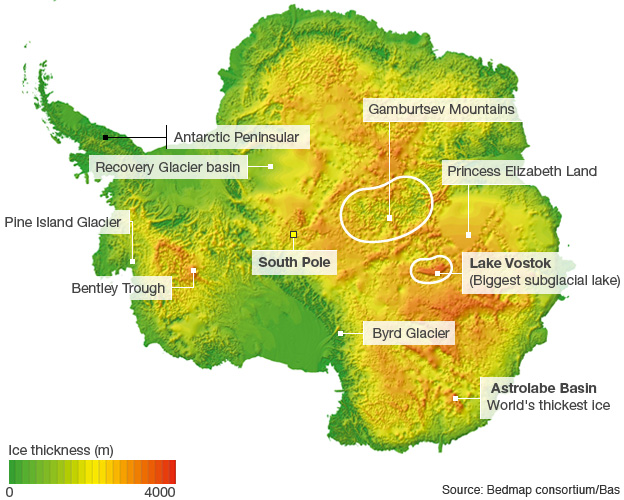
Antarctica-ice-thickness-2013

'Best estimate' for impact of melting ice on sea level rise Researchers say they now have the most accurate estimate yet for the impact of the melting of ice sheets. Researchers have published their most advanced calculation for the likely impact of melting ice on global sea levels. The EU funded team say the ice sheets and glaciers could add 36.8 centimetres to the oceans by 2100. Adding in other factors, sea levels could rise by up to 69 centimetres, higher than previous predictions. The researchers say there is a very small chance that the seas around Britain could rise by a meter. “The previous IPCC identified this gap in our knowledge, we've addressed that gap and what we've found is not scary” Prof Tony Payne, University of Bristol The last Intergovernmental Panel on Climate Change (IPCC) report was highly detailed about many aspects of Earth's changing climate in the coming decades, Advanced models While they estimated that sea levels could rise by 18-59 centimetres by 2100, they were very unsure about the role played by the melting of ice sheets and mountain glaciers. To fill the void, the EU funded experts from 24 institutions in Europe and beyond to try and come up with more accurate figures on the melting of ice sheets and glaciers in Antarctica and Greenland and how this might swell the oceans. Called Ice2sea, the group of scientists have made what they term the "best estimate" yet of the impact of melting based on a mid-range level of carbon emissions that would increase global temperatures by 3.5C by the end of this century.

Mercury exposure linked to dramatic decline in Arctic foxes

arctic fox
arctic foxes

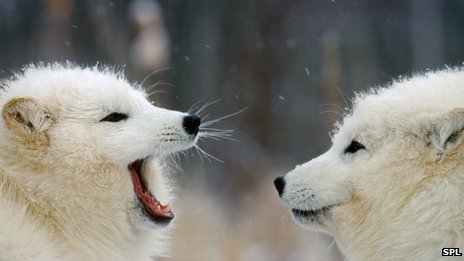
According to the research, the levels of mercury found in Arctic foxes depend on their diets Scientists say that foxes in Arctic regions who feed on ocean prey are being exposed to dangerous levels of mercury. On one Russian island where the population of foxes has crashed, the researchers believe the toxin has played a key role in the decline. They say the findings could have important implications for conservation. The data is published in the Journal, PLOS ONE. Mercury levels in the world's oceans have doubled over the past 100 years, according to the UN, with more mercury deposited in the Arctic than on any other part of the planet. The Arctic Council says there has been a ten-fold increase in the levels of mercury found in top predators in the region over the past 150 years. Hair of the dog Now a team of researchers says it has found significant levels of mercury in different populations of Arctic foxes in different environments. On the small Russian island of Mednyi, part of the Commander Islands chain in the North Pacific Ocean, the foxes survive almost exclusively on sea birds with some also eating seal carcasses. The island's fox population declined mysteriously in the 1970s, and while the population is currently stable many of them are in poor condition, and have low body weight. They are listed as a critically endangered species with IUCN. Scientists at one time believed their shrinking numbers were caused by an infection, but they couldn't find the underlying cause.

Arctic Ocean is acidifying rapidly

Arctic - Saunders Island and Wolstenholme Fjord with Kap Atoll
arctic volcano

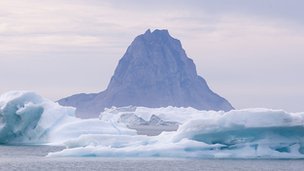
Arctic Ocean 'acidifying rapidly' Photo1: Saunders Island and Wolstenholme Fjord with Kap Atholl in the background is shown in this picture taken during an Operation IceBridge survey flight in April 2013. Photo 2: arctic volcano. The Arctic seas are being made rapidly more acidic by carbon-dioxide emissions, according to a new report. Scientists from Norway's Center for International Climate and Environmental Research monitored widespread changes in ocean chemistry in the region. They say even if CO2 emissions stopped now, it would take tens of thousands of years for Arctic Ocean chemistry to revert to pre-industrial levels. Many creatures, including commercially valuable fish, could be affected. They forecast major changes in the marine ecosystem, but say there is huge uncertainty over what those changes will be. It is well know that CO2 warms the planet, but less well-known that it also makes the alkaline seas more acidic when its absorbed from the air.

Soot has large role in climate change

Climate change: Soot's role underestimated


wood fire


The burning of wood is a major source of black carbon the world over.


Black carbon, or soot, is making a much larger contribution to global warming than previously recognised, according to research.

Scientists say that particles from diesel engines and wood burning could be having twice as much warming effect as assessed in past estimates. They say it ranks second only to carbon dioxide as the most important climate-warming agent. The research is in the Journal of Geophysical Research-Atmospheres. Black carbon aerosols have been known to warm the atmosphere for many years by absorbing sunlight. They also speed the melting of ice and snow. This new study concludes the dark particles are having a warming effect approximately two thirds that of carbon dioxide, and greater than methane.

Oil sands pollutes freshwater ecosystems

Oil sands' toxins accumulate in freshwater ecosystems


 AP)
 
Studies have shown that oil sands operations lead to pollutants being released into water systems
 

Toxic pollutants released by oil

Proof of Climate Change - Global Warming in Europe

Flooded properties as the River Tiber, Rome, breaches its banks (Getty Images)


The cost of damage from extreme weather events is projected to increase in the future.


Earth: Will the age of man be written in stone?

There have been a few times in the history of mankind when we nearly died out as a species. Anthropologists call these events “bottlenecks”, times when the population of humans shrank – perhaps to as few as 2,000 people over 50,000 years ago. At those levels, we would be categorised as an endangered species on the IUCN Red List, existing in even fewer numbers than wild tigers do today. We survived, and in fact we’ve thrived, mainly because we adapted our environment to suit our needs. But to what degree has the survival and triumph of our species changed our planet? The best people to answer this could well be those who have the grandest perspective. Geologists can take a 4.5-billion-year step back and look at the human impact on our planet in the context of its long history – they can identify changes in the rock record within layers of deposited sediments that build up and are compressed over time.

Artic ice melting is increasing global warming

Arctic ice melt 'like adding 20 years of CO2 emissions'


The loss of Arctic ice is massively compounding the effects of greenhouse gas emissions, ice scientist Professor Peter Wadhams has told BBC Newsnight.

White ice reflects more sunlight than open water, acting like a parasol. Melting of white Arctic ice, currently at its lowest level in recent history, is causing more absorption. Prof Wadhams calculates this absorption of the sun's rays is having an effect "the equivalent of about 20 years of additional CO2 being added by man".

Population and Consumption must decrease for livable future

Obese boy doing exercise
Consumption levels are now high enough in some developing countries as to become a concern  

Pages