Asia is home to many threatened species, endangered species and critically endangered species at risk of extinction; like the Asian elephant, the Bengal tiger, the Amur tiger, the rhinoceros (rhino), the snow leopard, and more.
Africa is home to many threatened species, endangered species and critically endangered species; like the elephant, lion, giraffe, hippopotomus, rhino, cheetah, leopard, and more. Many African large mammals are in real danger of extinction.
Harmful Islamic Turkish President Erdogan Irresponsibly Encouraging Turkish Overpopulation and Islamic Overpopulation.
The Turkish President, Recep Tayyip Erdogan, has said a woman's life is "incomplete" if she does not have children. This is in June, 2016, when the world is horribly overpopulated already.
He is encouraging women to have babies and help boost his country's population, and his religion's population. This harmful and irresponsible attitude is one of the causes of overpopulation, and is the greatest cause of pollution and extinction of other species as well as a decreasing quality of life for humans. Other countries' must respond by saying a strong "NO" to immigration from Turkey and any country that encourages population growth. The world needs to lower population, not raise it, and we cannot afford a religious or nationalist population race. This must put an end to the European stupidity in even thinking that Turkey might be allowed to join the European Union. The European Union, as well as the entire world, is seriously overpopulated, and population densities are far too high in Europe.
Scientists have published their first global assessment of the state of the world's plants.
They warn that 21% of all plants are at risk of extinction and face a broad range of threats. The research was carried out by the Royal Botanic Gardens Kew in the UK. See the full report: here
Acidic oceans helped fuel the biggest mass extinction in the history of life on Earth
The exact causes behind the Permian-Triassic mass extinction have been much debated. Two separate pulses of CO2 into the atmosphere - a "one-two punch" - may have helped fuel the die-off, new research suggests. Changes to ocean acidity would have been one of the consequences, according to the study in Science journal. Computer models suggested that this CO2 may have been released by massive bouts of volcanism from the Siberian Traps, now represented as a large region of volcanic rock in northern Eurasia. The Permian-Triassic mass extinction, which took place 252 million years ago, wiped out more than 90% of marine species and more than two-thirds of the animals living on land. The event is thought to have played out over a 60,000-year period and acidification of the oceans lasted for about 10,000 years. The team led by Dr Matthew Clarkson from the University of Edinburgh analysed rocks unearthed in the United Arab Emirates - which were on the ocean floor at the time. The rocks preserve a detailed record of changing oceanic conditions at the time. They then developed a climate model to work out what drove the extinction. The researchers think the rapid rate of release of carbon was a crucial factor in driving the ocean acidification. The carbon was released at a similar rate to modern emissions. Dr Clarkson commented: "Scientists have long suspected that an ocean acidification event occurred during the greatest mass extinction of all time, but direct evidence has been lacking until now.
Chinese Yangtze river ancient sturgeon almost extinct in 2014
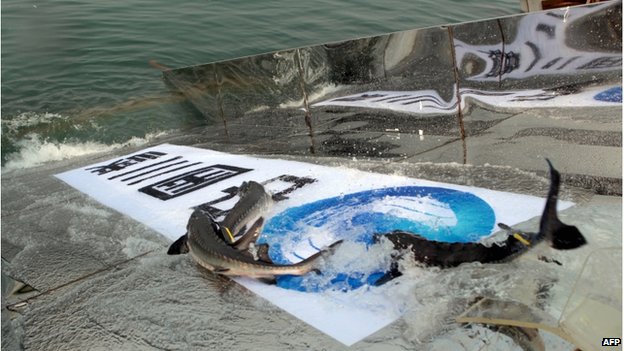
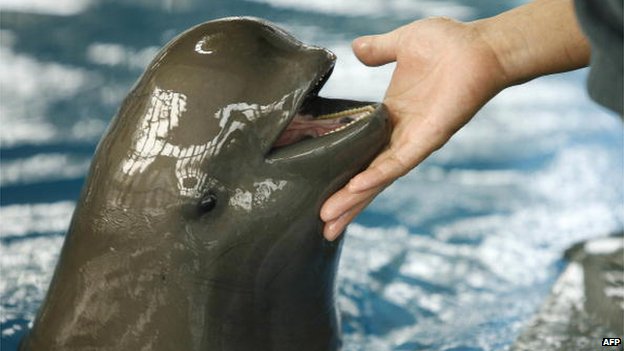
Ancient sturgeon in China's Yangtze 'nearly extinct' This picture taken on 13 April 2014 shows artificially bred Chinese sturgeons released into the Yangtze river in Yichang, central China's Hubei province The Chinese sturgeon, thought to have existed for more than 140 million years, is now on the brink of extinction, according to local media. Xinhua reported that no wild sturgeon reproduced naturally last year in the Yangtze river. It was the first time since researchers began recording levels 32 years ago. Chinese researches say the fall is due to rising levels of pollution in the Yangtze river and the construction of dozens of dams. Researchers from the Chinese Academy of Fishery Sciences also found that no young sturgeons were found swimming along the Yangtze toward the sea during the period they usually do so. A researcher told Xinhua that in the 1980s, at least several thousand sturgeon could be found in the river. It is estimated only around 100 fish remain. "Without natural reproduction, the fish population cannot replenish itself. If there are no further steps taken to strengthen conservation, the wild sturgeon faces the danger of extinction," he said. The finless porpoise, another native species to the Yangtze river, is said to be at risk as well. In recent decades the Chinese authorities have built numerous dams along the 6,300km-long Yangtze river to boost the country's electricity supply. Such moves have drawn criticism of environmental degradation and displacement of villagers.
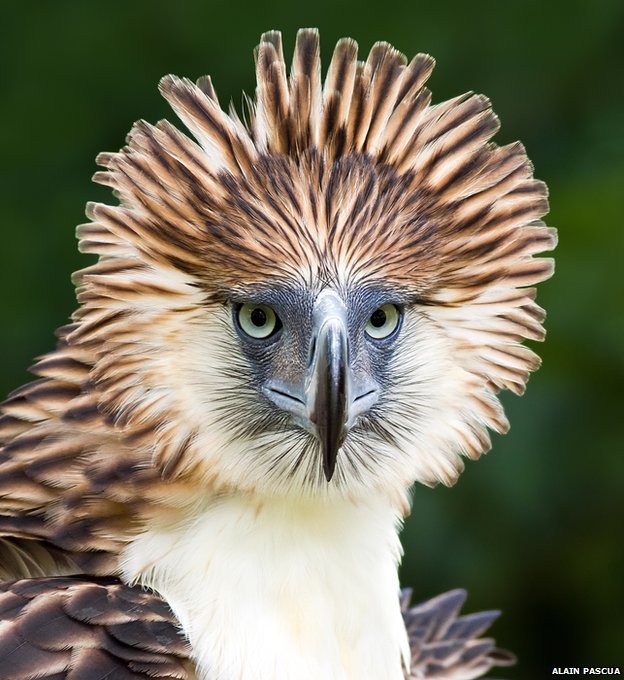
The 100 most distinct and rare birds Philippine's eagle: The Philippine's eagle is at number eight The world's 100 most distinctive and endangered birds have been determined. Scientists in the UK and US chose the birds based on their rarity, but also how distinctive their appearance, behaviour and evolutionary history was. The list of birds contains several of the world's largest and most striking, as well as other unusual species threatened with extinction. Included are the tooth-billed pigeon, known as the little dodo, the Philippine's eagle and a type of kiwi. Scientists at the Zoological Society of London (ZSL), UK and Yale University in New Haven, Connecticut, US created the list as part of the EDGE of Existence programme, which seeks to document the most uniquely vulnerable species on the planet. Details of the exercise are published in the journal Current Biology. Giant ibis. The giant ibis stands tall at the top of the list At number one is a bird called the giant ibis. The largest member of the ibis and spoonbill family, the giant ibis stands over a metre tall, weighs 4.2kg and is the national bird of Cambodia. Despite this, fewer than 230 pairs remain. As well as being more distantly related to other members of its family, the giant ibis is expected to further decline in numbers due to habitat destruction and the predation of its eggs by mammals.
Organised crime and Asian superstition driving rhinos and elephants to extinction
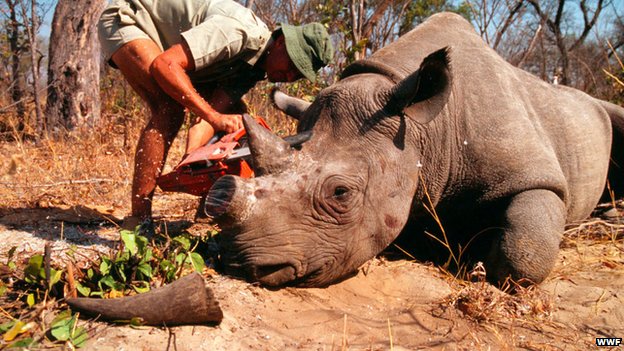
Ivory destruction Despite efforts to destroy ivory, criminals are becoming more organised, ingenious and dangerous. "We have seen more and more organised crime networks moving into the wildlife trade," says Davyth Stewart from Interpol, the international intelligence agency. "Groups who have been traditionally involved in drug trafficking, fire arms and human trafficking are now moving onto wildlife." It's clearly not a fair match: conservationists pitted against criminal gangs. But the wildlife experts say it's a fight they have to take on. They have gathered at the Zoological Society of London to tackle how to halt the rapidly growing trade in animals. The backdrop to these crisis talks is bleak. Thousands of rhinos, elephants, tigers and others have been slaughtered, becoming part of an illegal market that's worth an estimated $19bn a year. Many criminals see it as low risk, high profit, says Mr Stewart. "There is a lower risk of apprehension, it's unfortunate but law enforcement has not invested the resources in attacking wildlife crime as it has in other crimes," he explains. "Even in courts the penalties are much lower. Just last year in Ireland, we saw two people arrested for smuggling rhino horns worth half a million euros. They received a 500-euro fine." Demand and supply John Sellar, the former chief of enforcement at Cites (the Convention on International Trade in Endangered Species), says the focus of the battle should be shifted away from conservation towards the issue of criminality. "It's about locking up the bad guys," he tells the conference.
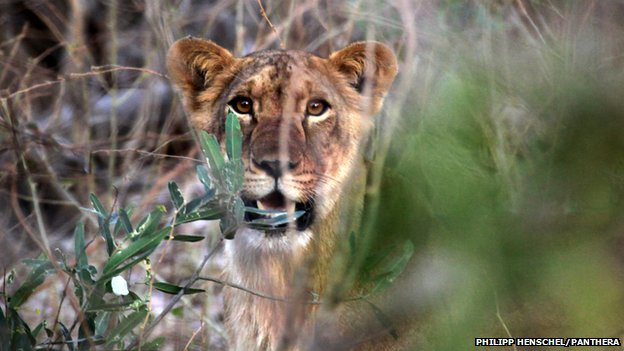
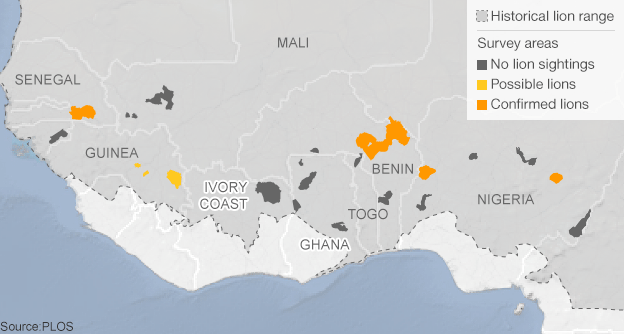
Lions facing extinction in West Africa. There has been a catastrophic collapse in the number of lions in West Africa, with only around 400 left in the region, a new survey suggests. With fewer than 250 mature lions of breeding age, there are concerns the entire population could disappear. The research by Panthera, a non-profit organisation, was carried out in 17 countries, from Senegal to Nigeria, and took more than six years. West African lions are genetically distinct from others in Africa. In 2005, West African lions were believed to live in 21 different protected areas. But the survey, published in the scientific journal PLOS One, suggests lions now exist in just four of those sites. The report says lions now roam in just 1.1% of their historic range in West Africa. The majority of their habitat has been converted for agricultural use, says Philipp Henschel, co-author of the report. Panthera is calling for the lion to be listed as critically endangered in West Africa: all but a few of the areas we surveyed were basically paper parks, having neither management budgets nor patrol staff, and had lost all their lions and other iconic large mammals. The conservation of lions in West Africa have been largely neglected, whereas in eastern and southern Africa where millions of dollars a year are spent. The researchers discovered that West African lions now survive in only five countries; Senegal, Nigeria and a single trans-frontier population on the shared borders of Benin, Niger and Burkina-Faso.

 The world's 100 most distinctive and endangered birds have been determined. Scientists in the UK and US chose the birds based on their rarity, but also how distinctive their appearance, behaviour and evolutionary history was. The list of birds contains several of the world's largest and most striking, as well as other unusual species threatened with extinction. Included are the tooth-billed pigeon, known as the little dodo, the Philippine's eagle and a type of kiwi. Scientists at the Zoological Society of London (ZSL), UK and Yale University in New Haven, Connecticut, US created the list as part of the EDGE of Existence programme, which seeks to document the most uniquely vulnerable species on the planet. Details of the exercise are published in the journal Current Biology.
 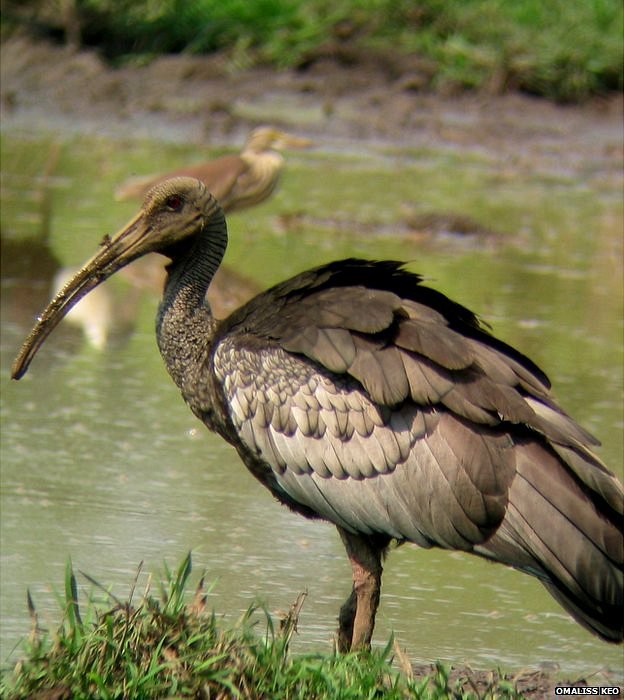 Giant ibis. The giant ibis stands tall at the top of the list At number one is a bird called the giant ibis. The largest member of the ibis and spoonbill family, the giant ibis stands over a metre tall, weighs 4.2kg and is the national bird of Cambodia. Despite this, fewer than 230 pairs remain. As well as being more distantly related to other members of its family, the giant ibis is expected to further decline in numbers due to habitat destruction and the predation of its eggs by mammals.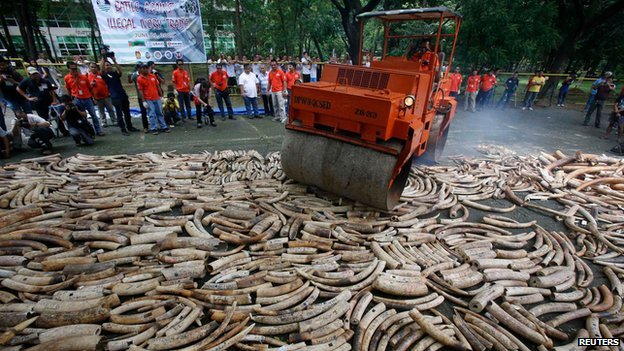



 Favorite


Recent comments